Biblical Settlement
Succoth 2 in the Bible
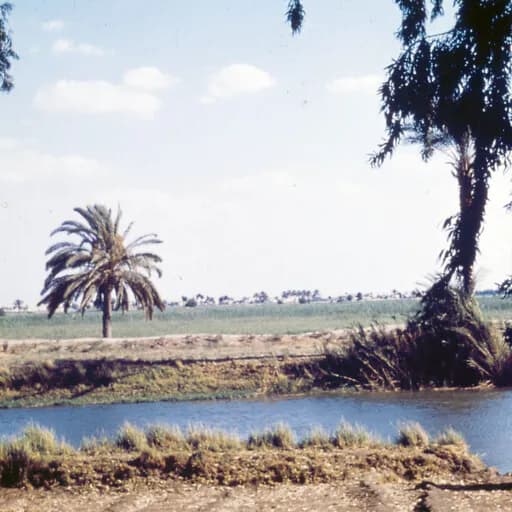
Succoth 2 is a settlement mentioned in 4 verses across 2 books of the Bible. Known today as Tell el Maskhuta.
Verses
4
Books
2
Confidence
Moderate
Coordinates
30.5527, 32.0990
Map
Loading map...
Key Verses About Succoth 2
“about six hundred thousand on foot who were men”Exodus 12:37 (KJV)
“and encamped in Etham”Exodus 13:20 (KJV)
“and encamped in Succoth.”Numbers 33:5 (KJV)
“and encamped in Etham”Numbers 33:6 (KJV)
What the Commentators Say
“**Verses 37-42** The children of Israel set forward without delay. A mixed multitude went with them. Some, perhaps, willing to leave their country, laid waste by plagues; others, out of curiosity; perhaps a few out of love to them and their religion. But there were always those among the Israelites who were not Israelites. Thus there are still hypocrites in the church. This great event was 430 years from the promise made to Abraham: see Ga 3:17. So long the promise of a settlement was unfulfilled. But though God's promises are not performed quickly, they will be, in their season. This is that night of the Lord, that remarkable night, to be celebrated in all generations. The great things God does for his people, are to be not only a few days' wonder, but to be remembered throughout all ages; especially the work of our redemption by Christ. This first passover-night was a night of the Lord, much to be observed; but the last passover-night, in which Christ was betrayed and in which the first passover, with the rest of the Jewish ceremonies, was done away, was a night of the Lord, much more to be observed. Then a yoke, heavier than that of Egypt, was broken from off our necks, and a land, better than that of Canaan, set before us. It was a redemption to be celebrated in heaven, for ever and ever.”
Matthew Henry's Concise Commentary on Exodus 12:37
“THE DEPARTURE OF ISRAEL, THEIR NUMBERS, AND THE TIME OF THE EGYPTIAN SOJOURN. (37-41) The two principal statements of this passage are—(1) that the sojourn of the Israelites in Egypt lasted four hundred and thirty years; and (2) that at the time of the departure the number of the “men” (*gëbârim*) was six hundred thousand. This latter statement is evidently a rough one, but it is confirmed, and even enlarged, by the more accurate estimate of Numbers 1, 2, which goes into particulars with respect to the several tribes, and makes the exact amount of the adult male population, exclusive of the Levites, to be 625,540 (Numbers 2:32). It would follow that the nation, at the time of its departure, was one of above two millions of souls. Two difficulties are raised with respect to this estimate:—(1) Could the Israelites possibly have increased during their sojourn in Egypt from the “seventy souls” who went down with Jacob to two millions? (2) Is it conceivable that such a multitude, with their flocks and herds, could have quitted Egypt on one day, and marched in a body through the narrow *wadys* of the Sinaitic region to the plain in front of Sinai? Could even that plain have contained them? With regard to the first point, before it can be decided we must ascertain what are the exact data. What is to be taken as the original number of those who “went down into Egypt?” what as the duration of the sojourn? It has been already shown (see the comment on Exodus 1:5) that the descendants of Jacob who entered Egypt were probably a hundred and thirty-two rather than seventy; that they were accompanied by their wives and husbands; that they took with them also their “households,” which were very numerous (see Note on Genesis 17:13); and that the entire number is fairly estimated at “several thousands.” Let us then place it at 3,000. The duration of the sojourn in Egypt, stated in the Hebrew text at 430 years, is reduced by the LXX. and Samaritan Versions to half the time: *i.e.,* to 215 years. If we accept Mr. Malthus’s statement, that in the absence of artificial checks population will double itself every twenty years, we shall find that 3,000 persons might, in the space of two centuries, increase to above 3,000,000; so that even the 215 years of the Greek and Samaritan Versions would admit of such a multiplication as that required. But as there is no sufficient reason for preferring the Versions to the Original, or the period of 215 to that of 430 years, we are entitled to regard the latter term as the real duration of the sojourn, in which case a doubling of the population every forty-five years would have produced the result indicated. Such a result under the circumstances, in the rich soil of Egypt, in the extensive territory granted to the Israelites, and with God’s special blessing on the people, is in no way surprising. The difficulty of handling so vast a body, and marching them from Goshen to the Red Sea, and from the Red Sea to Sinai, remains, and, no doubt, is considerable. But we must remember that as far as Marah the country was perfectly open, and allowed of any extension of the line of march on either flank. After this, the *wadys* were entered, and the real difficulties of the journey began. Probably the host spread itself out, and proceeded to the rendezvous in front of the Ras Sufsafeh by several routes, of which Moses traces only the one which he himself followed. The plain Er-Rahah, according to the calculations of the best engineers, would have contained the entire multitude; but it is unnecessary to suppose that all were at any one time present in it. The whole Sinaitic district was probably occupied by the flocks and herds, and the herdsmen who tended them. Many of the tents may have been pitched in the Wady-ed-Deir and the Seil Leja. All that the narrative requires is that the *main body* of the people should have been encamped in front of Sinai, have heard the Decalogue delivered, and consented to the covenant. (37) **From Rameses to Succoth.**—The difference between the Raamses of Exodus 1:11 and the Rameses of this passage is merely one of “pointing;” nor is there the least ground for supposing that a different place is intended. Pi-Ramesu was the main capital of the kings of the nineteenth dynasty, having superseded Tanis, of which it was a suburb. (See Note on Exodus 1:11.) Succoth has been identified by Dr. Brugsch with an Egyptian town called Thukot; but it is probably a Semitic word, signifying “tents” or “booths.” The district south-east of Tanis is one in which clusters of “booths” have been at all times common. Some one of these—situated, perhaps, near the modern Tel-Dafneh, fifteen miles south-east of Tanis—was the first halt of the Israelites.”
Ellicott's Commentary for English Readers on Exodus 12:37
Bible Verses Mentioning Succoth 2
Learn More
Nearby Biblical Places
Related Resources
Attribution
- Geographic data from OpenBible.info Bible Geocoding Data licensed under CC BY 4.0.
- Map tiles by OpenStreetMap contributors (ODbL 1.0).
- Image: Matson Collection.