Biblical Region
Sheba 1 in the Bible
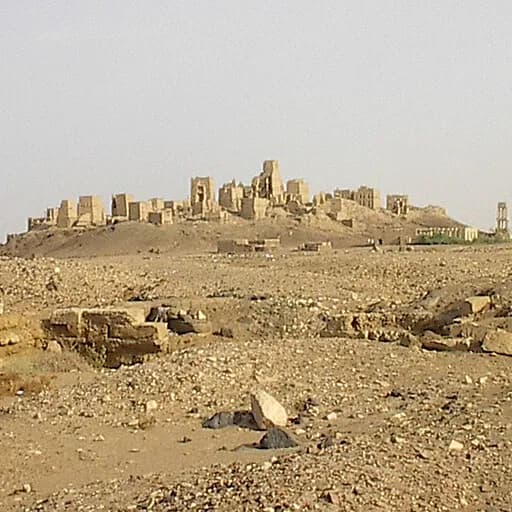
Sheba 1 is a region mentioned in 18 verses across 8 books of the Bible. Known today as Sheba.
Verses
18
Books
8
Confidence
Very High
Coordinates
15.3483, 44.2064
Map
Loading map...
Key Verses About Sheba 1
“she came to prove him with hard questions.”1 Kings 10:1 (KJV)
“and the house that he had built”1 Kings 10:4 (KJV)
“and of spices very great store”1 Kings 10:10 (KJV)
“whatever she asked”1 Kings 10:13 (KJV)
“she came to prove Solomon with hard questions at Jerusalem”2 Chronicles 9:1 (KJV)
What the Commentators Say
“Chapter 10 Chapter Outline The queen of Sheba's visit to Solomon.(1-13) Solomon's wealth.(14-29) **Verses 1-13** The queen of Sheba came to Solomon to hear his wisdom, thereby to improve her own. Our Saviour mentions her inquiries after God, by Solomon, as showing the stupidity of those who inquire not after God, by our Lord Jesus Christ. By waiting and prayer, by diligently searching the Scriptures, by consulting wise and experienced Christians, and by practising what we have learned, we shall be delivered from difficulties. Solomon's wisdom made more impression upon the queen of Sheba than all his prosperity and grandeur. There is a spiritual excellence in heavenly things, and in consistent Christians, to which no reports can do justice. Here the truth exceeded; and all who, through grace, are brought to commune with God, will say the one half was not told them of the pleasures and the advantages of wisdom's ways. Glorified saints, much more, will say of heaven, that the thousandth part was not told them, 1Co 2:9. She pronounced them happy that constantly attended Solomon. With much more reason may we say of Christ's servants, Blessed are they that dwell in his house; they will be still praising him. She made a noble present to Solomon. What we present to Christ, he needs not, but will have us do so to express our gratitude. The believer who has been with Jesus, will return to his station, discharge his duties with readiness, and from better motives; looking forward to the day when, being absent from the body, he shall be present with the Lord.”
Matthew Henry's Concise Commentary on 1 Kings 10:1
“(1) **The queen of Sheba.**—The name “Sheba” must be distinguished from *Seba*, or *Saba* (which begins with a different Hebrew letter), (*a*) The name Seba denotes a Cushite race (Genesis 10:7), connected, in Isaiah 43:3; Isaiah 45:14, with Egypt and Cush, and named with Sheba (“the kings of Sheba and Seba”)in the Psalm of Solomon (Psalm 72:10). Seba is, indeed, with great probability identified (see Jos. Ant. ii. 10, 2) with the Ethiopian city and island of Meroë. It is probably from confusion between Sheba and Saba that Josephus (Ant. viii. 6, 5) represents the queen of Sheba as a “queen of Egypt and Ethiopia.” (*b*) The name “Sheba” is found in the ethnological lists of Genesis 10:7, among the descendants of Cush of the Hamite race, in Genesis 10:28, among the Semitic Joktanites, and in Genesis 25:3, among the Abrahamic children of Keturah. The kingdom of Sheba referred to in this passage must certainly be placed in Arabia Felix, the habitation of the Joktanite race (in which the Keturahites appear to have been merged), for the Cushite Sheba is probably to be found elsewhere on the Persian Gulf. The queen of Sheba would therefore be of Semitic race, not wholly an alien from the stock of Abraham. **The fame of Solomon concerning the name of the Lord.**—If the reading of the text be correct, the phrase “concerning: the name of the Lord” (to which there is nothing to correspond in 2Chronicles 9:1) must refer to the constant connection of the fame of Solomon—especially in relation to his wisdom, which is here mainly referred to—with the name of Jehovah, as the God to whom, in the erection of the Temple, he devoted both his treasure and himself. **Hard questions**—or, riddles. The Arabian legends preserved in the Koran enumerate a list of questions and puzzles, propounded by the queen and answered by Solomon, too puerile to be worth mention. The “hard questions” (in which Solomon is said by Josephus to have had a contest with Hiram also) must surely have been rather those enigmatic and metaphorical sayings, so familiar to Eastern philosophy, in which the results of speculation, metaphysical or religious, are tersely embodied. The writings representing the age of Solomon—Job, Proverbs, and (whatever be its actual date) Ecclesiastes—are all concerned with these great problems, moral and speculative, which belong to humanity as such, especially in its relation to God. In solving these problems, rather than the merely fantastic ingenuity of what we call riddles, the wisdom of Solomon would be worthily employed.”
Ellicott's Commentary for English Readers on 1 Kings 10:1
Bible Verses Mentioning Sheba 1
Learn More
Nearby Biblical Places
Related Resources
Attribution
- Geographic data from OpenBible.info Bible Geocoding Data licensed under CC BY 4.0.
- Map tiles by OpenStreetMap contributors (ODbL 1.0).
- Image: Tapatio.