Biblical River
Pishon in the Bible
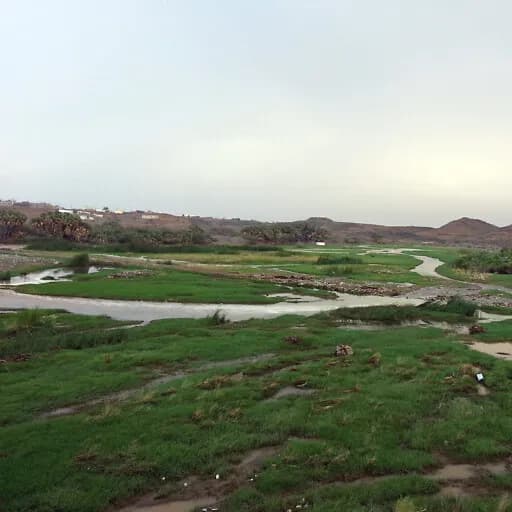
Pishon is a river mentioned in 1 verse across 1 book of the Bible. Known today as Wadi Baysh.
Verses
1
Books
1
Confidence
Low
Coordinates
17.1197, 42.4164
Map
Loading map...
Key Verses About Pishon
“where there is gold;”Genesis 2:11 (KJV)
What the Commentators Say
“**Verses 8-14** The place fixed upon for Adam to dwell in, was not a palace, but a garden. The better we take up with plain things, and the less we seek things to gratify pride and luxury, the nearer we approach to innocency. Nature is content with a little, and that which is most natural; grace with less; but lust craves every thing, and is content with nothing. No delights can be satisfying to the soul, but those which God himself has provided and appointed for it. Eden signifies delight and pleasure. Wherever it was, it had all desirable conveniences, without any inconvenience, though no other house or garden on earth ever was so. It was adorned with every tree pleasant to the sight, and enriched with every tree that yielded fruit grateful to the taste and good for food. God, as a tender Father, desired not only Adam's profit, but his pleasure; for there is pleasure with innocency, nay there is true pleasure only in innocency. When Providence puts us in a place of plenty and pleasure, we ought to serve God with gladness of heart in the good things he gives us. Eden had two trees peculiar to itself. 1. There was the tree of life in the midst of the garden. Of this man might eat and live. Christ is now to us the Tree of life, Re 2:7; 22:2; and the Bread of life, Joh 6:48, 51. 2. There was the tree of the knowledge of good and evil, so called because there was a positive revelation of the will of God about this tree, so that by it man might know moral good and evil. What is good? It is good not to eat of this tree. What is evil? It is evil to eat of this tree. In these two trees God set before Adam good and evil, the blessing and the curse.”
Matthew Henry's Concise Commentary on Genesis 2:11
“(11, 12) **The name of the first is Pison.**—“The full-flowing” (Gesenius), or “free-streaming” (Fürst). Neither derivation has much authority for it in the Hebrew language, and we must wait for the true explanation till the cuneiform inscriptions have been more thoroughly examined. As two of the four rivers of Paradise rise in Armenia, so we must probably seek the other two there; but the conjectures of commentators have thus far suggested no probable identification of this stream. **Compasseth.**—This word, without strictly meaning *to go round, *gives the idea of a devious course (comp. 1Samuel 7:16; Song of Solomon 3:3), as if the river had now reached a level plain. **Havilah **may mean *sandy land *(Deutsch), or *circuit region. *There seems to have been more than one country of this name; but the most probable is that in South-Western Arabia, afterwards colonised by the Joktanites (Genesis 10:29), which this river skirted rather than traversed. But we know of no such river, rising in Armenia or elsewhere, which answers to this description now. Besides gold of great purity, pronounced emphatically “good,” this land produced” bdellium,” a scented gum, to which manna is compared (Numbers 11:7), though the meaning even there is uncertain. Instead of *bedolach, *bdellium, the Syriac reads *berulchê, *that is, the same word in the plural, but with *d *instead of r. These two letters being very similar, not merely in the square Hebrew alphabet now in use, but in the original Samaritan characters, are constantly interchanged in manuscripts; and as *berulchê *means *pearls, *the sense agrees better with the other productions of Havilah, gold and onyx stones. As *bedolach *is a quadriliteral, while Hebrew words have only three root letters, we must look to the Accadi an language for its true signification, if this be really the right reading. **The onyx stone.**—Though there is considerable authority for this translation, yet probably the LXX., supported by most ancient authorities, are right in regarding this gem as the beryl of a light green colour (leek-stone, LXX.). The root signifies something *pale, *while the onyx has its name from its markings resembling those of the human nail.”
Ellicott's Commentary for English Readers on Genesis 2:11
Bible Verses Mentioning Pishon
Nearby Biblical Places
Related Resources
Attribution
- Geographic data from OpenBible.info Bible Geocoding Data licensed under CC BY 4.0.
- Map tiles by OpenStreetMap contributors (ODbL 1.0).
- Image: majed.m.g.