Biblical Settlement
Carchemish in the Bible
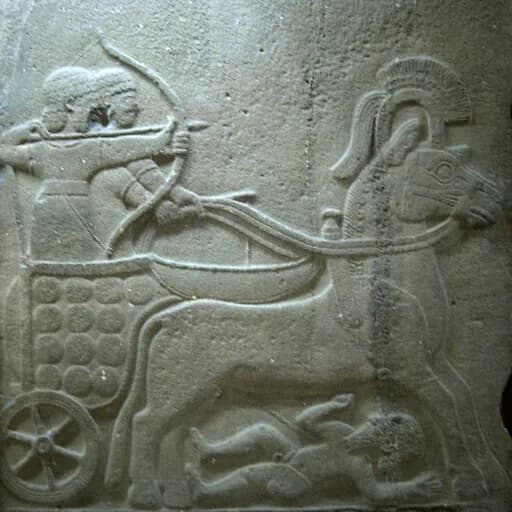
Carchemish is a settlement mentioned in 3 verses across 3 books of the Bible. Known today as Jerabis.
Verses
3
Books
3
Confidence
Very High
Coordinates
36.8297, 38.0150
Map
Loading map...
Key Verses About Carchemish
“when Josiah had prepared the temple”2 Chronicles 35:20 (KJV)
“which was by the river Euphrates in Carchemish”Jeremiah 46:2 (KJV)
What Does “Carchemish” Mean?
כַּרְכְּמִישׁ (Karkᵉmîysh, Hebrew) — “fortress of Chemosh”
Karkemish, a place in Syria
H3751 in Strong's Concordance →What the Commentators Say
“**Verses 5-19** See what a change sin made. The king of Assyria, in his pride, thought to act by his own will. The tyrants of the world are tools of Providence. God designs to correct his people for their hypocrisy, and bring them nearer to him; but is that Sennacherib's design? No; he designs to gratify his own covetousness and ambition. The Assyrian boasts what great things he has done to other nations, by his own policy and power. He knows not that it is God who makes him what he is, and puts the staff into his hand. He had done all this with ease; none moved the wing, or cried as birds do when their nests are rifled. Because he conquered Samaria, he thinks Jerusalem would fall of course. It was lamentable that Jerusalem should have set up graven images, and we cannot wonder that she was excelled in them by the heathen. But is it not equally foolish for Christians to emulate the people of the world in vanities, instead of keeping to things which are their special honour? For a tool to boast, or to strive against him that formed it, would not be more out of the way, than for Sennacherib to vaunt himself against Jehovah. When God brings his people into trouble, it is to bring sin to their remembrance, and humble them, and to awaken them to a sense of their duty; this must be the fruit, even the taking away of sin. When these points are gained by the affliction, it shall be removed in mercy. This attempt upon Zion and Jerusalem should come to nothing. God will be as a fire to consume the workers of iniquity, both soul and body. The desolation should be as when a standard-bearer fainteth, and those who follow are put to confusion. Who is able to stand before this great and holy Lord God?”
Matthew Henry's Concise Commentary on Isaiah 10:9
“**JOSIAH SLAIN IN BATTLE AGAINST NECHO KING OF EGYPT** (2Chronicles 35:20-27. Comp. 2Kings 23:29-30; 3 Ezra 1:23-30). (20) **After all this.**—Comp. the similar, “after these matters, and this faithfulness” (2Chronicles 32:1). The phrase calls attention to the difference between the event and what might naturally have been expected. In spite of Josiah’s fidelity to Jehovah, *this* was his end. **Necho king of Egypt came up.**—Kings, “In his days came up Pharaoh Necho, king of Egypt.” So LXX. here. Syriac, “Pharaoh the Lame, king of Egypt.” *Pharaoh* is simply “the king;” Coptic *Pouro,* or *Perro* (*pi* “the,” *ouro* or *r*̄*ro,* “king”). The Hebrew spelling *Pa’rōh* appears to be due to an assimilation of the Egyptian word to the Hebrew *pĕrā’ôth,* “leaders” (Judges 5:1). An inscription of Assurbanipal gives a list of twenty subject kings appointed by Esarhaddon his father to bear rule in Egypt, the first name in the list being that of *“Nikû sar ali Mimpi u ali Sâa,” i.e.,* “Necho, king of the city of Memphis, and the city of Sais.” Assurbanipal twice reinstated this Necho (Necho I., circ. 664 B.C. ) after vanquishing Tirhakah. The Necho of our text is Necho II., who reigned circ. 610 B.C. (See the Note on 2Kings 23:29.) **Against Charchemish.**—*At Charchemish.* Syriac and Arabic, “to assault Mabûg,” *i.e.,* Hierapolis. Necho’s enemy was “the king of Assyria” (2Kings 23:29; so LXX. here), *i.e.,* Esarhaddon II. (Saracus), the last of the rulers of Nineveh; not Nabopalassar, king of Babylon, for the Assyrian empire had not yet fallen before the united assault of the Medes and the Babylonians. Charchemish has been identified with the modern *Jirbâs,* on the western bank of the middle Euphrates. Its situation, as Schrader observes, suits an intended expedition against Nineveh and Assyria, rather than against Babylon. It was one of the great Hittite capitals, and inscriptions in hieroglyphics, similar to those of Hamath, have recently been disinterred on the site, and brought thence to the British Museum. The name means, “Fortress of Mîsh.” Comp. “Mesha” (Genesis 10:30), the Assyrian *Masu, i.e.,* the part of the Syrian desert which ran along the right bank of the Euphrates. The place was also called *Tel-Mîsh,* “mound of Mîsh;” Greek, Τελμησσός*.* (Thenius thinks the phrase, “against Charchemish,” was originally a marginal gloss, noting the place of the final and decisive encounter between Necho and the Babylonians). **Josiah went out against him.**—To this statement Kings only adds that Necho “slew him at Me-giddo, when he saw him,” *i.e.,* at the outset of the encounter. The chronicler, therefore, has derived the details of the following verses from another source (2Chronicles 35:21-25).”
Ellicott's Commentary for English Readers on 2 Chronicles 35:20
Bible Verses Mentioning Carchemish
Learn More
Nearby Biblical Places
Related Resources
Attribution
- Geographic data from OpenBible.info Bible Geocoding Data licensed under CC BY 4.0.
- Map tiles by OpenStreetMap contributors (ODbL 1.0).
- Image: Georges Jansoone.