Biblical Region
Mesopotamia in the Bible
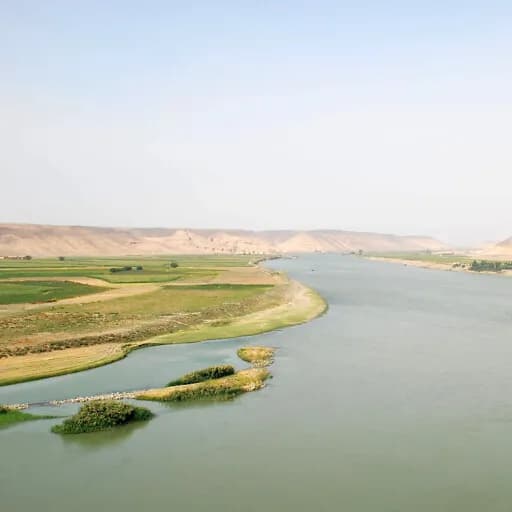
Mesopotamia is a region mentioned in 7 verses across 5 books of the Bible. Known today as Harran.
Verses
7
Books
5
Confidence
Very High
Coordinates
36.8644, 39.0328
Map
Loading map...
Key Verses About Mesopotamia
“of his master's camels”Genesis 24:10 (KJV)
“when you came forth out of Egypt”Deuteronomy 23:4 (KJV)
“and he sold them into the hand of Cushan Rishathaim king of Mesopotamia: and the children of Israel served Cushan Rishathaim eight years.”Judges 3:8 (KJV)
“and he judged Israel; and he went out to war”Judges 3:10 (KJV)
“Hanun and the children of Ammon sent one thousand talents of silver to hire them chariots and horsemen out of Mesopotamia”1 Chronicles 19:6 (KJV)
What Does “Mesopotamia” Mean?
Μεσοποταμία (Mesopotamía, Greek)
Mesopotamia (as lying between the Euphrates and the Tigris
G3318 in Strong's Concordance →What the Commentators Say
“**Verses 10-28** Abraham's servant devoutly acknowledged God. We have leave to be particular in recommending our affairs to the care of Divine providence. He proposes a sign, not that he intended to proceed no further, if not gratified in it; but it is a prayer that God would provide a good wife for his young master; and that was a good prayer. She should be simple, industrious, humble, cheerful, serviceable, and hospitable. Whatever may be the fashion, common sense, as well as piety, tells us, these are the proper qualifications for a wife and mother; for one who is to be a companion to her husband, the manager of domestic concerns, and trusted to form the minds of children. When the steward came to seek a wife for his master, he did not go to places of amusement and sinful pleasure, and pray that he might meet one there, but to the well of water, expecting to find one there employed aright. He prayed that God would please to make his way in this matter plain and clear before him. Our times are in God's hand; not only events themselves, but the times of them. We must take heed of being over-bold in urging what God should do, lest the event should weaken our faith, rather than strengthen it. But God owned him by making his way clear. Rebekah, in all respects, answered the characters he sought for in the woman that was to be his master's wife. When she came to the well, she went down and filled her pitcher, and came up to go home with it. She did not stand to gaze upon the strange man his camels, but minded her business, and would not have been diverted from it but by an opportunity of doing good. She did not curiously or confidently enter into discourse with him, but answered him modestly. Being satisfied that the Lord had heard his prayer, he gave the damsel some ornaments worn in eastern countries; asking at the same time respecting her kindred. On learning that she was of his master's relations, he bowed down his head and worshipped, blessing God. His words were addressed to the Lord, but being spoken in the hearing of Rebekah, she could perceive who he was, and whence he came.”
Matthew Henry's Concise Commentary on Genesis 24:10
“(10) **And the servant.**—Why did not Isaac go himself in search of a wife? We must not conclude from his inactivity that the matter had not his full concurrence; but he was the heir, and according to Oriental manners it was fit that the choice should be left to a trusty deputy. What is peculiar in the narrative is the distance to which the servant was sent, and the limitation of his choice to a particular family; but both these peculiarities arose from the religious considerations involved. Jacob subsequently went in person on a similar errand, but we must remember that Rebekah was also seeking for him a place of safety. But for this, and had he been the sole heir, she would probably have sent an embassy to her brother’s house to ask for him a wife. **For all the goods of his master were in his hand.**—Rather, *with every good thing of his master’s in his hand. *It was necessary not only that the servant should take with him such a convoy as would ensure his safety and that of the bride on their return, but also such rich presents as would adequately represent Abraham’s wealth and power. **Mesopotamia.**—Heb., *Aram-Naharaim: *that is, *“*Aram of the two rivers.” Aram means *highland, *but it became the title of the whole Syrian race; and here Aram-Naharaim means that part of Syria which lies between the Tigris and Euphrates. It was a mountainless region, except towards the north. For Padan-aram, see Note on Genesis 25:20. **The city of Nahor.**—This was Charran (Genesis 27:43). Nahor had probably migrated thither from Ur when Terah was growing old, that he might occupy the pastures which Abraham was about to abandon.”
Ellicott's Commentary for English Readers on Genesis 24:10
Bible Verses Mentioning Mesopotamia
Learn More
Nearby Biblical Places
Related Resources
Attribution
- Geographic data from OpenBible.info Bible Geocoding Data licensed under CC BY 4.0.
- Map tiles by OpenStreetMap contributors (ODbL 1.0).
- Image: Bertramz.