Biblical Settlement
Haran in the Bible
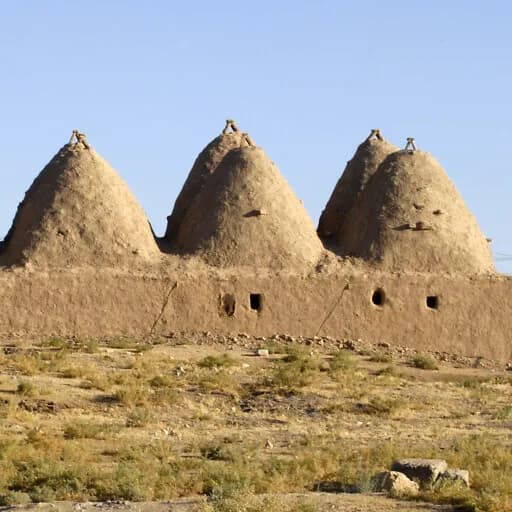
Haran is a settlement mentioned in 12 verses across 5 books of the Bible. Known today as Harran.
Verses
12
Books
5
Confidence
Very High
Coordinates
36.8644, 39.0328
Map
Loading map...
Key Verses About Haran
“Lot the son of Haran”Genesis 11:31 (KJV)
“And the days of Terah were two hundred and five years: and Terah died in Haran.”Genesis 11:32 (KJV)
“as Yahweh had spoken to him. Lot went with him. Abram was seventy-five years old when he departed out of Haran.”Genesis 12:4 (KJV)
“Lot his brother's son”Genesis 12:5 (KJV)
“my son”Genesis 27:43 (KJV)
What Does “Haran” Mean?
חָרָן (Chârân, Hebrew) — “mountaineer”
Charan, the name of a man and also of a place
H2771 in Strong's Concordance →What the Commentators Say
“**Verses 27-32** Here begins the story of Abram, whose name is famous in both Testaments. Even the children of Eber had become worshippers of false gods. Those who are through grace, heirs of the land of promise, ought to remember what was the land of their birth; what was their corrupt and sinful state by nature. Abram's brethren were, Nahor, out of whose family both Isaac and Jacob had their wives; and Haran, the father of Lot, who died before his father. Children cannot be sure that they shall outlive their parents. Haran died in Ur, before the happy removal of the family out of that idolatrous country. It concerns us to hasten out of our natural state, lest death surprise us in it. We here read of Abram's departure out of Ur of the Chaldees, with his father Terah, his nephew Lot, and the rest of his family, in obedience to the call of God. This chapter leaves them about mid-way between Ur and Canaan, where they dwelt till Terah's death. Many reach to Charran, and yet fall short of Canaan; they are not far from the kingdom of God, and yet never come thither.”
Matthew Henry's Concise Commentary on Genesis 11:31
“(31) **They went forth with them.**—This may possibly mean that they went forth in one body; but the phrase is strange, and the Samaritan, followed by the LXX. and Vulg.,by a slight transposition of the letters reads, “And he (Terah) brought them forth.” **Haran.**—The Charran of Acts 7:4, that is, Carrhae in North-west Mesopotamia, about twenty geographical miles south-east of Edessa. The name must not be confounded with that of Haran, the father of Lot, as really it is in the Heb. *Kharan, *and was so called in Accadian times, in which language the word means *“*road,” being, according to Mr. Sayce, the key of the highway from the east to the west. It was both a very early and a very late outpost of Chaldean power. (Tomkins’ *Studies on Times of Abraham, 55ff*.) Terah’s migration was partly perhaps a movement of a tribe of the Semites northwards (see Note on Genesis 11:28), made restless by the Elamites, who about this time overran Western Asia; but chiefly it had a religious motive: for Ur was the especial seat of the worship of the moon-god, Sin; and though Terah had not attained to the purity of Abraham’s faith, yet neither was he altogether an idolater. But why did they intend “to go into the land of Canaan?” As Abram subsequently continued this migration in simple dependance upon God’s guidance (Genesis 12:1), it was probably the Divine rather than the human purpose that is here expressed. Still, there may have been some tradition in the family, or knowledge handed down from patriarchal times, which made them look upon Canaan as their land of hope; and the expedition of Amraphel, king of Shinar, and others against the south of Palestine, recorded in Genesis 14:1-16, and confirmed by our large present knowledge of these popular movements, shows that we must not assume that, far removed from one another as were Babylonia and Canaan, therefore they were lands mutually unknown. We gather also that the Divine summons came to Abram in Ur (see «Genesis 15:7; Nehemiah 9:7; Acts 7:2), but we learn in Genesis 12:1 that his final destination was not then definitely told him.”
Ellicott's Commentary for English Readers on Genesis 11:31
People Connected to Haran
Bible Verses Mentioning Haran
Learn More
Nearby Biblical Places
Related Resources
Attribution
- Geographic data from OpenBible.info Bible Geocoding Data licensed under CC BY 4.0.
- Map tiles by OpenStreetMap contributors (ODbL 1.0).
- Image: Zhengan.