Biblical Field
Washer’s Field in the Bible
Washer’s Field is a field mentioned in 3 verses across 2 books of the Bible. Known today as Bir Ayub.
Verses
3
Books
2
Confidence
Moderate
Coordinates
31.7672, 35.2360
Map
Loading map...
Key Verses About Washer’s Field
“they came and stood by the conduit of the upper pool”2 Kings 18:17 (KJV)
“Go out now to meet Ahaz, you, and Shearjashub your son, at the end of the conduit of the upper pool, on the highway of the fuller's field.,Then said the LORD unto Isaiah, Go forth now to meet Ahaz, thou, and Shearjashub thy son, at the end of the conduit of the upper pool in the highway of the fuller's field;, וַיֹּאמֶר יְהוָה אֶל־יְשַׁעְיָהוּ צֵא־נָא לִקְרַאת אָחָז אַתָּה וּשְׁאָר יָשׁוּב בְּנֶךָ אֶל־קְצֵה תְּעָלַת הַבְּרֵכָה הָעֶלְיוֹנָה אֶל־מְסִלַּת שְׂדֵה כוֹבֵס׃ ,Then said the LORD unto Isaiah: Go forth now to meet Ahaz”Isaiah 7:3 (KJV)
“And the king of Assyria sent Rabshakeh from Lachish to Jerusalem unto king Hezekiah with a great army. And he stood by the conduit of the upper pool in the highway of the fuller's field.”Isaiah 36:2 (KJV)
What the Commentators Say
“**Verses 17-20** One may guess how people stand affected to God, by observing how they stand affected to his people and ministers. It has been the lot of the best and most useful men, like Elijah, to be called and counted the troublers of the land. But those who cause God's judgments do the mischief, not he that foretells them, and warns the nation to repent.”
Matthew Henry's Concise Commentary on 2 Kings 18:17
“(17) **And the king of Assyria sent . . .**—Apparently in careless violation of his word, as Josephus states. **Tartan.**—Rather, *the commander-in-chief;* called in Assyrian *tur-ta-nu,* a word of Sumerian origin, imitated in the Hebrew *tartān* here and in Isaiah 20:1. **Rabsaris and Rab-shaken.**—Two other official titles. The Rabsaris has not been identified on the Assyrian monuments. The Hebrew word suggests “chief eunuch,” or “courtier.” (Comp. Jeremiah 39:3.) Such an official would accompany the *tartan* as scribe The term *Rab-shakeh,* as a Hebrew expression, signifies “chief cup-bearer;” but it is really only a Hebraised form of the Assyrian title *rab-sak,* “chief officer,” applied to superior military commanders or staff officers. In Isaiah 36:2 only the Rabshakeh is mentioned; in 2Chronicles 33:9 the three foreign titles are naturally displaced by the general expression, “his servants.” **And they went up and came**—*i.e.,* the Assyrian army-corps under the *tartan,* &c. **And when they were come up, they came.**—Literally, as before, *And they went up and came.* This is omitted in LXX., Syriac, Vulg., and Arabic, but the phrase refers this time specially to the three principals, who came within speaking distance of the walls. **The conduit** **. . .** **field.**—Isaiah 7:3. The upper pool (called Gihon in 1Kings 1:33) on the “highway of the fuller’s field,” *i.e.,* the Joppa road, on the west side of the city, is different from the upper pool in the Tyropœon, which is also called “the artificial pool” (Nehemiah 3:16), and “the old pool” (Isaiah 22:11). Below this latter was a pool, dug in Hezo-kiah’s time, called in Isaiah 22:9 “the lower pool,” and in Nehemiah 3:15 “the pool of Siloah.””
Ellicott's Commentary for English Readers on 2 Kings 18:17
Bible Verses Mentioning Washer’s Field
Nearby Biblical Places
Related Resources
Attribution
- Geographic data from OpenBible.info Bible Geocoding Data licensed under CC BY 4.0.
- Map tiles by OpenStreetMap contributors (ODbL 1.0).
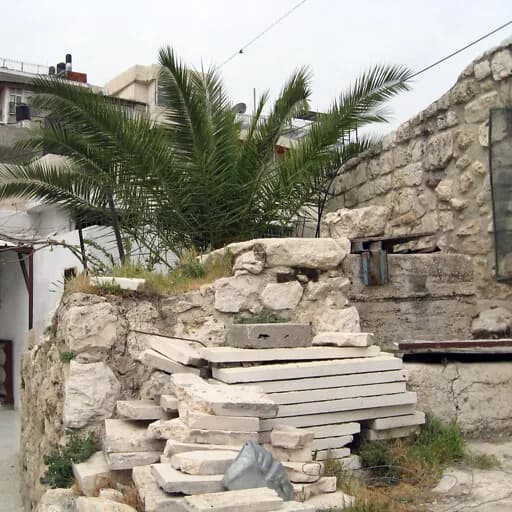
- Image: kfar hatemanim.