Biblical Pool
Shiloah in the Bible
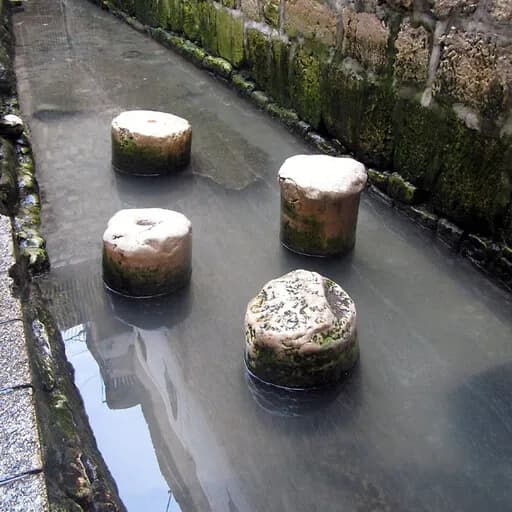
Shiloah is a pool mentioned in 1 verse across 1 book of the Bible. Known today as Pool of Siloam.
Verses
1
Books
1
Confidence
Very High
Coordinates
31.7706, 35.2350
Map
Loading map...
What the Commentators Say
“**Verses 5-7** The Jewish church came up from the wilderness, supported by Divine power and favour. The Christian church was raised from a low, desolate condition, by the grace of Christ relied on. Believers, by the power of grace, are brought up from the wilderness. A sinful state is a wilderness in which there is no true comfort; it is a wandering, wanting state: There is no coming out of this wilderness, but leaning on Christ as our Beloved, by faith; not leaning to our own understanding, nor trusting in any righteousness of our own; but in the strength of him, who is the Lord our Righteousness. The words of the church to Christ which follow, entreat an abiding place in his love, and protection by his power. Set me as a seal upon thine heart; let me always have a place in thine heart; let me have an impression of love upon thine heart. Of this the soul would be assured, and without a sense thereof no rest is to be found. Those who truly love Christ, are jealous of every thing that would draw them from him; especially of themselves, lest they should do any thing to provoke him to withdraw from them. If we love Christ, the fear of coming short of his love, or the temptations to forsake him, will be most painful to us. No waters can quench Christ's love to us, nor any floods drown it. Let nothing abate our love to him. Nor will life, and all its comforts, entice a believer from loving Christ. Love of Christ, will enable us to repel and triumph over temptations from the smiles of the world, as well as from its frowns.”
Matthew Henry's Concise Commentary on Isaiah 8:6
“(6) **Forasmuch as this people refuseth the waters of Shiloah . . .**—Grammatically, the words “this people” might seem to refer to Judah, and suggest the thought that the tyranny of Ahaz had made him so unpopular that his subjects welcomed the invaders. On this view Ahaz sought the alliance with Tiglath-pilneser as against his own subjects no less than against Syria or Ephraim. He was as a Ferdinand of Naples falling back on Austria to protect him against Garibaldi and Victor Emmanuel. What line was the prophet to take? Was he to take the side of the king, or that of his rebellious subjects who were ready to sacrifice their independence? As it is, he sides with neither, and has a warning for each. Each is running blindly into destruction. The prophet could hardly have blamed the people of Syria and Israel for following their own kings; but it was for him a strange and monstrous thing that Judah should follow their example. We must remember, too, that in spite of the weakness and wickedness of Ahaz, the prophet’s hopes rested on the house of David (Isaiah 11:1), and that Hezekiah was already old enough to justify that hope. The “waters of Shiloah that go softly,” issuing from the slope between Moriah and Zion, “fast by the oracles of God” (Psalm 46:4; John 9:7), presenting so striking a contrast to the great rivers, Nile, Euphrates, Hiddekel (Tigris), on which stood the capitals of great empires, or even to the Abana and Pharpar of Syria, and the Jordan of Ephraim, were a natural symbol of the ideal polity and religion of Judah. (Comp. Ezekiel 47:1-5.) In acting as they did the people were practically apostatising as much as “that king Ahaz” of 2Chronicles 28:22.”
Ellicott's Commentary for English Readers on Isaiah 8:6
Bible Verses Mentioning Shiloah
Nearby Biblical Places
Related Resources
Attribution
- Geographic data from OpenBible.info Bible Geocoding Data licensed under CC BY 4.0.
- Map tiles by OpenStreetMap contributors (ODbL 1.0).
- Image: Tamar Hayardeni.