Biblical Settlement
Sychar in the Bible
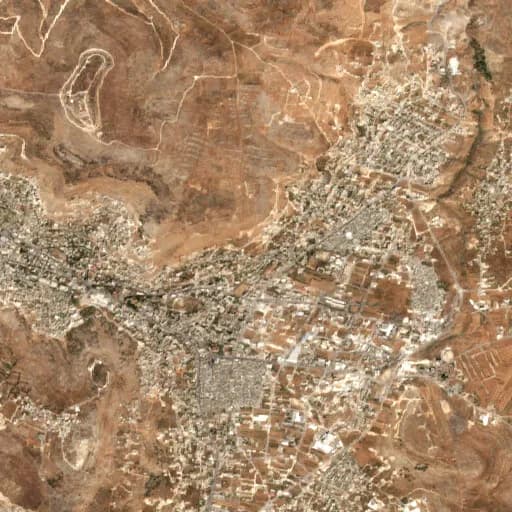
Sychar is a settlement mentioned in 1 verse across 1 book of the Bible. Known today as Askar.
Verses
1
Books
1
Confidence
High
Coordinates
32.2178, 35.2890
Map
Loading map...
Key Verses About Sychar
“called Sychar”John 4:5 (KJV)
What Does “Sychar” Mean?
What the Commentators Say
“**Verses 4-26** There was great hatred between the Samaritans and the Jews. Christ's road from Judea to Galilee lay through Samaria. We should not go into places of temptation but when we needs must; and then must not dwell in them, but hasten through them. We have here our Lord Jesus under the common fatigue of travellers. Thus we see that he was truly a man. Toil came in with sin; therefore Christ, having made himself a curse for us, submitted to it. Also, he was a poor man, and went all his journeys on foot. Being wearied, he sat thus on the well; he had no couch to rest upon. He sat thus, as people wearied with travelling sit. Surely, we ought readily to submit to be like the Son of God in such things as these. Christ asked a woman for water. She was surprised because he did not show the anger of his own nation against the Samaritans. Moderate men of all sides are men wondered at. Christ took the occasion to teach her Divine things: he converted this woman, by showing her ignorance and sinfulness, and her need of a Saviour. By this living water is meant the Spirit. Under this comparison the blessing of the Messiah had been promised in the Old Testament. The graces of the Spirit, and his comforts, satisfy the thirsting soul, that knows its own nature and necessity. What Jesus spake figuratively, she took literally. Christ shows that the water of Jacob's well yielded a very short satisfaction. Of whatever waters of comfort we drink, we shall thirst again. But whoever partakes of the Spirit of grace, and the comforts of the gospel, shall never want that which will abundantly satisfy his soul. Carnal hearts look no higher than carnal ends. Give it me, saith she, not that I may have everlasting life, which Christ proposed, but that I come not hither to draw. The carnal mind is very ingenious in shifting off convictions, and keeping them from fastening. But how closely our Lord Jesus brings home the conviction to her conscience! He severely reproved her present state of life. The woman acknowledged Christ to be a prophet. The power of his word in searching the heart, and convincing the conscience of secret things, is a proof of Divine authority. It should cool our contests, to think that the things we are striving about are passing away. The object of worship will continue still the same, God, as a Father; but an end shall be put to all differences about the place of worship. Reason teaches us to consult decency and convenience in the places of our worship; but religion gives no preference to one place above another, in respect of holiness and approval with God. The Jews were certainly in the right. Those who by the Scriptures have obtained some knowledge of God, know whom they worship. The word of salvation was of the Jews. It came to other nations through them. Christ justly preferred the Jewish worship before the Samaritan, yet here he speaks of the former as soon to be done away. God was about to be revealed as the Father of all believers in every nation. The spirit or the soul of man, as influenced by the Holy Spirit, must worship God, and have communion with him. Spiritual affections, as shown in fervent prayers, supplications, and thanksgivings, form the worship of an upright heart, in which God delights and is glorified. The woman was disposed to leave the matter undecided, till the coming of the Messiah. But Christ told her, I that speak to thee, am He. She was an alien and a hostile Samaritan, merely speaking to her was thought to disgrace our Lord Jesus. Yet to this woman did our Lord reveal himself more fully than as yet he had done to any of his disciples. No past sins can bar our acceptance with him, if we humble ourselves before him, believing in him as the Christ, the Saviour of the world.”
Matthew Henry's Concise Commentary on John 4:5
“(5) The “Samaria” of this chapter is the province into which the older kingdom had degenerated, and which took its name from the capital city. This was the Shomĕron built by Omri, on a hill purchased from Shemer (1Kings 16:23-24). The city was given by Augustus to Herod the Great, who rebuilt it, and called it after the Emperor, Sebaste, a name which survives in the modern village *Sebustiêh.* **Sychar** involves questions of greater uncertainty. The reading may be regarded as beyond doubt, the attempts to substitute “Sychem,” or “Sichem” being obviously made to avoid the topographical difficulty. The older geographers, followed by many modern commentators, suppose the word to be an intentional variation of the word Sychem, by which the Jews expressed their contempt for the city of the Samaritans, the sound being very nearly that of the Hebrew words for “lie” and “drunken.” Others suppose the change of termination is a natural dialectic variation. (Comp. *Ben,* the Hebrew for son, as in *Benjamin,* Genesis 35:18, which in the later language became *Bar,* as in Simon *Bar-*Jona, Matthew 16:17.) These explanations assume that Sychar is the same place as Shechem; but it is very improbable that St. John would have spoken of a city so well known as Shechem with the prefix “which is called,” or would have thought it necessary to define it as “near to the parcel of ground. . . .” The only other places with the same prefix are Ephraim (John 11:54), the Pavement (John 19:13), and Golgotha (John 19:17), but in the latter instances, as in the mention of Thomas called Didymus (John 11:16; John 20:24), the words do not imply a soubriquet (comp. Farrar, *Life of Christ,* i. 206, note, and Grove in Smith’s *Dictionary of Bible,* “Sychar”), but are a citation of the names in Hebrew and Greek, for the benefit of Greek readers. To assert that Sychar is meant to convey a double meaning is to imply that this would be understood by readers for whom it is necessary to translate Gabbatha and Golgotha, Thomas and Cephas (John 1:42), for whom Messias has been rendered in Greek in John 1:41, and is to be again in this very discourse (John 4:25). Shechem, moreover, was then known by the Greek name Neapolis, which has become the present *Naplûs* (see Ewald *in loc.,* and comp. Jos. *Wars,* iv.), and this name would have been as natural in this Gospel as, *e.g.,* Tiberias, which is found in it only (John 6:1; John 6:23; John 21:1). Nor can it be said that Shechem was near to Jacob’s well, for admitting that the old city extended considerably “farther eastward than at present,” it must still have been more than a mile distant. As early as the fourth century, Sychar was distinguished from Shechem by Eusebius, Jerome, and the Bordeaux Pilgrim, and the name also occurs in the Talmud. (See quotations in Wieseler’s *Synopsis,* p. 231 of the Eng. Trans.) It is still found in the modern village *Askar,* about half a mile north from Jacob’s well. A plan and description of the neighbourhood, by Dr. Rosen, Prussian Consul at Jerusalem, appeared in the *Journal of the German Oriental Society* (xiv. 634), and the results of this are now accessible to the English reader in the translation of Caspari’s *Introduction* (p. 124). (Comp. Dr. Thomson’s *The Land and the Book,* John 31) The identification is accepted by Ewald, Godet, and Luthardt, among modern writers. Mr. Grove (Art. “Sychar,” as above), inclines to it, but, as he says, “there is an etymological difficulty . . . ‘Askar begins with the letter ‘Ain, which Sychar does not appear to have contained; a letter too stubborn and enduring to be easily either dropped or assumed in a name.” One is tempted to think it possible that this ‘Ain is the first letter of the word for Spring or Fountain, the plural of which occurs in Ænon, in John 3:23, and that *‘A-Sychar* (well of Sychar) = *‘Askar.* **The parcel of ground that Jacob gave to his son Joseph.**—The reference is to the blessing of Joseph in Genesis 48:22, which is translated by Kalisch, “And I give to thee one portion above thy brethren, which I take out of the hand of the Amorite with my sword and with my bow.” The patriarch is confident that he will, in his posterity, drive out the Amorite and possess the land promised him by God (John 4:4; John 4:21). In that land there is a portion where Abraham had raised his first altar, and received the first promise that his seed should possess that land (Genesis 12:6-7). That portion had been his own first halting-place on his return from Padan-aram; and he, too, had erected an altar there, in a parcel of a field where his tent rested, which he bought for a hundred pieces of money, and made it sacred to El, the God of Israel (Genesis 33:18-20). It comes to his mind now, when in the last days of his life he looks on to the future and back to the past, and he gives it to his own and Rachel’s son. The Hebrew word here used for portion is “Shechem” (Shekhem), and this, as the proper names in the following chapter, has, and is meant to have, a double meaning. The Greek of the LXX. could not preserve this play upon the words, and rendered it by the proper name *Sikima,* understanding that the portion referred to was that at Shechem. This the children of Israel understood too, for they gave this region to Ephraim (Joshua 16), and the parcel of ground became the resting-place for the bones of Joseph (Joshua 24:32-33).”
Ellicott's Commentary for English Readers on John 4:5
Bible Verses Mentioning Sychar
Learn More
Nearby Biblical Places
Related Resources
Attribution
- Geographic data from OpenBible.info Bible Geocoding Data licensed under CC BY 4.0.
- Map tiles by OpenStreetMap contributors (ODbL 1.0).
- Image: Contains modified Copernicus Sentinel data 2019.