Biblical Structure
Beth-millo in the Bible
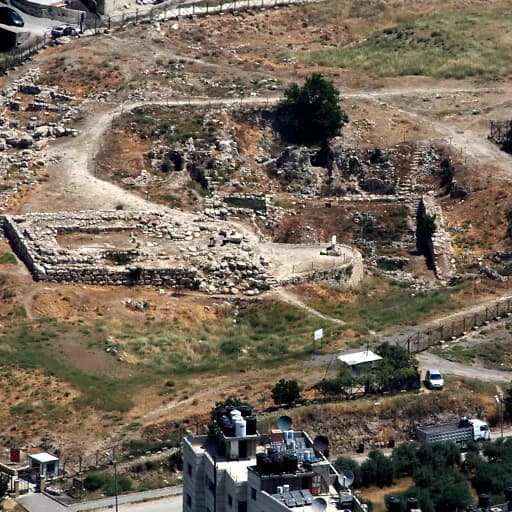
Beth-millo is a structure mentioned in 3 verses across 2 books of the Bible. Known today as Tell Balatah.
Verses
3
Books
2
Confidence
High
Coordinates
32.2136, 35.2819
Map
Loading map...
Key Verses About Beth-millo
“and all the house of Millo”Judges 9:6 (KJV)
“let fire come out from Abimelech”Judges 9:20 (KJV)
“and made a conspiracy”2 Kings 12:20 (KJV)
What the Commentators Say
“Chapter 9 Chapter Outline Abimelech murders his brethren, and is made king.(1-6) Jotham rebukes the Shechemites.(7-21) The Shechemites conspire against Abimelech.(22-29) Abimelech destroys Shechem.(30-49) Abimelech slain.(50-57) **Verses 1-6** The men of Shechem chose Abimelech king. God was not consulted whether they should have any king, much less who it should be. If parents could see what their children would do, and what they are to suffer, their joy in them often would be turned into sorrow: we may be thankful that we cannot know what shall happen. Above all, we should fear and watch against sin; for our evil conduct may produce fatal effects upon our families, after we are in our graves.”
Matthew Henry's Concise Commentary on Judges 9:6
“(6) **The house of Millo.**—It cannot be determined whether Beth Millo is here a proper name, or whether *Beth *means the family or inhabitants of Millo. The Chaldee renders Millo by “a rampart;” and if this be correct, the “house of the rampart” was perhaps the same as the “tower of Shechem” (Judges 9:46-49). There was a Millo on Mount Zion (2Samuel 5:9), which was also called a Beth Millo (2Kings 12:21). **Made Abimelech king.**—He was the first Israelite who ever bore that name. It does not appear that this royalty was recognised beyond the limits of Ephraim. Gideon had not only refused the title of king (*melek*)*, *but even the title of ruler (Judges 8:23). **By the plain of the pillar that was in Shechem.**—Rather, *near the terebinth of the monument which is in Shechem. *The word rendered “by” is *im, *which properly means *with, *but may mean “near,” as in Genesis 25:11. The word rendered “the pillar” is *mutsabh, *which the Syriac and Arabic versions take for a proper name, and the Chaldee renders “the corn-field” or *“*statue.” Luther renders it the *“*lofty oak,” and the Vulg. follows another reading. The LXX. take it to mean *“*a garrison” (LXX., *stasis*)*, *which is the meaning it has in Isaiah 29:3; but as the terebinth is doubtless that under which Joshua had raised his “stone of witness” (Joshua 24:26), the *mutsabh *is perhaps a name for this stone. If so, the neighbourhood of that pledge of faithfulness would add audacity to his acts. There can be little doubt that the terebinth was the celebrated tree under which Jacob had made his family bury their idolatrous earrings and amulets (Genesis 35:4), and the terebinth (E.V., *plain*) of Moreh, near Shechem, under which Abraham had spread his tent and where he had built an altar (Genesis 12:6). Possibly, too, it may be the “terebinth of the enchanters” mentioned in Judges 9:37. The veneration attached to old trees lasted from generation to generation in Palestine, and the terebinth of Mamre was celebrated for a thousand years.”
Ellicott's Commentary for English Readers on Judges 9:6
Bible Verses Mentioning Beth-millo
Nearby Biblical Places
Related Resources
Attribution
- Geographic data from OpenBible.info Bible Geocoding Data licensed under CC BY 4.0.
- Map tiles by OpenStreetMap contributors (ODbL 1.0).
- Image: יאיר דב.