Biblical Settlement
Shechem in the Bible
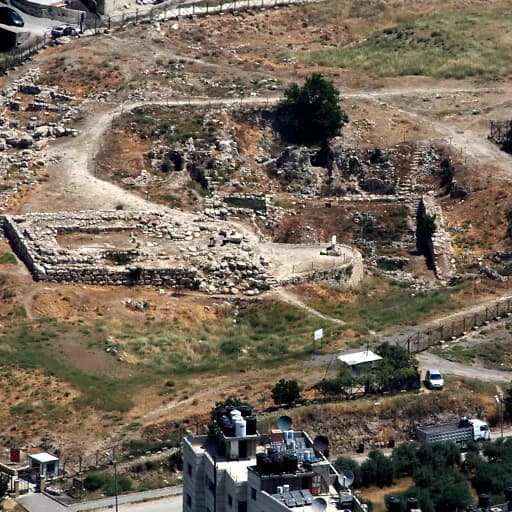
Shechem is a settlement mentioned in 45 verses across 10 books of the Bible. Known today as Tell Balatah.
Verses
45
Books
10
Confidence
Very High
Coordinates
32.2136, 35.2819
Map
Loading map...
Key Verses About Shechem
“to the oak of Moreh. The Canaanite was then in the land.”Genesis 12:6 (KJV)
“which is in the land of Canaan”Genesis 33:18 (KJV)
“and the rings which were in their ears; and Jacob hid them under the oak which was by Shechem.”Genesis 35:4 (KJV)
“And his brethren went to feed their father's flock in Shechem.”Genesis 37:12 (KJV)
“Aren't your brothers feeding the flock in Shechem? Come, and I will send you to them. He said to him”Genesis 37:13 (KJV)
What Does “Shechem” Mean?
שֶׁכֶם (Shekem, Hebrew) — “back”
Shekem, the name of a Hivite and two Israelites
H7928 in Strong's Concordance →What the Commentators Say
“**Verses 6-9** Abram found the country peopled by Canaanites, who were bad neighbours. He journeyed, going on still. Sometimes it is the lot of good men to be unsettled, and often to remove into various states. Believers must look on themselves as strangers and sojourners in this world, He 11:8, 13, 14. But observe how much comfort Abram had in God. When he could have little satisfaction in converse with the Canaanites whom he found there, he had abundance of pleasure in communion with that God, who brought him thither, and did not leave him. Communion with God is kept up by the word and by prayer. God reveals himself and his favours to his people by degrees; before, he had promised to show Abram this land, now, to give it to him: as grace is growing, so is comfort. It should seem, Abram understood it also as a grant of a better land, of which this was a type; for he looked for a heavenly country, He 11:16. As soon as Abram was got to Canaan, though he was but a stranger and sojourner there, yet he set up, and kept up, the worship of God in his family. He not only minded the ceremonial part of religion, the offering of sacrifice; but he made conscience of seeking his God, and calling on his name; that spiritual sacrifice with which God is well pleased. He preached concerning the name of the Lord; he taught his family and neighbours the knowledge of the true God, and his holy religion. The way of family worship is a good old way, no new thing, but the ancient usage of the saints. Abram was rich, and had a numerous family, was now unsettled, and in the midst of enemies; yet, wherever he pitched his tent, he built an altar: wherever we go, let us not fail to take our religion along with us.”
Matthew Henry's Concise Commentary on Genesis 12:6
“(6) **The place of Sichern.**—Heb., *Shechem. *This word signifies “shoulder,” and was the name of the ridge uniting Mounts Ebal and Gerizim, the summits of which are about two miles apart. As the name is thus taken from the natural conformation of the ground, it may be very ancient. The modern name of the place is Nablous, a contraction of Flavia Neapolis, a title given it in honour of Vespasian. Mr. Conder ( *Tent Work in Palestine, *1:61) describes the valley as an oasis of remarkable beauty and luxuriance, but set, like Damascus, in a desert, and girt around by strong and barren mountains. **The plain of Moreh.**—Heb., *the oak of Moreh, *It was here that Jacob buried the strange gods brought by his household from Haran (Genesis 35:4)*, *and here, too, Joshua set up the stone of testimony (Joshua 24:26; Judges 9:6); but as in Deuteronomy 11:30 the oaks (wrongly translated in most places in our version “plains”) are described in the plural, it is probable that the word is to be taken as a collective for an oak grove. Such shady spots were favourite places for the tents of the wandering patriarchs. A famous terebinth, called after Abram’s name, long existed at Mamre, and under it, in the time of Vespasian, the captive Jews were sold for slaves. It disappeared about A.D. 330, and no tree now marks the site of Abram’s grove. The Hebrew word, however, for terebinth is *elâh, *while that used here is *êlôn. *It was probably the *quercus pseudococcifera *(see Tristram, *Nat. Hist. of Bible, *p. 369). This tree often grows to a vast size. **Moreh.**—Literally, *teacher *(Isaiah 9:15). Probably in this cool grove some religious personage had given instruction to the people. In Judges 7:1 we find a place called the “teacher’s hill,” and it is thus possible that among a people so religious as the race of Shem, men from time to time arose revered by the people as teachers of holiness. Such an one was Melchisedech. **The Canaanite was then in the land.**—This is no sign of post-Mosaic authorship, nor a later interpolation, as if the meaning were that the Canaanite was there at that time, but is so no longer. What really is meant is that Abram on his arrival found the country no longer in the hands of the old Semitic stock, but occupied by the Canaanites, who seem to have gained the ascendancy, not so much by conquest as by gradual and peaceful means. We gather from the Egyptian records that this had taken place not very long before Abram’s time. In the early inscriptions we read only of the Sati and Aamu, both apparently Semitic races, the latter name being derived from the Heb. *am, *“people.” Subsequently we find frequent mention of the Amaor and the Kheta—that is, the Amorites and Hittites, evidently in Abram’s time the two most powerful races of Canaan. (See Tomkins’ *Studies, *82 ff.) For their previous wanderings, see on Genesis 10:15-19.”
Ellicott's Commentary for English Readers on Genesis 12:6
Bible Verses Mentioning Shechem
Judges(23)
Learn More
Nearby Biblical Places
Related Resources
Attribution
- Geographic data from OpenBible.info Bible Geocoding Data licensed under CC BY 4.0.
- Map tiles by OpenStreetMap contributors (ODbL 1.0).
- Image: יאיר דב.