Biblical Settlement
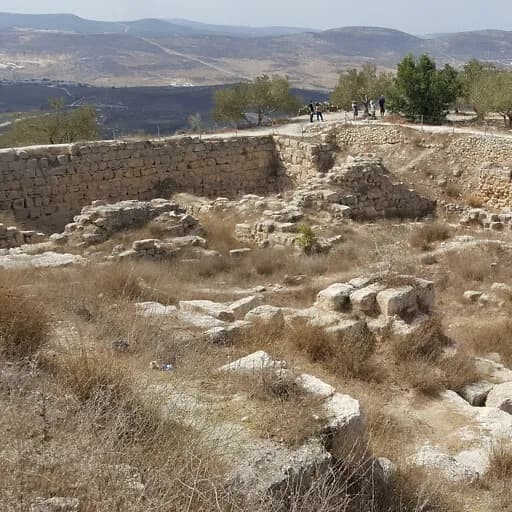
Samaria 1 in the Bible
Samaria 1 is a settlement mentioned in 113 verses across 12 books of the Bible. Known today as Samaria.
Verses
113
Books
12
Confidence
Very High
Coordinates
32.2761, 35.1950
Map
Loading map...
Key Verses About Samaria 1
“and against all the houses of the high places which are in the cities of Samaria”1 Kings 13:32 (KJV)
“and called the name of the city which he built”1 Kings 16:24 (KJV)
“and was buried in Samaria; and Ahab his son reigned in his place.”1 Kings 16:28 (KJV)
“And in the thirty and eighth year of Asa king of Judah began Ahab the son of Omri to reign over Israel: and Ahab the son of Omri reigned over Israel in Samaria twenty and two years.”1 Kings 16:29 (KJV)
“which he had built in Samaria.”1 Kings 16:32 (KJV)
What the Commentators Say
“**Verses 23-34** God is displeased at the sins of his own people; and no man shall be protected in disobedience, by his office, his nearness to God, or any services he has done for him. God warns all whom he employs, strictly to observe their orders. We cannot judge of men by their sufferings, nor of sins by present punishments; with some, the flesh is destroyed, that the spirit may be saved; with others, the flesh is pampered, that the soul may ripen for hell. Jeroboam returned not from his evil way. He promised himself that the calves would secure the crown to his family, but they lost it, and sunk his family. Those betray themselves who think to support themselves by any sin whatever. Let us dread prospering in sinful ways; pray to be kept from every delusion and temptation, and to be enabled to walk with self-denying perseverance in the way of God's commands.”
Matthew Henry's Concise Commentary on 1 Kings 13:32
“(24) **Built on the hill.**—Omri only followed the usual practice of a new dynasty in the East, of which Jeroboam had set an example at Shechem, and probably Baasha at Tirzah. Possibly the seeds of disaffection may have still lurked in Tirzah, the place of Zimri’s conspiracy, and (as has been conjectured) of Tibni’s rival power. But the site of Samaria must have been chosen by a soldier’s eye. Its Hebrew name (*Shomerôn*) means a “watch-tower,” and may well have had a double derivation, from its natural position, as well as from its owner’s name. Its position was one of great beauty, and, in the warfare of those days, of singular strength, as is shown by the long sieges which it withstood (1Kings 20:1; 2Kings 6:24; 2Kings 17:5; 2Kings 18:9-10). It lay north-west of Shechem, on an isolated hill with precipitous sides, rising in the middle of a basin of the hills of Ephraim, not far from the edge of the maritime plain, and commanding a view of the sea. Its history vindicated the sagacity of its founder. Even after its destruction and depopulation by the Assyrians, it seems to have revived, for Alexander took it on his invasion of Palestine, and placed a Greek colony there. Again destroyed by John Hyrcanus, it was rebuilt by Herod, and called *Sebaste*, in honour of Augustus. In the Assyrian inscriptions it is known as Beth-Khumri (“the house of Omri”).”
Ellicott's Commentary for English Readers on 1 Kings 16:24
Bible Verses Mentioning Samaria 1
1 Kings(17)
2 Kings(49)
2 Kings 1:22 Kings 1:32 Kings 2:252 Kings 3:12 Kings 3:62 Kings 5:32 Kings 6:192 Kings 6:202 Kings 6:242 Kings 6:252 Kings 7:12 Kings 7:162 Kings 7:182 Kings 10:12 Kings 10:62 Kings 10:122 Kings 10:172 Kings 10:352 Kings 10:362 Kings 13:12 Kings 13:62 Kings 13:92 Kings 13:102 Kings 13:132 Kings 14:142 Kings 14:162 Kings 14:232 Kings 14:292 Kings 15:82 Kings 15:132 Kings 15:142 Kings 15:172 Kings 15:232 Kings 15:252 Kings 15:272 Kings 17:12 Kings 17:52 Kings 17:62 Kings 17:242 Kings 17:262 Kings 17:272 Kings 17:282 Kings 17:292 Kings 18:92 Kings 18:102 Kings 18:342 Kings 21:132 Kings 23:182 Kings 23:19
2 Chronicles(8)
Isaiah(9)
Ezekiel(7)
Learn More
Nearby Biblical Places
Related Resources
Attribution
- Geographic data from OpenBible.info Bible Geocoding Data licensed under CC BY 4.0.
- Map tiles by OpenStreetMap contributors (ODbL 1.0).
- Image: Ovedc.