Biblical Settlement
Ramathaim-zophim in the Bible
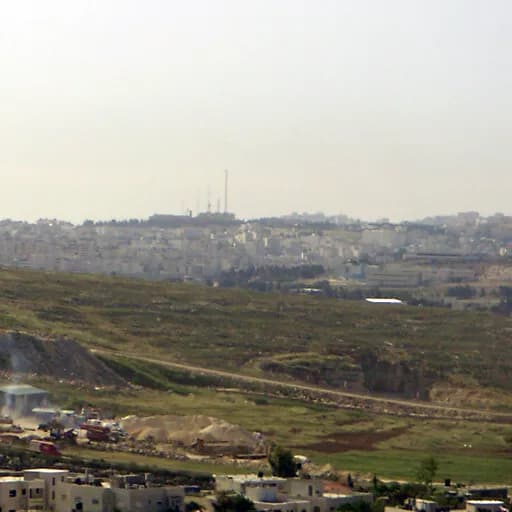
Ramathaim-zophim is a settlement mentioned in 1 verse across 1 book of the Bible. Known today as Al Ram.
Verses
1
Books
1
Confidence
High
Coordinates
31.8543, 35.2316
Map
Loading map...
Key Verses About Ramathaim-zophim
“of the hill country of Ephraim”1 Samuel 1:1 (KJV)
What the Commentators Say
“(1) **Now there was a certain man.**—Literally, *And there was, &c. *These introductory words do not signify that this history is the continuation of the Book of Judges or of any preceding writing. It is a common historical introductory formula. We find it at the commencement of Joshua, Judges, Ruth, 1 Kings, Esther, Ezra, Ezekiel, &c. The circumstances under which this record was probably compiled are discussed elsewhere. **Of Ramathaim-zophim.**—The name Ramathaim—literally, *The Two Ramahs*—is the dual of the well-known Ramah, the appellation by which this city is usually known. The old city was, no doubt, built on two hills, which looked one on the other: hence perhaps the name Zophim, *the watchers. *Possibly at an early date watch-towers or outlooks, to enable the citizens to guard against surprise, were built on the summit of these hills. Either of these suppositions would account for the suggestive name by which Ramah was once known, the “Ramahs of the Watchers.” Others would connect the appellation “Zophim” with the family of Zuph, from whom Elkanah descended. (See 1Chronicles 6:35, and 1Samuel 9:5, where the land of Zuph is mentioned.) An interesting. though fanciful, derivation refers Zophim, *watchers, *to the “prophet-watchmen” of the house of Israel, as Ramah in after years was a school of the prophets. On the whole, the simplest and least strained explanation is the one given above, which refers the name to the hills so placed that they watched one another, or better still, to the watch-towers built at an early date on the two summits. Ramah lay among the mountains of Ephraim, which extended into the territory of Benjamin, in which tribe the city of Ramah lay. **His name was Elkanah.**—Elkanah, the father of the future prophet-judge, was a Levite of the family of Kohath (compare the genealogy given here with 1Chronicles 6:22). He is here termed an Ephrathite: that is, an Ephraimite, because, as far as his civil standing was concerned, he belonged to the tribe of Ephraim. Some have found a difficulty in reconciling the Levitical descent of Samuel with his dedication to the Lord by his mother, supposing that in the case of a Levite this would be unnecessary; but the dedication of Samuel, it should be remembered, was a life-long one, whereas the Levitical service only began when the Levite was twenty-five years old; and even then the service was not continuous.”
Ellicott's Commentary for English Readers on 1 Samuel 1:1
Bible Verses Mentioning Ramathaim-zophim
Learn More
Nearby Biblical Places
Related Resources
Attribution
- Geographic data from OpenBible.info Bible Geocoding Data licensed under CC BY 4.0.
- Map tiles by OpenStreetMap contributors (ODbL 1.0).
- Image: Soman.