Biblical Special Place
Ezel in the Bible
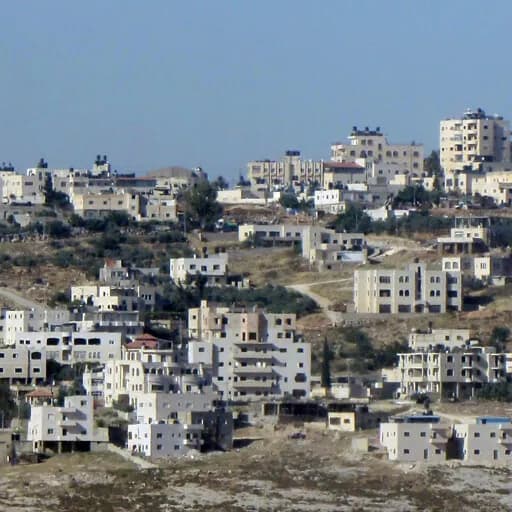
Ezel is a special place mentioned in 2 verses across 1 book of the Bible. Known today as Jaba.
Verses
2
Books
1
Confidence
Unknown
Coordinates
31.8575, 35.2611
Map
Loading map...
Key Verses About Ezel
“you shall go down quickly”1 Samuel 20:19 (KJV)
“David arose out of [a place] toward the South”1 Samuel 20:41 (KJV)
What Does “Ezel” Mean?
אֶזֶל (ʼezel, Hebrew) — “departure”
Ezel, a memorial stone in Palestine
H237 in Strong's Concordance →What the Commentators Say
“**Verses 11-23** Jonathan faithfully promises that he would let David know how he found his father affected towards him. It will be kindness to ourselves and to ours, to secure an interest in those whom God favours, and to make his friends ours. True friendship rests on a firm basis, and is able to silence ambition, self-love, and undue regard for others. But who can fully understand the love of Jesus, who gave himself as a sacrifice for rebellious, polluted sinners! how great then ought to be the force and effects of our love to him, to his cause, and his people!”
Matthew Henry's Concise Commentary on 1 Samuel 20:19
“(19) **Go down quickly.**—“Quickly” represents, but not faithfully, the Hebrew *m’od. *“Quickly” comes from the Vulg., *descende ergo festinus. *The literal rendering of *m’od *is “greatly,” and probably Dean Payne Smith’s rendering, “and on the third day go a long way (greatly) down into the valley,” represents the meaning of the original, which has been a general stumbling-block with the versions. The Chaldee, Arabic, and Syriac here interpret rather than translate, “on the third day thou will be missed the more.” “It did not matter,” writes the Dean, “whether David went fast or slow, as he was to hide there some time, but it was important that David should be far away, so that no prying eye might chance to catch sight of him.” **When the business was in hand.**—The expression, *b’yom hammaăseh, *rendered in our version by “when the business was *in hand,” *is one hard to understand. Perhaps the best translation is that adopted by Gesenius, De Wette, and Maurer, who render it quite literally “on the day of the deed,” and understand by “deed” King Saul’s design of killing David (see 1Samuel 19:2). **By the stone Ezel.**—This stone, or cairn, or possibly ruin, is mentioned nowhere else. Some have supposed it to have been a road-stone, or stone guide-post. The following ingenious conjecture is hazarded in the *Speaker’s Commentary:—“*The LXX. here, and again in 1Samuel 20:41 (where the spot, but not the stone, is spoken of), read *argab, *or *ergab, *a word meaning *a heap of stones. *If this is the true reading, David’s hiding place was either a natural cavernous rock, which was called *argab, *or some ruin of an ancient building equally suited for a hiding place.” Ewald, slightly changing the text, understands the word as signifying “the lonely waste.””
Ellicott's Commentary for English Readers on 1 Samuel 20:19
Bible Verses Mentioning Ezel
Nearby Biblical Places
Related Resources
Attribution
- Geographic data from OpenBible.info Bible Geocoding Data licensed under CC BY 4.0.
- Map tiles by OpenStreetMap contributors (ODbL 1.0).
- Image: יעקב.