Biblical Settlement
Baal-tamar in the Bible
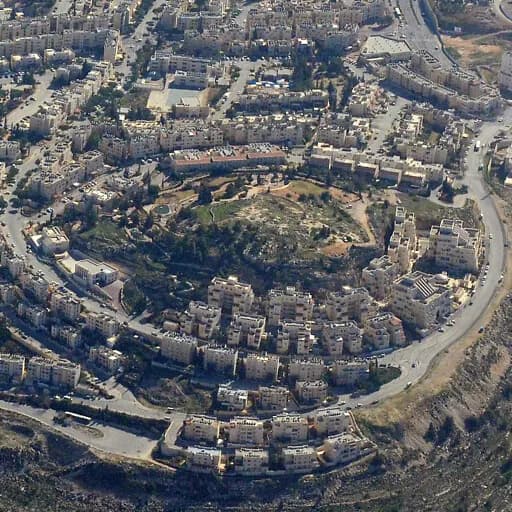
Baal-tamar is a settlement mentioned in 1 verse across 1 book of the Bible. Known today as Ras et Tawil.
Verses
1
Books
1
Confidence
Moderate
Coordinates
31.8315, 35.2413
Map
Loading map...
Key Verses About Baal-tamar
“and set themselves in array at Baal Tamar: and the ambushers of Israel broke forth out of their place”Judges 20:33 (KJV)
What Does “Baal-tamar” Mean?
בַּעַל תָּמָר (Baʻal Tâmâr, Hebrew) — “lord of the palms”
Baal-Tamar, a place in Palestine
H1193 in Strong's Concordance →What the Commentators Say
“Chapter 20 Chapter Outline The law concerning the cities of refuge.(1-6) The cities appointed as refuges.(7-9) **Verses 1-6** When the Israelites were settled in their promised inheritance, they were reminded to set apart the cities of refuge, whose use and typical meaning have been explained, Nu 35; De 19. God's spiritual Israel have, and shall have in Christ and heaven, not only rest to repose in, but refuge to secure themselves in. These cities were designed to typify the relief which the gospel provides for penitent sinners, and their protection from the curse of the law and the wrath of God, in our Lord Jesus, to whom believers flee for refuge, He 6:18.”
Matthew Henry's Concise Commentary on Judges 20:33
“(33) **Put themselves in array at Baal-tamar.**—This is either a detail added out of place (so that we might almost suppose that there has been some accidental transposition of clauses), or it means that when the Israelites in their pretended rout had got as far as Baal-tamar (“Lord of the Palm”) they saw the appointed smoke-signal of the ambuscade, and at that point rallied against their pursuers. What makes this probable is that Baal-tamar can only have derived its name from some famous, and therefore isolated, palm-tree. Now there was exactly such a palm tree—the well known “Palm of Deborah” (see Note on Judges 4:5)—“between Ramah and Bethel,” and therefore at a little distance from the spot where the roads branch. The place was still called Bathamar in the days of Eusebius and Jerome. The Chaldee rendering, “in the plains of Jericho” (“the palm city,” Judges 1:16), is singularly erroneous. **Out of the meadows of Gibeah.**—The word *maareh, *rendered “meadows,” occurs nowhere else. Some derive it from *arah, *“to strip.” The LXX., not understanding it, render it as a name, *Maraagabe, *and in Cod. A (following a different reading), “from the west of Gibeah,” as also does the Vulg. Rashi renders it, “because of the stripping of Gibeah,” and Buxtorf, “after the stripping of Gibeah.” It is, however, clear that the words are in apposition to and in explanation of “out of their places:” The Syriac and Arabic understand *maareh *to mean “a cave” or “caves,” printing it *maarah *instead of *maareh. *Similarly the reading “from the west” only involves the change of a single letter (*maarab*)*. *If the text be left unaltered, the “meadows” may have been concealed from the town by intervening rocks. In Isaiah 19:7 *aroth *mean “pastures.””
Ellicott's Commentary for English Readers on Judges 20:33
Bible Verses Mentioning Baal-tamar
Learn More
Nearby Biblical Places
Related Resources
Attribution
- Geographic data from OpenBible.info Bible Geocoding Data licensed under CC BY 4.0.
- Map tiles by OpenStreetMap contributors (ODbL 1.0).
- Image: Dvirraz.