Biblical Settlement
Ivvah in the Bible
Ivvah is a settlement mentioned in 3 verses across 2 books of the Bible. Known today as Kafr Aya.
Verses
3
Books
2
Confidence
Low
Coordinates
34.6847, 36.6906
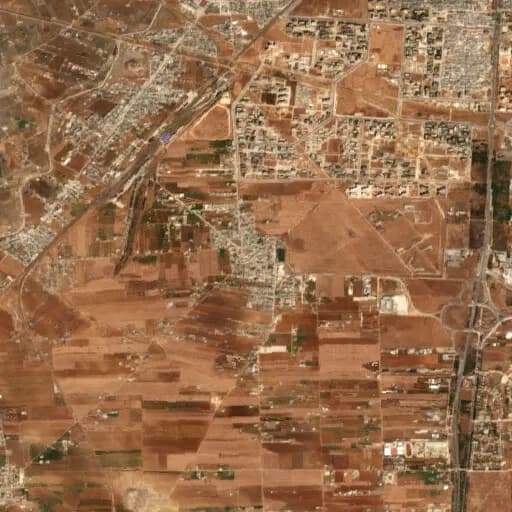
Map
Loading map...
Key Verses About Ivvah
“and of Arpad? where are the gods of Sepharvaim”2 Kings 18:34 (KJV)
“and the king of Arpad”2 Kings 19:13 (KJV)
“and the king of Arpad”Isaiah 37:13 (KJV)
What the Commentators Say
“**Verses 21-40** Many of the people wavered in their judgment, and varied in their practice. Elijah called upon them to determine whether Jehovah or Baal was the self-existent, supreme God, the Creator, Governor, and Judge of the world, and to follow him alone. It is dangerous to halt between the service of God and the service of sin, the dominion of Christ and the dominion of our lusts. If Jesus be the only Saviour, let us cleave to him alone for every thing; if the Bible be the world of God, let us reverence and receive the whole of it, and submit our understanding to the Divine teaching it contains. Elijah proposed to bring the matter to a trial. Baal had all the outward advantages, but the event encourages all God's witnesses and advocates never to fear the face of man. The God that answers by fire, let him be God: the atonement was to be made by sacrifice, before the judgment could be removed in mercy. The God therefore that has power to pardon sin, and to signify it by consuming the sin-offering, must needs be the God that can relieve from the calamity. God never required his worshippers to honour him in the manner of the worshippers of Baal; but the service of the devil, though sometimes it pleases and pampers the body, yet, in other things, really is cruel to it, as in envy and drunkenness. God requires that we mortify our lusts and corruptions; but bodily penances and severities are no pleasure to him. Who has required these things at your hands? A few words uttered in assured faith, and with fervent affection for the glory of God, and love to the souls of men, or thirstings after the Lord's image and his favour, form the effectual, fervent prayer of the righteous man, which availeth much. Elijah sought not his own glory, but that of God, for the good of the people. The people are all agreed, convinced, and satisfied; Jehovah, he is the God. Some, we hope, had their hearts turned, but most of them were convinced only, not converted. Blessed are they that have not seen what these saw, yet have believed, and have been wrought upon by it, more than they that saw it.”
Matthew Henry's Concise Commentary on 2 Kings 18:34
“(34) **Where are the gods of Hamath, and of Arpad?**—Sargon, Sennacherib’s father, had reduced these two cities. The reference to “my fathers” in 2Kings 19:12, and the use of the general term, “the king of Assyria” (2Kings 18:33), are against Schrader’s supposition that the historian has confused the campaigns of Sargon with those of Sennacherib. (Comp. 2Kings 17:24; 2Kings 17:30.) Sargon has recorded that *Ya-u-bi-h-di,* king of the Hamathites, induced Arpad, Simyra, Damascus, and Samaria to join his revolt against Assyria. The confederacy was defeated at Qarqar, and Yahubihdi taken and flayed alive (B.C. 720). **Arpad.**—*Tell-Erfâd,* about ten miles north of Aleppo. The question, “Where are the gods?” &c, may imply that they had been annihilated along with their temples and statues. (Comp. Job 14:10.) Sometimes, indeed, the Assyrians carried off the idols of conquered nations, but this need not have been an invariable practice, and Isaiah 10:11 seems to imply that they were sometimes destroyed, as was likely to be the case when a city was taken by storm, and committed to the flames. **Sepharvaim.**—See on 2Kings 17:24. This city revolted with Babylon against Sargon at the beginning of his reign. No account of its fall has been preserved. **Hena, and Ivah.**—These names do not occur in Isaiah, and are wholly unknown. The words look like two Hebrew verbs (“He hath caused to wander, and overturned”), as at present vocalised; and the Targum translates them as a question: “Have they not made them wander, and carried them away?” Hoffmann thinks the two words are really one (the *niphal* participle of *‘av’av*)*,* and should be rendered as an epithet of Sepharvaim, “the utterly perverted;” a nickname given it by the Assyrians, because of its follyin revolting again after its former subjugation. But the mention of Ava and the Avites (2Kings 17:24; 2Kings 17:31) is in favour of the same proper name here, and the LXX., Syriac, Arabic, and Vulg. agree with this. (The Syriac reads *Avva,* as in chap. 7:24.) **Have they delivered Samaria** **. . .?**—Rather, *How much less have they *(*i.e.,* its gods) *delivered Samaria out of mine hand!* So Ewald, *Gram.,* § 256. The Syriac, Vulg., and Arabic render as the Authorised Version. Perhaps the original reading was not *kȋ;* but *hakî:* “*Is it the case that* they have delivered?” &c. (Job 6:22). **Out of mine hand?**—Sennacherib speaks as if he were one with his father, a circumstance which lends some support to the suggestion of Schrader, that the successive Assyrian invasions were not kept quite distinct in the Hebrew tradition. If so, the year 714 B.C. , assigned as the date of the present expedition (2Kings 18:13), may really be that of an earlier expedition under Sargon, who, in fact, invaded the West in 720, 715, and 711 (or 709) B.C.”
Ellicott's Commentary for English Readers on 2 Kings 18:34
Bible Verses Mentioning Ivvah
Learn More
Nearby Biblical Places
Related Resources
Attribution
- Geographic data from OpenBible.info Bible Geocoding Data licensed under CC BY 4.0.
- Map tiles by OpenStreetMap contributors (ODbL 1.0).
- Image: Contains modified Copernicus Sentinel data 2019.