Biblical Settlement
Arimathea in the Bible
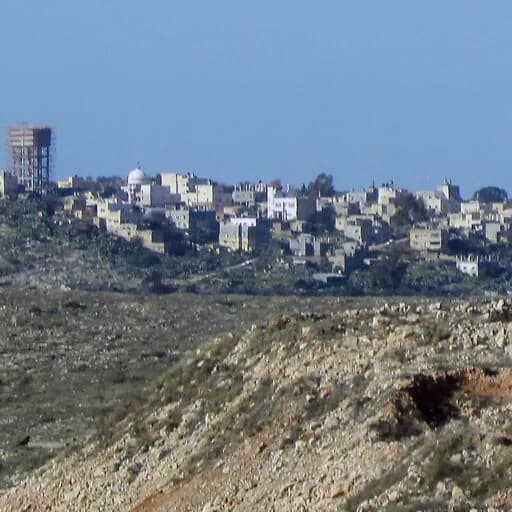
Arimathea is a settlement mentioned in 4 verses across 4 books of the Bible. Known today as Rantis.
Verses
4
Books
4
Confidence
Moderate
Coordinates
32.0281, 35.0194
Map
Loading map...
Key Verses About Arimathea
“a rich man from Arimathaea”Matthew 27:57 (KJV)
“a prominent council member who also himself was looking for the Kingdom of God”Mark 15:43 (KJV)
“a man named Joseph”Luke 23:50 (KJV)
“Joseph of Arimathaea”John 19:38 (KJV)
What the Commentators Say
“Chapter 27 Chapter Outline Christ delivered to Pilate, The despair of Judas.(1-10) Christ before Pilate.(11-25) Barabbas loosed, Christ mocked.(26-30) Christ led to be crucified.(31-34) He is crucified.(35-44) The death of Christ.(45-50) Events at the crucifixion.(51-56) The burial of Christ.(57-61) The sepulchre secured.(62-66) **Verses 1-10** Wicked men see little of the consequences of their crimes when they commit them, but they must answer for them all. In the fullest manner Judas acknowledged to the chief priests that he had sinned, and betrayed an innocent person. This was full testimony to the character of Christ; but the rulers were hardened. Casting down the money, Judas departed, and went and hanged himself, not being able to bear the terror of Divine wrath, and the anguish of despair. There is little doubt but that the death of Judas was before that of our blessed Lord. But was it nothing to them that they had thirsted after this blood, and hired Judas to betray it, and had condemned it to be shed unjustly? Thus do fools make a mock at sin. Thus many make light of Christ crucified. And it is a common instance of the deceitfulness of our hearts, to make light of our own sin by dwelling upon other people's sins. But the judgment of God is according to truth. Many apply this passage of the buying the piece of ground, with the money Judas brought back, to signify the favour intended by the blood of Christ to strangers, and sinners of the Gentiles. It fulfilled a prophecy, Zec 11:12. Judas went far toward repentance, yet it was not to salvation. He confessed, but not to God; he did not go to him, and say, I have sinned, Father, against heaven. Let none be satisfied with such partial convictions as a man may have, and yet remain full of pride, enmity, and rebellion.”
Matthew Henry's Concise Commentary on Matthew 27:57
“(57) **A rich man of Arimathæa.**—The place so named was probably identical with the Ramah of 1Samuel 1:19, the birth-place of the prophet. In 1Samuel 1:1 the name is given in its uncontracted form as Ramathaim-zophim, and in the LXX. version it appears throughout as Armathaim, in Josephus as Armatha, in 1 Maccabees 11:34 as Ramathem. It was a city of the Jews, in the narrower sense in which that word meant the people of Judæa (Luke 23:51). The site is more or less conjectural, but if we identify the Ramah, or Ramathaim, of 1Samuel 1:1 with the modern *Nebby Samuel,* about four miles north-west of Jerusalem, we have a position which sufficiently fits in with the circumstances of the history. Of Joseph we are told by St. Mark (Mark 15:43) that he was “an honourable counsellor,” *i.e.,* a member of the Sanhedrin, and that he was looking for the kingdom of God; by St. Luke (Luke 23:50-51), that he was “a good man, and a just” (see Note on Romans 5:7 for the distinction between the two words); by St. John ( John 19:38), that he was “a disciple, but secretly for fear of the Jews.” He was apparently a man of the same class and type of character as Nicodemus, respecting our Lord as a man, admiring Him as a teacher, half-believing in Him as the Christ, and yet, till now, shrinking from confessing Him before men. For us the name has the interest of being one of the few New Testament names connected with our own country. He was sent, it was said, by Philip (the Apostle) to Britain. There, in the legend which mediæval chroniclers delighted to tell, he founded the Church of Glastonbury; and the staff which he stuck into the ground took root and brought forth leaves and flowers, and became the parent of all the Glastonbury thorns from that day to this. We have to place the piercing of the side, narrated by St. John only (John 19:31-37), before Joseph’s application.”
Ellicott's Commentary for English Readers on Matthew 27:57
Bible Verses Mentioning Arimathea
Learn More
Nearby Biblical Places
Related Resources
Attribution
- Geographic data from OpenBible.info Bible Geocoding Data licensed under CC BY 4.0.
- Map tiles by OpenStreetMap contributors (ODbL 1.0).
- Image: יעקב.