Biblical Settlement
Salem in the Bible
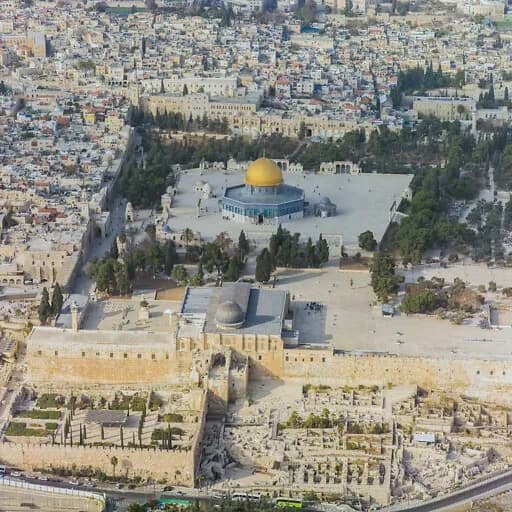
Salem is a settlement mentioned in 4 verses across 3 books of the Bible. Known today as Jerusalem.
Verses
4
Books
3
Confidence
Very High
Coordinates
31.7767, 35.2342
Map
Loading map...
Key Verses About Salem
“And Melchizedek king of Salem brought forth bread and wine: and he was the priest of the most high God.”Genesis 14:18 (KJV)
“In Salem also is his tabernacle”Psalms 76:2 (KJV)
“king of Salem”Hebrews 7:1 (KJV)
“by interpretation”Hebrews 7:2 (KJV)
What Does “Salem” Mean?
What the Commentators Say
“**Verses 17-20** Melchizedek is spoken of as a king of Salem, supposed to be the place afterwards called Jerusalem, and it is generally thought that he was only a man. The words of the apostle, He 7:3, state only, that the sacred history has said nothing of his ancestors. The silence of the Scriptures on this, is to raise our thoughts to Him, whose generation cannot be declared. Bread and wine were suitable refreshment for the weary followers of Abram; and it is remarkable that Christ appointed the same as the memorials of his body and blood, which are meat and drink indeed to the soul. Melchizedek blessed Abram from God. He blessed God from Abram. We ought to give thanks for other's mercies as for our own. Jesus Christ, our great High Priest, is the Mediator both of our prayers and praises, and not only offers up ours, but his own for us. Abram gave him the tenth of the spoils, He 7:4. When we have received some great mercy from God, it is very fit we should express our thankfulness by some special act of pious charity. Jesus Christ, our great Melchisedek, is to have homage done him, and to be humbly acknowledged as our King and Priest; not only the tithe of all, but all we have, must be given up to him.”
Matthew Henry's Concise Commentary on Genesis 14:18
“(18) **Melchizedek king of Salem.**—There is a Salem near Scythopolis in the tribe of Ephraim, near to which John baptised (John 3:23, where it is called *Salim*)*, *and Jerome mentions that some local ruins there were said to be the remains of Melchizedek’s palace. But such traditions are of little value, and we may eel certain that the place was really Jerusalem (Psalm 76:2); for it lay on Abram’s route homeward, and was within a reasonable distance of Sodom, which, as we have seen, lay in the Ciccar of Jericho, at the northern end of the Dead Sea. Salem is a common name for towns in Palestine (Conder, *Tent-work, *i. 91), and the village in Ephraim is too remote to have been the place of meeting. In Melchizedek we have a type of Christ (Psalm 110:4; Hebrews 5:6; Hebrews 5:10; Hebrews 7:1-21), and so venerable is his character and aspect that Jewish tradition identified him with the patriarch Shem, thus reconciling also to themselves his superiority over their forefather Abraham. But this idea is contradicted by Hebrews 7:3. He was more probably the king of some Semitic race who still occupied Salem, but from whom it was at a subsequent period wrested by the Jebusites, who called it Jebus, after the name of their ancestor (Judges 19:10-11). Up to David’s days it seems to have still had a titular king (2Samuel 24:23), and upon his conquest of it its old name reappears, but with a prefix, and henceforward it was known as Jeru-salem, that is (probably), *the possession of Salem.* The typical value of Melehizedek’s priesthood lies not merely in his being “king of righteousness and king of peace,” but even more in his priesthood being universal, limited by no external ordinances, and attached to no particular race or people. Moreover, he is a king-priest (Psalms 110), and by taking precedence of Abram. and blessing him, and receiving of him tithes, he became the representative of a higher priesthood than any that could spring from Abram’s loins. **Bread and wine.**—The representatives of food of all kinds, both liquid and solid. Though the primary object of this offering was the refreshing of the bodies of Abram’s men, and of the prisoners wearied with their long march to and fro, yet we cannot but recognise in it a foreshowing of the bestowal by Christ, the antitype, upon His Church of the spiritual food of His most blessed Body and Blood. **Priest of the most high God.**—Heb., *of El ‘elyon. *The mention of the term *priest *(used here for the first time) shows that some sort of sacrificial worship existed at Salem. Sacrifice had, however, been practised before; for Abel had acted as a priest when offering his firstlings, and Abram at the various altars which he built. Apparently, however, Melchizedek had been set apart for the priesthood in some more definite way. *El ‘elyon *means “the supreme God,” and though the two words are so similar in English, they are altogether unlike in Hebrew. In Psalm 7:17 the epithet ‘*elyon *is applied to Jehovah. With that precision in the use of the names of Deity which we have so often noticed before, Melchizedek is described as a priest of *El ‘elyon, *the Supreme Ruler of the universe; but Abram swears by *Jehovah El ‘elyon, *thus claiming that Jehovah was that Supreme Deity whom Melchizedek served, though without the special knowledge of Him which the patriarch possessed.”
Ellicott's Commentary for English Readers on Genesis 14:18
Bible Verses Mentioning Salem
Learn More
Nearby Biblical Places
Related Resources
Attribution
- Geographic data from OpenBible.info Bible Geocoding Data licensed under CC BY 4.0.
- Map tiles by OpenStreetMap contributors (ODbL 1.0).
- Image: Godot13.