Biblical Structure
Baal-hamon in the Bible
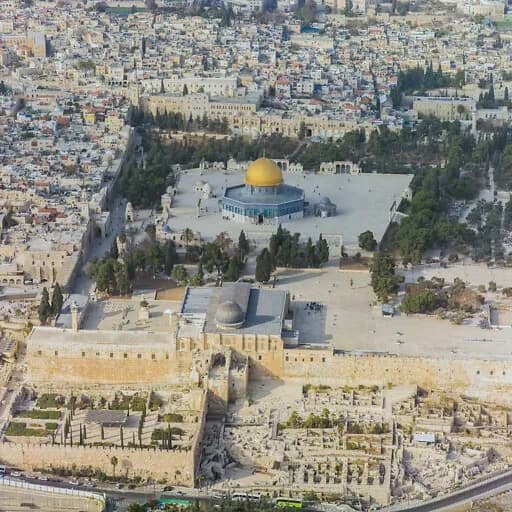
Baal-hamon is a structure mentioned in 1 verse across 1 book of the Bible. Known today as Jerusalem.
Verses
1
Books
1
Confidence
Low
Coordinates
31.7767, 35.2342
Map
Loading map...
Key Verses About Baal-hamon
“Solomon had a vineyard at Baalhamon; he let out the vineyard unto keepers; every one for the fruit thereof was to bring a thousand pieces of silver.”Song of Solomon 8:11 (KJV)
What Does “Baal-hamon” Mean?
בַּעַל הָמוֹן (Baʻal Hâmôwn, Hebrew) — “lord (possessor) of abundance”
Baal-Hamon, a place in Palestine
H1174 in Strong's Concordance →What the Commentators Say
“(11, 12) **Solomon had a vineyard . . .**—Here the poet repeats the sentiment of Song of Solomon 6:8-9—the contrast of his love for one chosen bride with the state of feeling and morality fostered by polygamy. But while in the former passage the contrast lay in number only, here it lies also in the *value *which comes to be set on the possession. Any one member of the harem of Solomon is no dearer to him than one of his many vineyards, which has to be cultivated by hirelings (perhaps with allusion to the eunuchs who guard the seraglio), and is valued only for the return it yields. But the one wedded wife is a vineyard tended by the owner, loved for its own sake as well as valued. A certain obscurity arises from the abrupt transition from simile to metaphor. Long similes, so common in classical poetry, are almost unknown in that of the Hebrews. Complete, the simile would have run, “As Solomon, who possesses so many vineyards, does not keep any one, even the choicest, in his own hands, but entrusts it to keepers and only enjoys an annual rent, so, with such a large and costly establishment of wives, he has none that is to him what my *one, *my sole possession, is to me.” But after the first member of it in Song of Solomon 8:11, he breaks abruptly into metaphor, so much more natural to him, “My vineyard,” &c. For the figure comp. Song of Solomon 4:12-13. **Baal-hamon.**—Many are the conjectures hazarded as to the locality of this place. It has been identified (1) with Baal-gad, or Heliopolis (Rosenmüller); (2) with Hammon, a place in the tribe of Asher (Joshua 19:28, Ewald); (3) with Balamo (LXX. Βεελαμων), a place mentioned in the Book of Judith, Song of Solomon 8:3, in connection with Dothaim, which (if the same as Dothan) has possibly been discovered to the south of the valley of Esdraelon.—*Recovery of Jerusalem, *p. 463 (1871). (Comp. Judith 4:10; Judith 3:9; Meier, Hitzig, &c) But no identification is necessary. If the poet had any definite place in his mind he merely used it for the play on words (*Baal-hamon=*lord of multitude). The correct translation is “a vineyard was to Solomon *as *lord of a multitude.” The particle *be *often has this force. Exodus 6:3 : “I appeared as God Almighty.” Comp. Proverbs 3:26; Isaiah 40:10; 1Chronicles 9:33, &c. We further note that *Baal, *as *lord *with us, often means *husband, *and *Baal-hamon *has a covert allusion to the polygamy of the king. **A thousand pieces of silver.**—Supply *shekels. *The substantives denoting weight, measure, or time are frequently omitted (Genesis 20:16). (Comp. Isaiah 7:23 : *a thousand silverlings, *whence we see that it was customary to portion off vineyards into sections containing a certain number of vines.) For worth of shekel, see Genesis 23:15.”
Ellicott's Commentary for English Readers on Song of Solomon 8:11
Bible Verses Mentioning Baal-hamon
Learn More
Nearby Biblical Places
Related Resources
Attribution
- Geographic data from OpenBible.info Bible Geocoding Data licensed under CC BY 4.0.
- Map tiles by OpenStreetMap contributors (ODbL 1.0).
- Image: Godot13.