Biblical Region
Moriah in the Bible
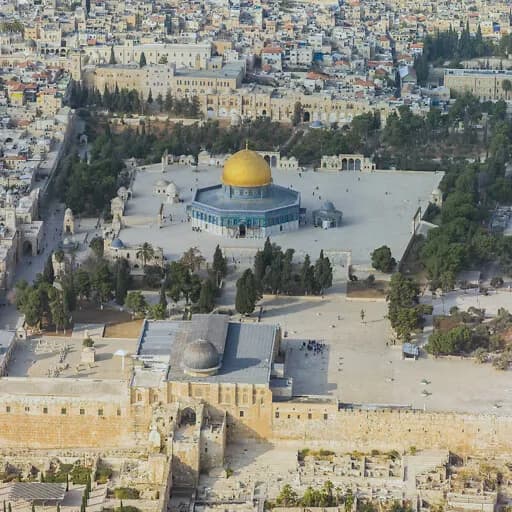
Moriah is a region mentioned in 1 verse across 1 book of the Bible. Known today as Mount Moriah.
Verses
1
Books
1
Confidence
Moderate
Coordinates
31.7778, 35.2356
Map
Loading map...
Key Verses About Moriah
“Now take your son, your only son, whom you love, even Isaac, and go into the land of Moriah. Offer him there for a burnt offering on one of the mountains which I will tell you of.”Genesis 22:2 (KJV)
What Does “Moriah” Mean?
מוֹרִיָּה (Môwrîyâh, Hebrew) — “chosen by Jehovah”
Morijah, a hill in Palestine
H4179 in Strong's Concordance →What the Commentators Say
“Chapter 22 Chapter Outline God commands Abraham to offer up Isaac.(1-2) Abraham's faith and obedience to the Divine command.(3-10) Another sacrifice is provided instead of Isaac.(11-14) The covenant with Abraham renewed.(15-19) The family of Nahor.(20-24) **Verses 1-2** We never are secure from trials In Hebrew, to tempt, and to try, or to prove, are expressed by the same word. Every trial is indeed a temptation, and tends to show the dispositions of the heart, whether holy or unholy. But God proved Abraham, not to draw him to sin, as Satan tempts. Strong faith is often exercised with strong trials, and put upon hard services. The command to offer up his son, is given in such language as makes the trial more grievous; every word here is a sword. Observe, 1. The person to be offered: Take thy son; not thy bullocks and thy lambs. How willingly would Abraham have parted with them all to redeem Isaac! Thy son; not thy servant. Thine only son; thine only son by Sarah. Take Isaac, that son whom thou lovest. 2. The place: three days' journey off; so that Abraham might have time to consider, and might deliberately obey. 3. The manner: Offer him for a burnt-offering; not only kill his son, his Isaac, but kill him as a sacrifice; kill him with all that solemn pomp and ceremony, with which he used to offer his burnt-offerings.”
Matthew Henry's Concise Commentary on Genesis 22:2
“(2) **Take now.**—*Now *is not an adverb of time, but an interjection of entreaty, usually coupled with requests, and intended to soften them. It thus makes the words more an exhortation than a command. **Thine only son Isaac.**—The words in the original are more emphatic, being, “Take, I pray, thy son, thine only son, whom thou lovest, even Isaac.” If childlessness was so unendurable in old time to Abraham (Genesis 15:2), what would it be now, after so many years of enjoyment of a son, and after giving up Ishmael for his sake (Genesis 17:18)? **The land of Moriah.**—Moriah may either mean *Jah is teacher *(see Note on Genesis 12:6), or *Jah is provider. *The first is supported by Isaiah 2:3, where the verb is rendered *will teach; *but the second agrees best with Genesis 22:8; Genesis 22:14. If this be the meaning, the name would be derived from this event, and would signify the place where “Jehovah will Himself provide the sacrifice.” It has been suggested by many able commentators, that the place meant was Moreh in Sichem, and that the site of the sacrifice was, as the Samaritans affirmed, the natural altar upon the summit of Mount Gerizim. But as Abraham and Isaac reached the spot on the third day, and evidently at an early hour, Gerizim is too remote from Beer-sheba for this to be possible Even Jerusalem is distant enough, as the journey from Beer-sheba takes twenty and a half hours; and travellers in those days had to cook their own food, and prepare their own sleeping accommodation. We may notice also, that Moriah is described as “a land,” in some part of which Abraham was to be shown the special mountain intended for the sacrifice; Moreh, on the contrary, was a place where Abraham had lived, and which was therefore well known to him. **Offer him there for a burnt offering.**—Hengstenberg and others have argued that Abraham was not to kill Isaac, but to surrender him spiritually to God, and sanctify him by a burnt offering. But this is contradicted by the narrative itself (Genesis 22:10), and by the passage in the Epistle to the Hebrews referred to above, where the victory of Abraham’s faith is described as consisting in the belief, that even though Isaac were killed, nevertheless the promise would still in some Divine manner be fulfilled in him.”
Ellicott's Commentary for English Readers on Genesis 22:2
Bible Verses Mentioning Moriah
Learn More
Nearby Biblical Places
Related Resources
Attribution
- Geographic data from OpenBible.info Bible Geocoding Data licensed under CC BY 4.0.
- Map tiles by OpenStreetMap contributors (ODbL 1.0).
- Image: Godot13.