Biblical Hill
Moreh 2 in the Bible
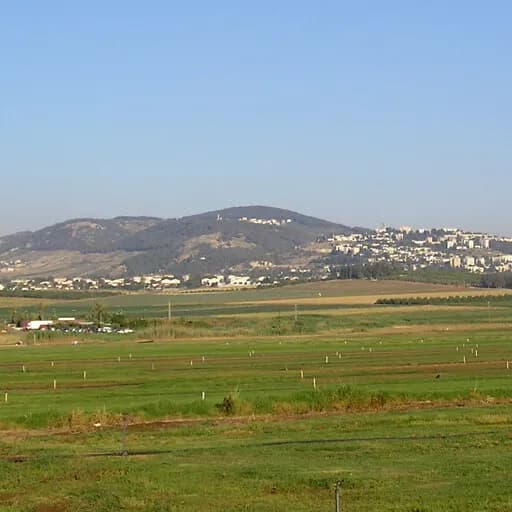
Moreh 2 is a hill mentioned in 1 verse across 1 book of the Bible. Known today as Givat HaMoreh.
Verses
1
Books
1
Confidence
High
Coordinates
32.6176, 35.3487
Map
Loading map...
Key Verses About Moreh 2
“who is Gideon”Judges 7:1 (KJV)
What the Commentators Say
“Chapter 7 Chapter Outline Gideon's army reduced.(1-8) Gideon is encouraged.(9-15) The defeat of the Midianites.(16-22) The Ephraimites take Oreb and Zeeb.(23-25) **Verses 1-8** God provides that the praise of victory may be wholly to himself, by appointing only three hundred men to be employed. Activity and prudence go with dependence upon God for help in our lawful undertakings. When the Lord sees that men would overlook him, and through unbelief, would shrink from perilous services, or that through pride they would vaunt themselves against him, he will set them aside, and do his work by other instruments. Pretences will be found by many, for deserting the cause and escaping the cross. But though a religious society may thus be made fewer in numbers, yet it will gain as to purity, and may expect an increased blessing from the Lord. God chooses to employ such as are not only well affected, but zealously affected in a good thing. They grudged not at the liberty of the others who were dismissed. In doing the duties required by God, we must not regard the forwardness or backwardness of others, nor what they do, but what God looks for at our hands. He is a rare person who can endure that others should excel him in gifts or blessings, or in liberty; so that we may say, it is by the special grace of God that we regard what God says to us, and not look to men what they do.”
Matthew Henry's Concise Commentary on Judges 7:1
“(1) **Jerubbaal, who is Gideon.**—Abraham, Sarah, Jacob, Joseph, Esther, Daniel, St. Paul, &c, are other instances of Scriptural characters who have two names. **Beside.**—Rather, *above. *It would have been foolish and dangerous to encamp on the plain. **The well of Harod.**—The name “Harod” means “trembling,” with an obvious allusion to the timidity of the people (*chareed, *Judges 7:3), to which there may be again an allusion in 1Samuel 28:5. The name is here used by anticipation. It occurs here only, though two *Harodites *are mentioned in 2Samuel 23:25; and the same fountain is obviously alluded to in 1Samuel 29:1. From the fact that Gideon’s camp was on Mount Gilboa there can be little doubt that Harod must be identified with the abundant and beautiful fountain at the foot of the hill now known as *Ain Jalûd, *or “the spring of Goliath,” from a mistaken legend that this was the scene of the giant’s death; or possibly from a mistaken corruption of the name Harod itself. There is another reading, “Endor” (comp. Ps. 82:10). **By the hill of Moreh.**—Bertheau renders it, “stretching from the hill of Moreh into the valley.” The only hill of this name which we know from other sources is that at Shechem (Genesis 12:6; Deuteronomy 11:30), but that is twenty-five miles south of Mount Gilboa. There can be no doubt that Moreh is here used for Little Hermon, now Jebel ed-Duhy. The Vulgate renders it “of a lofty hill,” perhaps to avoid a supposed difficulty. The word Moreh means “archer,” and Little Hermon may have been called “the Archer’s Hill,” from the bowmen of the Amalekites.”
Ellicott's Commentary for English Readers on Judges 7:1
Bible Verses Mentioning Moreh 2
Learn More
Nearby Biblical Places
Related Resources
Attribution
- Geographic data from OpenBible.info Bible Geocoding Data licensed under CC BY 4.0.
- Map tiles by OpenStreetMap contributors (ODbL 1.0).
- Image: Almog.