Biblical People Group
Abiezer in the Bible
Abiezer is a people group mentioned in 1 verse across 1 book of the Bible. Known today as Afula.
Verses
1
Books
1
Confidence
Very High
Coordinates
32.6057, 35.2900
Map
Loading map...
Key Verses About Abiezer
“What have I now done in comparison with you? Isn't the gleaning of the grapes of Ephraim better than the vintage of Abiezer?”Judges 8:2 (KJV)
What Does “Abiezer” Mean?
אֲבִיעֶזֶר (ʼĂbîyʻezer, Hebrew) — “my father is help”
Abiezer, the name of two Israelites
H44 in Strong's Concordance →What the Commentators Say
“Chapter 8 Chapter Outline Gideon pacifies the Ephraimites.(1-3) Succoth and Penuel refuse to relieve Gideon.(4-12) Succoth and Penuel punished.(13-17) Gideon avenges his brethren.(18-21) Gideon declines the government, but given occasion for idolatry.(22-28) Gideon's death, Israel's ingratitude.(29-35) **Verses 1-3** Those who will not attempt or venture any thing in the cause of God, will be the most ready to censure and quarrel with such as are of a more zealous and enterprising spirit. And those who are the most backward to difficult services, will be the most angry not to have the credit of them. Gideon stands here as a great example of self-denial; and shows us that envy is best removed by humility. The Ephraimites had given vent to their passion in very wrong freedom of speech, a certain sign of a weak cause: reason runs low when chiding flies high.”
Matthew Henry's Concise Commentary on Judges 8:2
“(2) **What have I done now in comparison of you?**—Since Gideon was by no means a man of very placable and pacific disposition, we see the strong and noble self-control which this answer manifests. He was not in a condition, even had he wished it, to humble the fierce jealousy of this kindred tribe, as the more independent Jephthah, who was not so closely bound to them, did not scruple to do. He remembered that Zebah and Zalmunna were still safe; the Midianites were as yet by no means finally crushed. Patriotism as well as right feeling demanded that at such a moment there should be no civil discord. **Is not the gleaning . . .?**—The answer has a proverbial sound. (Comp. Deuteronomy 24:21.) It here implies that Ephraim, by a mere subsequent and secondary effort, had achieved more (as yet) than Gideon himself had done, or perhaps that the two bloody heads which were their “gleaning” were better than the “vintage” of obscure thousands. In admitting this, in waiving all self-assertion, Gideon was setting an example of the spirit which is content to suffer wrong, and to take less than its proper due (*elassousthai, *Time. i. 77). Nor was there any irony or wilful sacrifice of truth in his remark, for there can be no doubt that the Ephraimites had wrought a splendid victory (Isaiah 10:26). The Chaldee renders it, “Are not the weak of the house of Ephraim better than the strong of the house of Abiezer?””
Ellicott's Commentary for English Readers on Judges 8:2
Bible Verses Mentioning Abiezer
Nearby Biblical Places
Related Resources
Attribution
- Geographic data from OpenBible.info Bible Geocoding Data licensed under CC BY 4.0.
- Map tiles by OpenStreetMap contributors (ODbL 1.0).
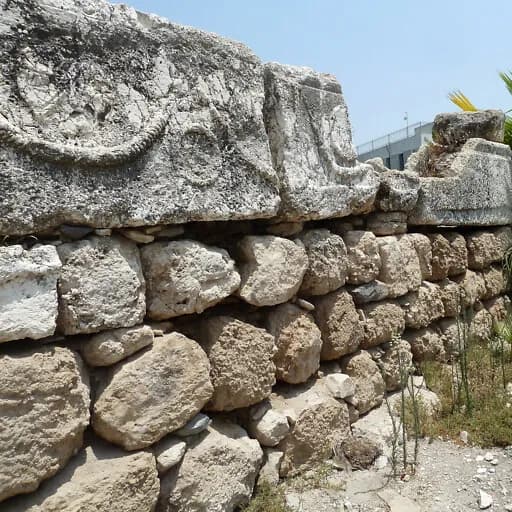
- Image: Deror_avi.