Biblical Settlement
Michmash in the Bible
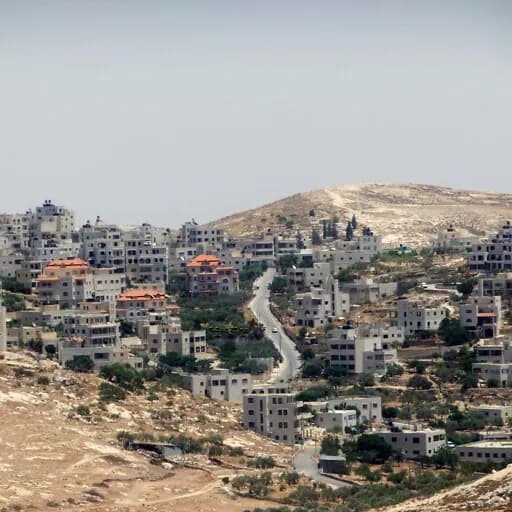
Michmash is a settlement mentioned in 11 verses across 4 books of the Bible. Known today as Mukhmas.
Verses
11
Books
4
Confidence
High
Coordinates
31.8728, 35.2769
Map
Loading map...
Key Verses About Michmash
“of which two thousand were with Saul in Michmash and in the Mount of Bethel”1 Samuel 13:2 (KJV)
“thirty thousand chariots”1 Samuel 13:5 (KJV)
“What have you done? Saul said”1 Samuel 13:11 (KJV)
“and Jonathan his son”1 Samuel 13:16 (KJV)
“And the garrison of the Philistines went out to the passage of Michmash.”1 Samuel 13:23 (KJV)
What the Commentators Say
“Chapter 13 Chapter Outline The invasion of the Philistines.(1-7) Saul sacrifices, He is reproved by Samuel.(8-14) The policy of the Philistines.(15-23) **Verses 1-7** Saul reigned one year, and nothing particular happened; but in his second year the events recorded in this chapter took place. For above a year he gave the Philistine time to prepare for war, and to weaken and to disarm the Israelites. When men are lifted up in self-sufficiency, they are often led into folly. The chief advantages of the enemies of the church are derived from the misconduct of its professed friends. When Saul at length sounded an alarm, the people, dissatisfied with his management, or terrified by the power of the enemy, did not come to him, or speedily deserted him.”
Matthew Henry's Concise Commentary on 1 Samuel 13:2
“(2) **Saul chose him three thousand men of Israel.**—This is a very important statement, as it tells us of the first beginning of a standing army in Israel. This was the first step towards the development of Israel into a great military power. It was Saul’s military genius and foresight which enabled David and Solomon to make those great conquests which raised Israel for a time to the position of one of the greatest Eastern Powers. The really great life of Saul was frittered away in repelling what may be termed Israel’s domestic enemies. such as the Philistines, Moabites, Ammonites, and Edomites; but he left behind him a powerful and disciplined army, and a nation carefully trained to war. It has been asked, how was it, considering the position of Israel and the Philistines at that juncture—the latter people possessing evidently not a few strong places in the territories of the tribes, from whence they were in the habit of sallying forth, and harassing and pillaging the people—that Saul, instead of at once declaring war, dismissed the people gathered at Gilgal, only retaining so few? The probability is that Saul, with true military instinct, saw that Israel was at this period by no means trained or armed to undertake a regular war with such an enemy. He therefore adopted the wise course here related. **Whereof two thousand were with Saul in Michmash.**—Michmash was a position strongly situated at the head of a pass some nine miles north-east of Jerusalem. The “one thousand” he placed under the command of his son Jonathan, and stationed them in the neighbourhood of his old home, where he would have the benefit of the aid of his family and kinsfolk. This is the first mention of the gallant and chivalrous prince, the story of whose unbroken and romantic friendship with David is one of the most touching episodes of these books. “If the substance of this narrative was written in David’s reign, we may perhaps see the effect of David’s generous and loving nature in the care taken to give Jonathan his due place of honour in the history.”—*Speaker’s Commentary.*”
Ellicott's Commentary for English Readers on 1 Samuel 13:2
Bible Verses Mentioning Michmash
Learn More
Nearby Biblical Places
Related Resources
Attribution
- Geographic data from OpenBible.info Bible Geocoding Data licensed under CC BY 4.0.
- Map tiles by OpenStreetMap contributors (ODbL 1.0).
- Image: יעקב.