Biblical Settlement
Mephaath in the Bible
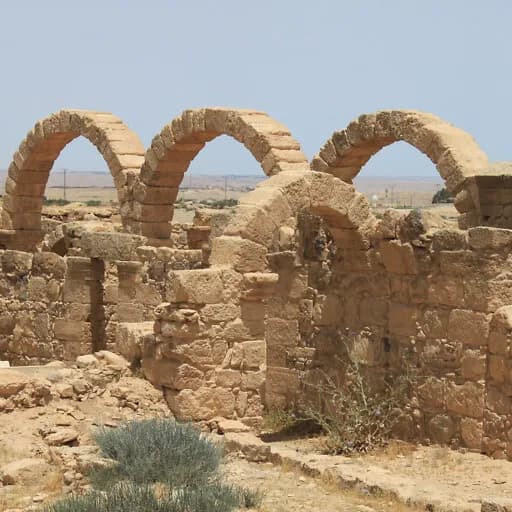
Mephaath is a settlement mentioned in 4 verses across 3 books of the Bible. Known today as Umm ar Rasas.
Verses
4
Books
3
Confidence
Moderate
Coordinates
31.4997, 35.9197
Map
Loading map...
Key Verses About Mephaath
“and Kedemoth”Joshua 13:18 (KJV)
“and Mephaath with its suburbs; four cities.”Joshua 21:37 (KJV)
“and Mephaath with its suburbs;”1 Chronicles 6:79 (KJV)
“on Holon”Jeremiah 48:21 (KJV)
What Does “Mephaath” Mean?
מוֹפַעַת (Môwphaʻath, Hebrew) — “splendour”
Mophaath or Mephaath, a place in Palestine
H4158 in Strong's Concordance →What the Commentators Say
“**Verses 7-33** The land must be divided among the tribes. It is the will of God that every man should know his own, and not take that which is another's. The world must be governed, not by force, but right. Wherever our habitation is placed, and in whatever honest way our portion is assigned, we should consider them as allotted of God; we should be thankful for, and use them as such, while every prudent method should be used to prevent disputes about property, both at present and in future. Joshua must be herein a type of Christ, who has not only conquered the gates of hell for us, but has opened to us the gates of heaven, and having purchased the eternal inheritance for all believers, will put them in possession of it. Here is a general description of the country given to the two tribes and a half, by Moses. Israel must know their own, and keep to it; and may not, under pretence of their being God's peculiar people, encroach on their neighbours. Twice in this chapter it is noticed, that to the tribe of Levi Moses gave no inheritance: see Nu 18:20. Their maintenance must be brought out of all the tribes. The ministers of the Lord should show themselves indifferent about worldly interests, and the people should take care they want nothing suitable. And happy are those who have the Lord God of Israel for their inheritance, though little of this world falls to their lot. His providences will supply their wants, his consolations will support their souls, till they gain heavenly joy and everlasting pleasures.”
Matthew Henry's Concise Commentary on Joshua 13:18
“(21) **And judgment is come upon the plain country . . .**—We enter here upon a list of less known names, of which Jahaz, Beth-diblathaim, Beth-Baal-meon are found on the Moabite Stone inscription (*Records of the Past, xi.* 165-168). Holon does not appear elsewhere. Jahazah (under the form Jahaz) appears in Numbers 21:23; Deuteronomy 2:32; Judges 11:20, as the scene of a famous battle between Sihon and the Israelites, and in Isaiah 15:4 in connexion with Heshbon and Elealeh. Mephaath was assigned to the Reubenites (Joshua 13:18), and afterwards to the Levites (Joshua 21:37; 1Chronicles 6:79), but it had clearly fallen afterwards into the hands of the Moabites. Like the other cities named, it was in the *Mishor, *or “plain,” on the north of the Arnon.”
Ellicott's Commentary for English Readers on Jeremiah 48:21
Bible Verses Mentioning Mephaath
Learn More
Nearby Biblical Places
Related Resources
Attribution
- Geographic data from OpenBible.info Bible Geocoding Data licensed under CC BY 4.0.
- Map tiles by OpenStreetMap contributors (ODbL 1.0).
- Image: Professor Bjorn Anderson.