Biblical Settlement
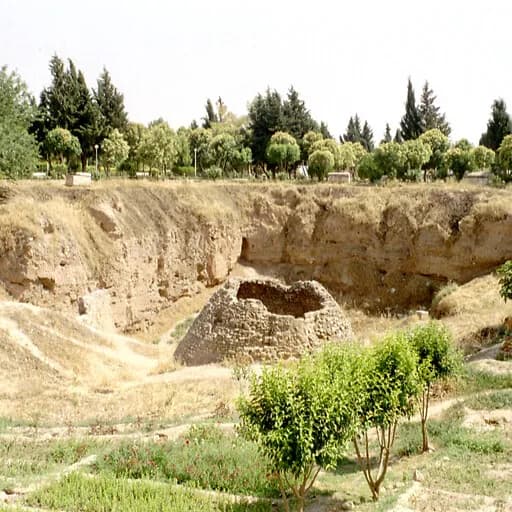
Hamath-zobah in the Bible
Hamath-zobah is a settlement mentioned in 2 verses across 2 books of the Bible. Known today as Hama.
Verses
2
Books
2
Confidence
Moderate
Coordinates
35.1365, 36.7500
Map
Loading map...
Key Verses About Hamath-zobah
“as he went to establish his dominion by the river Euphrates.”1 Chronicles 18:3 (KJV)
“and prevailed against it.”2 Chronicles 8:3 (KJV)
What Does “Hamath-zobah” Mean?
חֲמַת צוֹבָה (Chămath Tsôwbâh, Hebrew) — “fortress of Zobah”
Chamath-Tsobah
H2578 in Strong's Concordance →What the Commentators Say
“Chapter 18 Chapter Outline Good reign of Hezekiah in Judah, Idolatry.(1-8) Sennacherib invades Judah.(9-16) Rabshakeh's blasphemies.(17-37) **Verses 1-8** Hezekiah was a true son of David. Some others did that which was right, but not like David. Let us not suppose that when times and men are bad, they must needs grow worse and worse; that does not follow: after many bad kings, God raised one up like David himself. The brazen serpent had been carefully preserved, as a memorial of God's goodness to their fathers in the wilderness; but it was idle and wicked to burn incense to it. All helps to devotion, not warranted by the word of God, interrupt the exercise of faith; they always lead to superstition and other dangerous evils. Human nature perverts every thing of this kind. True faith needs not such aids; the word of God, daily thought upon and prayed over, is all the outward help we need.”
Matthew Henry's Concise Commentary on 1 Chronicles 18:3
“(3) **Hadarezer.**—Samuel, “Hadadezer” (*Hadad is help*)*,* which is correct. Hadad was a Syrian god, identical with Dadda (Rimmon), worshipped from the Euphrates to Edom and North Arabia. Comp. the royal names Benhadad and Abdadad (*i.e.,* servant of Hadad, like Obadiah, servant of Iahu), which last occurs on Syrian coins, and the Notes on 2Kings 5:18; 1Chronicles 1:46. Samuel adds. “son of Rehob.” **Zobah unto Hamath.**—Rather, *Zobah towards Hamath.* The word (*Hămáthāh;* not in Samuel) defines the position of Zobah. (Comp. 2Samuel 8:8; Ezekiel 47:16.) The town of Zobah lay somewhere near Emesa (*Horns*)*,* and not far from the present *Yabrûd,* north-east of Damascus. (The Assyrian monarch Assurbanipal mentions the towns of *Yabrudu* and *Cubiti*—*i.e.,* Zobah—in his Annals.) Its kings are spoken of in 1Samuel 14:47. Hadadezer appears to have brought the whole country under a single sceptre. **Hamath.**—See 1Chronicles 13:5, and 2Chronicles 8:4. The town lay in the valley of the Upper Orontes, west of Zobah, and north of Hermon and Damascus. **As** **he **(Hadadezer) **went.**—The occasion intended appears to be that whereof the particulars are given at 1Chronicles 19:16-19. **To stablish his** **dominion.**—Heb., *to set up his hand—i.e., *“his power.” Samuel has a different word, *to recover* his power, or *repeat* his attack. **The river Euphrates.**—The Hebrew text of Samuel has “the river.” Our text explains.”
Ellicott's Commentary for English Readers on 1 Chronicles 18:3
Bible Verses Mentioning Hamath-zobah
Learn More
Nearby Biblical Places
Related Resources
Attribution
- Geographic data from OpenBible.info Bible Geocoding Data licensed under CC BY 4.0.
- Map tiles by OpenStreetMap contributors (ODbL 1.0).
- Image: TheRealHuldra.