Biblical Settlement
City of Destruction in the Bible
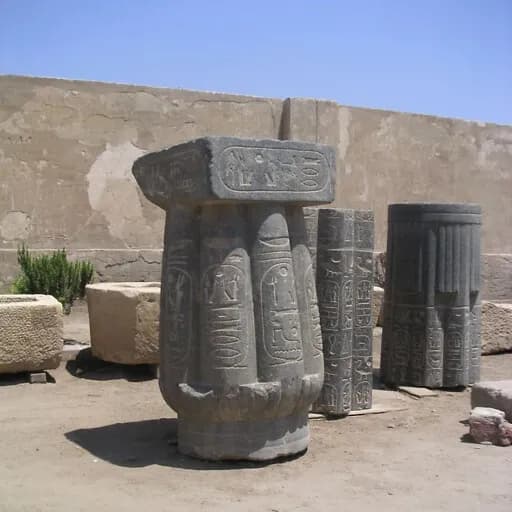
City of Destruction is a settlement mentioned in 1 verse across 1 book of the Bible. Known today as Ain Shams.
Verses
1
Books
1
Confidence
High
Coordinates
30.1294, 31.3075
Map
Loading map...
Key Verses About City of Destruction
“there will be five cities in the land of Egypt that speak the language of Canaan”Isaiah 19:18 (KJV)
What the Commentators Say
“**Verses 18-25** The words, "In that day," do not always refer to the passage just before. At a time which was to come, the Egyptians shall speak the holy language, the Scripture language; not only understand it, but use it. Converting grace, by changing the heart, changes the language; for out of the abundance of the heart the mouth speaks. So many Jews shall come to Egypt, that they shall soon fill five cities. Where the sun was worshipped, a place infamous for idolatry, even there shall be a wonderful reformation. Christ, the great Altar, who sanctifies every gift, shall be owned, and the gospel sacrifices of prayer and praise shall be offered up. Let the broken-hearted and afflicted, whom the Lord has wounded, and thus taught to return to, and call upon him, take courage; for He will heal their souls, and turn their sorrowing supplications into joyful praises. The Gentile nations shall not only unite with each other in the gospel fold under Christ, the great Shepherd, but they shall all be united with the Jews. They shall be owned together by him; they shall all share in one and the same blessing. Meeting at the same throne of grace, and serving with each other in the same business of religion, should end all disputes, and unite the hearts of believers to each other in holy love.”
Matthew Henry's Concise Commentary on Isaiah 19:18
“(18) **In that day shall five cities in the land of Egypt speak the language of Canaan.**—The prophecy is, it will be noticed, parallel to that affecting Ethiopia in Isaiah 18:7, and at least expresses the yearnings of the prophet’s heart after the conversion of Egypt to the worship of Jehovah. Like the previous prediction, it connects itself with Psalms 87, as recording the admission of proselytes as from other countries, so also from Rahab (*i.e., *Egypt). The “five cities” stand either as a certain number for an uncertain (Isaiah 30:17; Isaiah 17:6; Leviticus 26:8; 1Corinthians 14:19), or possibly as the actual number of the chief or royal cities of Egypt. The “language of Canaan” is Hebrew, and the prediction is that this will become the speech of the worshippers of Jehovah in the Egyptian cities. There is to be one universal speech for the universal Church of the true Israel. **And swear to the Lord of hosts.**—The oath, as in the parallel phrase of Isaiah 45:23, is one of allegiance, and implies, therefore, something like a covenant of obedience. **The city of destruction.**—There is probably something like a play on the name of the Egyptian city On, the Greek Heliopolis, the City of the Sun (Heb., *Ir-ha-kheres*)*, *and the word which the prophet actually uses (*Ir-ha-cheres*)*, *the “city of destruction.” The paronomasia, like in character to Ezekiel’s transformation of On into Aven, “nothingness,” or “vanity” (Ezekiel 30:17), or Hosea’s of Beth-el (“house of God”) into Bethaven (“ house of nothingness”) (Hosea 4:15), was intended to indicate the future demolition of the sun-idols, and is so interpreted in the Targum on this passage, “Bethshemesh (*i.e., *Heliopolis), whose future fate shall be destruction.” The word for destruction is cognate with the verb used of Gideon’s breaking down the image of Baal, in Judges 6:25; and in Jeremiah’s prophecy (Jeremiah 43:13), “He shall break the pillars in the house of the sun,” we may probably trace an allusive reference to Isaiah’s language. Other meanings, such as “city of rescue,” “city of protection,” “city of restoration,” have been suggested, but on inadequate grounds. The Vulg. gives *civitas solis. *The LXX. rendering, “city *asedek,” *apparently following a different reading of the Hebrew, and giving the meaning, “city of righteousness,” was probably connected historically with the erection of a Jewish temple at Leon-topolis by Onias IV., in the time of Ptolemy Philomêtor, which for some two centuries shared with the Temple at Jerusalem the homage of Egyptian Jews. Onias and his followers pointed to Isaiah’s words as giving a sanction to what their brethren in Palestine looked on as a rival and sacrilegious worship.”
Ellicott's Commentary for English Readers on Isaiah 19:18
Bible Verses Mentioning City of Destruction
Nearby Biblical Places
Related Resources
Attribution
- Geographic data from OpenBible.info Bible Geocoding Data licensed under CC BY 4.0.
- Map tiles by OpenStreetMap contributors (ODbL 1.0).
- Image: Neithsabes.