Biblical Settlement
Sheshach in the Bible
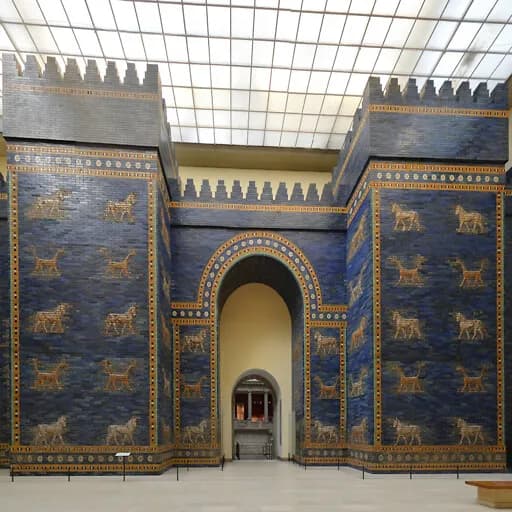
Sheshach is a settlement mentioned in 2 verses across 1 book of the Bible. Known today as Babylon.
Verses
2
Books
1
Confidence
Very High
Coordinates
32.5433, 44.4222
Map
Loading map...
Key Verses About Sheshach
“far and near”Jeremiah 25:26 (KJV)
“How is Sheshach taken! and how is the praise of the whole earth surprised! how is Babylon become an astonishment among the nations!”Jeremiah 51:41 (KJV)
What Does “Sheshach” Mean?
שֵׁשַׁךְ (Shêshak, Hebrew) — “thy fine linen”
Sheshak, a symbolic name of Babylon
H8347 in Strong's Concordance →What the Commentators Say
“Chapter 51 Exhortations to trust the Messiah. (Is. 51:1-3) The power of God, and the weakness of man. (Is. 51:4-8) Christ defends his people. (Is. 51:9-16) Their afflictions and deliverances. (Is. 51:17-23) **Verses 1-3** It is good for those privileged by the new birth, to consider that they were shapen in sin. This should cause low thoughts of ourselves, and high thoughts of Divine grace. It is the greatest comfort to be made serviceable to the glory of God. The more holiness men have, and the more good they do, the more gladness they have. Let us seriously reflect upon our guilt. To do so will tend to keep the heart humble, and the conscience awake and tender. They make Christ more precious to the soul, and give strength to our attempts and prayers for others.”
Matthew Henry's Concise Commentary on Jeremiah 51:41
“(26) **The kings of the north.**—The term is used generally (the Jews knowing comparatively little of the detailed geography of that region, the Grog, Magog, Meshech, and Tubal of Ezekiel 38, 39), as in Jeremiah 1:14, for the Scythians and other nations lying between the Caspian Sea and the Tigris. In the corresponding passage of Jeremiah 51:27, Ararat, Minni, and Ashkenaz are specially named. **The kingdoms of the world.**—The words are, of course, limited by the horizon of the prophet’s vision. As the “world” of the New Testament writers was the Roman Empire, so in the life of Jeremiah it was identical with that of Babylon. (Comp. Daniel 2:38; Daniel 4:22.) **The king of Sheshach.—**The name, which obviously is, from its position, the culminating point of the whole prophecy, is found only here and in Jeremiah 51:41. No city or country bearing this name is mentioned in the Old Testament or in any ancient writer. The traditional Rabbinic explanation is beyond doubt the true one. We have here the earliest known example of the use of a cypher-writing to disguise the meaning of what was written from all but the initiated. The cypher in this instance, known by the significant name of ATBASH (*i.e., *A taking the place of T, and T of A, B of SH, and SH of B, and so on), consisted in the use of the Hebrew alphabet in an inverted order, thus giving SHeSHaCH as an equivalent for BaBeL. This, then, was the crowning mystery reserved to the last. The Chaldæan kingdom was to do its work as the scourge of God upon the nations; but it was simply an instrument in His hand, as the Assyrians had been in their day (Isaiah 10:15); and when the work was done, the law of a righteous retribution would be felt by it and by its rulers. It adds to the point of the enigma that the word Sheshach would suggest to an Hebrew, taking its probable etymology, the idea of “crouching” or “sinking.” It may be noted (1) that the use of such a cypher seems to belong to the same mental characteristics as the prominence of the Hebrew alphabet in the acrostic structure of the Lamentations; (2) that the name is omitted by the LXX. both here and in Jeremiah 51:41; and (3) that another instance of the same cypher is found in Jeremiah 51:1. The second fact is presumptive evidence that it was not found in the copy which the Greek translators had before them; and the natural inference from this is that there were two editions of the prophecy even in the prophet’s time—one with and the other without the enigmatic word, the latter being probably the earlier of the two, the former adding, for the comfort of Israel, at once the limits of their exile (Jeremiah 25:14), and this intimation (so veiled that the Chaldæans, if they came across it, would not be likely to understand its meaning) of the way in which it would at last be brought to its close. The use of the cypher has, however, been questioned by some writers, who refer the name to *shishaki, *a possible form of the name of the moon-god of the Chaldæans (Rawlinson: Herod, i., p. 616). If the existence of any obscure region bearing the name could be proved, it would still be perfectly compatible with the use of the cypher, as veiling its true significance. Other meanings for the word, such as “the warlike city,” “the king’s palace,” have been suggested by recent scholars.”
Ellicott's Commentary for English Readers on Jeremiah 25:26
Bible Verses Mentioning Sheshach
Nearby Biblical Places
Related Resources
Attribution
- Geographic data from OpenBible.info Bible Geocoding Data licensed under CC BY 4.0.
- Map tiles by OpenStreetMap contributors (ODbL 1.0).
- Image: Radomir Vrbovsky.