Biblical Island
Samothrace in the Bible
Samothrace is an island mentioned in 1 verse across 1 book of the Bible. Known today as Samothraki.
Verses
1
Books
1
Confidence
Very High
Coordinates
40.4500, 25.5833
Map
Loading map...
Key Verses About Samothrace
“we made a straight course to Samothrace”Acts 16:11 (KJV)
What the Commentators Say
“**Verses 6-15** The removals of ministers, and the dispensing the means of grace by them, are in particular under Divine conduct and direction. We must follow Providence: and whatever we seek to do, if that suffer us not, we ought to submit and believe to be for the best. People greatly need help for their souls, it is their duty to look out for it, and to invite those among them who can help them. And God's calls must be complied with readily. A solemn assembly the worshippers of God must have, if possible, upon the sabbath day. If we have not synagogues, we must be thankful for more private places, and resort to them; not forsaking the assembling together, as our opportunities are. Among the hearers of Paul was a woman, named Lydia. She had an honest calling, which the historian notices to her praise. Yet though she had a calling to mind, she found time to improve advantages for her soul. It will not excuse us from religious duties, to say, We have a trade to mind; for have not we also a God to serve, and souls to look after? Religion does not call us from our business in the world, but directs us in it. Pride, prejudice, and sin shut out the truths of God, till his grace makes way for them into the understanding and affections; and the Lord alone can open the heart to receive and believe his word. We must believe in Jesus Christ; there is no coming to God as a Father, but by the Son as Mediator.”
Matthew Henry's Concise Commentary on Acts 16:11
“(11) **We came with a straight course to Samothracia.**—Their course lay to the north-west, and, probably, after the manner of the navigation of the time, they put into harbour each night; and the historian, with his characteristic love of geographical detail (see *Introduction to St. Luke’s Gospel*)*, *notes the main facts of the voyage. The “straight course” implies that they had the wind in their favour. The current, which sets to the south after leaving the Hellespont, and to the east between Samothrace and the mainland, would, of course, be against them. In Acts 20:6, the voyage from Philippi to Troas takes five, days. The name of Samothrace points, probably, to its having been a colony from Samos. In early Greek history it had been one of the chief seats of the worship of the Pelasgic race, and, besides the mysteries of Demeter and Persephone, which it had in common with the rest of Greece, was celebrated for the local *cultus* of the Cabiri, a name of uncertain origin, and applied to the twelve great gods. **The next day to Neapolis.**—The name (=new town) was naturally common wherever Greek was spoken. It survives in two conspicuous instances—in Naples, and in *Nablous* as the modern name of Sychem. The town now before us was in Thrace, about twelve miles from Philippi, which was the frontier town of Macedonia. It has been identified, on adequate grounds, with the modern *Kavalla, *where a Roman aqueduct, columns, and Greek and Latin inscriptions remain to attest the former importance of the city. Ten or twelve miles to the west are the traces of another harbour at *Eski Kavalla, *which was probably the Palæopolis (= old town) that had been superseded by the new port.”
Ellicott's Commentary for English Readers on Acts 16:11
Bible Verses Mentioning Samothrace
Learn More
Nearby Biblical Places
Related Resources
Attribution
- Geographic data from OpenBible.info Bible Geocoding Data licensed under CC BY 4.0.
- Map tiles by OpenStreetMap contributors (ODbL 1.0).
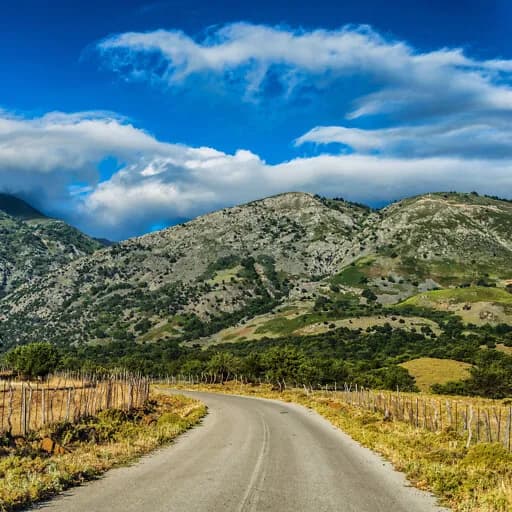
- Image: Angelos Konstantinidis.