Biblical Region
Persia in the Bible
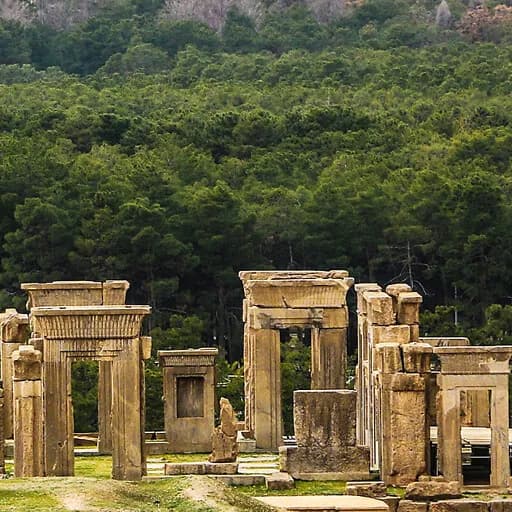
Persia is a region mentioned in 27 verses across 5 books of the Bible. Known today as Tell Hagmatana.
Verses
27
Books
5
Confidence
Very High
Coordinates
34.8065, 48.5162
Map
Loading map...
Key Verses About Persia
“And them that had escaped from the sword carried he away to Babylon; where they were servants to him and his sons until the reign of the kingdom of Persia:”2 Chronicles 36:20 (KJV)
“that the word of Yahweh by the mouth of Jeremiah might be accomplished”2 Chronicles 36:22 (KJV)
“All the kingdoms of the earth has Yahweh”2 Chronicles 36:23 (KJV)
“that the word of Yahweh by the mouth of Jeremiah might be accomplished”Ezra 1:1 (KJV)
“All the kingdoms of the earth has Yahweh”Ezra 1:2 (KJV)
What the Commentators Say
“Chapter 38 Jeremiah is cast into a dungeon, from whence he is delivered by an Ethiopian. (Jr 38:1-13) He advises the king to surrender to the Chaldeans. (Jr 38:14-28) **Verses 1-13** Jeremiah went on in his plain preaching. The princes went on in their malice. It is common for wicked people to look upon God's faithful ministers as enemies, because they show what enemies the wicked are to themselves while impenitent. Jeremiah was put into a dungeon. Many of God's faithful witnesses have been privately made away in prisons. Ebed-melech was an Ethiopian; yet he spoke to the king faithfully, These men have done ill in all they have done to Jeremiah. See how God can raise up friends for his people in distress. Orders were given for the prophet's release, and Ebed-melech saw him drawn up. Let this encourage us to appear boldly for God. Special notice is taken of his tenderness for Jeremiah. What do we behold in the different characters then, but the same we behold in the different characters now, that the Lord's children are conformed to his example, and the children of Satan to their master?”
Matthew Henry's Concise Commentary on Ezekiel 38:5
“I. THE FIRST RETURN UNDER ZERUBBABEL. (1-4) The decree of Cyrus: marking an epoch of very great importance, and therefore repeated almost word for word from the end of Chronicles. (1) **The first year.**—Cyrus became king of Persia in B.C. 559. Twenty years afterwards he took Babylon from Belshazzar; and this first year of his rule in Babylon was his beginning as an agent in Jewish affairs and for the Kingdom of God. **Stirred up.**—By a direct influence, probably through the instrumentality of Daniel. This prophet we may suppose Cyrus to have found in Babylon, and to have had his mind directed to the express prediction of Isaiah 44:28, where his name is mentioned. But the writer, who again and again records the prophetic intervention of Haggai and Zechariah (Ezra 5:1; Ezra 6:14), makes no allusion to the part that Daniel the earlier prophet had taken. He refers only to the Divine prediction by Jeremiah, which must be fulfilled: “And it shall come to pass, when seventy years are accomplished, that I will punish the king of Babylon” ( Jeremiah 25:12); “For thus saith the Lord, that after seventy years be accomplished at Babylon, I will visit you, and perform my good word toward you, in causing you to return to this place” (Jeremiah 29:10). (2) **Thus saith Cyrus king of Persia.**—In the interpretation of this decree two courses are open. We may suppose that “the spirit” of Cyrus was so effectually “stirred up” by the Spirit of God, through the prophecies of Isaiah, as to send out a written proclamation avowing his faith in Jehovah-Elohim, and thus publicly accepting the prediction: *“*He hath charged me to build.” In this case the parenthesis of Ezra 1:3 (He is the God) may be compared with the confession of his father-in-law, Darius the Mede: “He is the living God” (Daniel 6:26). Or we may assume that “Ormazd” in the original was reproduced in the Hebrew version that accompanied it by its equivalent, *“*Jehovah.” The latter supposition avoids the difficulty involved in making Cyrus disavow the national faith in the presence of his empire. The decree itself runs much in the style of those found in the majority of Persian inscriptions, such as “By the grace of Ormazd is Darius king;” and the spirit of tolerance! and piety in it is perfectly in harmony with all ancient testimonies to the character of Cyrus. (4) **Whosoever remaineth.**—*As to all the Remnant in all places.* There is a singular correspondence between this and the beginning of Nehemiah; but there this familiar name for the survivors of the great national catastrophe is used of those who had returned to Jerusalem, while here it is used for the dispersion in all the provinces of the empire (Nehemiah 1:3). **Where he sojourneth.**—Every individual Jew is thus significantly supposed to be only an exile. **Let the men of his place help him.**—The heathen subjects of Cyrus are required to assist the departing sojourner, and expected also to send freewill offerings to the Temple. Note that in all these terms the spirit and phrase of the Hebrew people are used; and that there was more in the decree than is here given, as appears in the sequel. Cyrus was under strong influence, both human and Divine.”
Ellicott's Commentary for English Readers on Ezra 1:1
Bible Verses Mentioning Persia
Ezra(12)
Learn More
Nearby Biblical Places
Related Resources
Attribution
- Geographic data from OpenBible.info Bible Geocoding Data licensed under CC BY 4.0.
- Map tiles by OpenStreetMap contributors (ODbL 1.0).
- Image: Hadis Faghiri.