Biblical Hill
Mount Mizar in the Bible
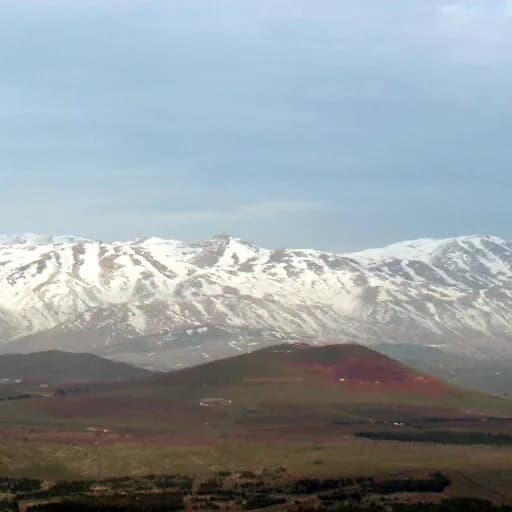
Mount Mizar is a hill mentioned in 1 verse across 1 book of the Bible. Known today as Mount Hermon.
Verses
1
Books
1
Confidence
Moderate
Coordinates
33.4000, 35.8500
Map
Loading map...
Key Verses About Mount Mizar
“my soul is in despair within me. Therefore I remember you from the land of the Jordan”Psalms 42:6 (KJV)
What the Commentators Say
“**Verses 6-11** The way to forget our miseries, is to remember the God of our mercies. David saw troubles coming from God's wrath, and that discouraged him. But if one trouble follow hard after another, if all seem to combine for our ruin, let us remember they are all appointed and overruled by the Lord. David regards the Divine favour as the fountain of all the good he looked for. In the Saviour's name let us hope and pray. One word from him will calm every storm, and turn midnight darkness into the light of noon, the bitterest complaints into joyful praises. Our believing expectation of mercy must quicken our prayers for it. At length, is faith came off conqueror, by encouraging him to trust in the name of the Lord, and to stay himself upon his God. He adds, And my God; this thought enabled him to triumph over all his griefs and fears. Let us never think that the God of our life, and the Rock of our salvation, has forgotten us, if we have made his mercy, truth, and power, our refuge. Thus the psalmist strove against his despondency: at last his faith and hope obtained the victory. Let us learn to check all unbelieving doubts and fears. Apply the promise first to ourselves, and then plead it to God.”
Matthew Henry's Concise Commentary on Psalms 42:6
“(6) **Cast down.**—The poet, though faith condemns his dejection, still feels it, and cannot help expressing it. The heart will not be tranquil all at once, and the utterance of its trouble, so natural, so pathetic, long after served, in the very words of the LXX., to express a deeper grief, and mark a more tremendous crisis (John 12:27; Matthew 26:38). **Therefore will I.**—Better, *therefore do I *remember thee. (Comp. Jonah 2:7.) **From the land of Jordan**—*i.e.*, the uplands of the north-east, where the river rises. The poet has not vet passed quite into the land of exile, the country beyond Jordan, but already he is on its borders, and as his sad eyes turn again and again towards the loved country he is leaving, its sacred summits begin to disappear, while ever nearer and higher rise the snow-clad peaks of Hermon. **Hermonites.**—Rather, *of the Hermons, i.e., *either collectively for the whole range (as generally of mountains, the Balkans, etc.) or with reference to the appearance of the mountain as a ridge with a conspicuous peak at either end. (See Thomson, *Land and Book, *p. 177.) In reality, however, the group known especially as Hermon has three summits, situated, like the angles of a triangle, a quarter of a mile from each other, and of almost equal elevation. (See Smith’s *Bible Dict*., “Hermon.” Comp. *Our Work in Palestine, *p. 246.) **The hill Mizar.**—Marg., *the little hill. *So LXX. and Vulg., *a monte modico. *(Comp. the play on the name Zoar in Genesis 19:20.) Hence some think the poet is contrasting Hermon with Zion. In such a case, however, the custom of Hebrew poetry was to exalt Zion, and not depreciate the higher mountains, and it is very natural to suppose that some lower ridge or pass, over which the exile may be supposed wending his sad way, was actually called “the little,” or “the less.””
Ellicott's Commentary for English Readers on Psalms 42:6
Bible Verses Mentioning Mount Mizar
Learn More
Nearby Biblical Places
Related Resources
Attribution
- Geographic data from OpenBible.info Bible Geocoding Data licensed under CC BY 4.0.
- Map tiles by OpenStreetMap contributors (ODbL 1.0).
- Image: Almog.