Biblical Mountain
Mount Baal-hermon in the Bible
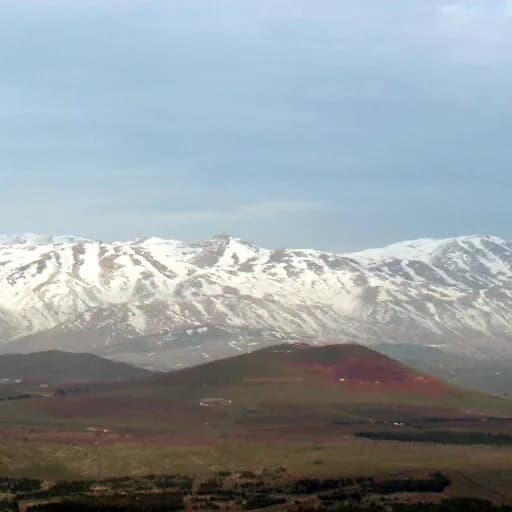
Mount Baal-hermon is a mountain mentioned in 1 verse across 1 book of the Bible. Known today as Mount Hermon.
Verses
1
Books
1
Confidence
Very High
Coordinates
33.4000, 35.8500
Map
Loading map...
Key Verses About Mount Baal-hermon
“the five lords of the Philistines”Judges 3:3 (KJV)
What the Commentators Say
“Chapter 3 Chapter Outline The nations left to prove Israel.(1-7) Othniel delivers Israel.(8-11) Ehud delivers Israel from Eglon.(12-30) Shamgar delivers and judges Israel.(31) **Verses 1-7** As the Israelites were a type of the church on earth, they were not to be idle and slothful. The Lord was pleased to try them by the remains of the devoted nations they spared. Temptations and trials detect the wickedness of the hearts of sinners; and strengthen he graces of believers in their daily conflict with Satan, sin, and this evil world. They must live in this world, but they are not of it, and are forbidden to conform to it. This marks the difference between the followers of Christ and mere professors. The friendship of the world is more fatal than its enmity; the latter can only kill the body, but the former murders many precious souls.”
Matthew Henry's Concise Commentary on Judges 3:3
“(3) **Five lords of the Philistines.**—The princes of the Pentapolis, Gaza, Ashdod, Askelon, Gath, Ekron. The word rendered “lords” is evidently a technical or local *title—Seranim. *It is rendered by the LXX. *“satrapies,” *and by the Vulgate, “satraps.” It is variously derived from *seren, *“a hinge” (comp. “cardinal” from “cardo”); from *sar, *“a prince,” being interchanged with *sarim, *in 1 Sam. 13:30; 1Samuel 29:6 (Ewald, i. 332); and from some Phœnician root. For the Philistines, see Judges 13:1. **All the Canaanites.**—Of the *shephēlah *or maritime plain. **The Sidonians.**—In Genesis 10:15 “Sidon” is the eldest son of Canaan. They maintained their complete independence to the last. **The Hivites that dwelt in Mount Lebanon.**—In Joshua 11:3 they are described as living “under Hermon, in the land at Mizpeh,” whence Mizpeh has been identified with “el-Mutalleh,” which also means “the look-out” or “watch-tower.” The name has been derived from *Havvah, *a circular encampment or village, because they lived (as they do to this day in northern Syria) in circular villages, with enclosures for cattle in the centre. Ewald ( i. 318) supposes that the word means “midlanders,” and Gesenius “villagers.” The Hivite is the sixth son of Canaan, in Genesis 10:17. **Mount Baal-hermon unto the entering in of Hamath.**—In Joshua 13:5 we have “from Baal-gad under mount Hermon unto,” &c. Baal-gad is also mentioned in Joshua 12:7; Joshua 11:17, and is usually supposed to be Paneas or Cesarea Philippi. It was probably a temple of Baal, but must be farther south than Baalbek. The hill of Paneas is therefore, in all probability, “ *Mount *Baal-hermon,” and Baal-hermon may be only another name for Baal-gad. Fürst supposes that both Gad and Gedi (in Engedi) are names of Astarte. **The entering in of Hamath.**—This is the usual phrase to describe the northern boundary of Canaan. The LXX. take it as a proper name, *Labo emath.*”
Ellicott's Commentary for English Readers on Judges 3:3
Bible Verses Mentioning Mount Baal-hermon
Nearby Biblical Places
Related Resources
Attribution
- Geographic data from OpenBible.info Bible Geocoding Data licensed under CC BY 4.0.
- Map tiles by OpenStreetMap contributors (ODbL 1.0).
- Image: Almog.