Biblical Settlement
Mamre in the Bible
Mamre is a settlement mentioned in 6 verses across 1 book of the Bible. Known today as Ramat el Khalil.
Verses
6
Books
1
Confidence
High
Coordinates
31.5565, 35.1053
Map
Loading map...
Key Verses About Mamre
“which was in Machpelah”Genesis 23:17 (KJV)
“Abraham buried Sarah his wife in the cave of the field of Machpelah before Mamre (that is”Genesis 23:19 (KJV)
“his sons”Genesis 25:9 (KJV)
“to Mamre”Genesis 35:27 (KJV)
“which is before Mamre”Genesis 49:30 (KJV)
What Does “Mamre” Mean?
What the Commentators Say
“**Verses 14-20** Prudence, as well as justice, directs us to be fair and open in our dealings; cheating bargains will not bear the light. Abraham, without fraud or delay, pays the money. He pays it at once in full, without keeping any part back; and by weight, current money with the merchant, without deceit. See how anciently money was used for the help of trade, and how honestly it should be paid when it is due. Though all the land of Canaan was Abraham by promise, yet the time of his possessing it not being come, what he had occasion for he bought and paid for. Dominion is not founded in grace. The saints' title to an eternal inheritance does not entitle them to the possessions of this world, nor justify them in doing wrong. Ephron honestly and fairly makes a good title to the land. As that which is bought, must be honestly paid for, so that which is sold, must be honestly delivered and secured. Let us manage our concerns with punctuality and exactness, in order to avoid contention. Abraham buried Sarah in cave. or vault, which was in the purchased field. It would tend to endear the land to his posterity. And it is worth noting, that a burying-place was the only piece of the land which Abraham possessed in Canaan. Those who have least of this earth, find a grave in it. This sepulchre was at the end of the field; whatever our possessions are, there is a burial-place at the end of them. It was a token of his belief and expectation of the resurrection. Abraham is contented to be still a pilgrim while he lives, but secures a place where, when he dies, his flesh may rest in hope. After all, the chief concern is, with whom we shall rise.”
Matthew Henry's Concise Commentary on Genesis 23:17
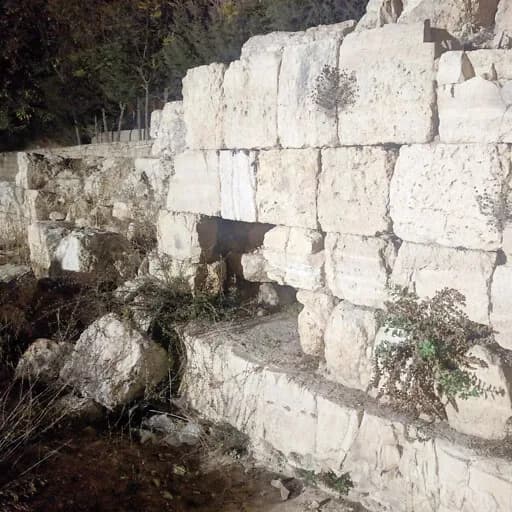
“(17) **Before Mamre.**—That is, opposite to it. The Haram wherein the bodies of Abraham and Sarah lie, is situated on the eastern side of the valley, so that Abraham’s oak-grove must have been on its western slope. The old Christian tradition, which places it at Ramet-el-Chalil, does not agree with this description, and is, moreover, too far away. The remains pointed out there as those of Abraham’s house, are the ruins of a heathen temple. But it is useless to look for any remains of the abode of a nomad dwelling in tents, especially after the site has been occupied by a great city. Moreover, Hebron itself has changed its position. For Benjamin of Tudela, who visited it nearly seven centuries ago, says that the old Hebron was on the heights, but had been abandoned, and that the new city lay in the valley. **The field, and the cave . . . —**It is interesting to compare this document, so legally exact and full, with the numerous tablets of terra-cotta now in our museums, and which record with equal exactness the daily business transactions of the people of Ur-Chasdim, whence Abraham had migrated.”
Ellicott's Commentary for English Readers on Genesis 23:17
People Connected to Mamre
Bible Verses Mentioning Mamre
Learn More
Nearby Biblical Places
Related Resources
Attribution
- Geographic data from OpenBible.info Bible Geocoding Data licensed under CC BY 4.0.
- Map tiles by OpenStreetMap contributors (ODbL 1.0).
- Image: Yywilk.