Biblical Settlement
Ellasar in the Bible
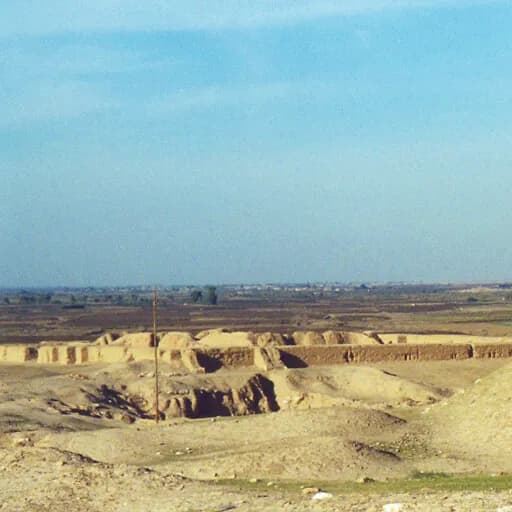
Ellasar is a settlement mentioned in 2 verses across 1 book of the Bible. Known today as Assur.
Verses
2
Books
1
Confidence
Moderate
Coordinates
35.4567, 43.2625
Map
Loading map...
Key Verses About Ellasar
“king of Shinar”Genesis 14:1 (KJV)
“and Tidal king of Goiim”Genesis 14:9 (KJV)
What Does “Ellasar” Mean?
אֶלָּסָר (ʼEllâçâr, Hebrew) — “God is chastener”
Ellasar, an early country of Asia
H495 in Strong's Concordance →What the Commentators Say
“Chapter 14 Chapter Outline The battle of the kings, Lot is taken prisoner.(1-12) Abram rescues Lot.(13-16) Melchizedek blesses Abram.(17-20) Abram restores the spoil.(21-24) **Verses 1-12** The wars of nations make great figure in history, but we should not have had the record of this war if Abram and Lot had not been concerned. Out of covetousness, Lot had settled in fruitful, but wicked Sodom. Its inhabitants were the most ripe for vengeance of all the descendants of Canaan. The invaders were from Chaldea and Persia, then only small kingdoms. They took Lot among the rest, and his goods. Though he was righteous, and Abram's brother's son, yet he was with the rest in this trouble. Neither our own piety, nor our relation to the favourites of Heaven, will be our security when God's judgments are abroad. Many an honest man fares the worse for his wicked neighbours: it is our wisdom to separate, or at least to distinguish ourselves from them, 2Co 6:17. So near a relation of Abram should have been a companion and a disciple of Abram. If he chose to dwell in Sodom, he must thank himself if he share in Sodom's losses. When we go out of the way of our duty, we put ourselves from under God's protection, and cannot expect that the choice made by our lusts, should end to our comfort. They took Lot's goods; it is just with God to deprive us of enjoyments, by which we suffer ourselves to be deprived of the enjoyment of him.”
Matthew Henry's Concise Commentary on Genesis 14:1
“XIV. INVASION OF THE JORDAN VALLEY BY CHEDOR-LAOMER, KING OF ELAM. (1) **It came to pass.**—Connected with the settlement of Lot in the Jordan valley is one of the most remarkable episodes in the whole of the Bible, derived either from Canaanite records, or, as Mr. Sayce thinks (*Chald. Genesis, *p. 72), from those of Babylon. The latter view is made the more probable by the fact that Amraphel, though but a subject king, is placed first; and the way in which the patriarch is described in it, as “Abram the Hebrew,” seems certainly to suggest that we have to do here with a narrative of foreign origin. Its incorporation with the history admirably sets forth the consequences of Lot’s choice in the troubles, and even ruin, which overtook him, the bravery and power of Abram, and his generosity to the rescued kings. It is also most interesting, as showing Abram’s relation to the Amorites, among whom he lived, and the existence in Palestine of a Semitic population, who still worshipped “the most high God,” and over whom one of the noblest figures in the Old Testament was king. The narrative is Jehovistic, for Abram calls God *Jehovah El Elton, *but is, nevertheless, of such ancient date as to forbid the acceptance of the theory which regards the occurrence of the name Jehovah as a proof of later authorship. Upon Elam and the conquests and route of Chedorlaomer, see Excursus at end of this book. **Amraphel.**—An Accadian name, which Lenormant has found on Babylonian cylinders, and which he explains as meaning “the circle of the year.” **Shinar.**—See on Genesis 10:10. **Arioch.**—*i.e., Eriaku, *which in Accadian means “servant of the moon-god.” He was king of Ellasar, *i.e., *Al-Larsa, *the city of Larsa, *now called Senkereh. It is situated on the left bank of the Euphrates, in Lower Babylonia, and has contributed some very ancient tablets to the collection in the British Museum. The name occurs again in Daniel 2:14. **Tidal.**—More correctly in the LXX., *Thargal, *that is, Tur-gal. *the great son *(Sayce). In the Syriac he is called “Thargil, king of the Gelae,” the latter being a mistake, through reading Gelim for Goim. This word does not mean “nations,” but is a proper name, spelt *Gutium *in the inscriptions, “by which the Accadians designated the whole tract of country which extended from the Tigris to the eastern borders of Media, including the district afterwards known as Assyria” (*Chald. Gen., *p. 197).”
Ellicott's Commentary for English Readers on Genesis 14:1
Bible Verses Mentioning Ellasar
Learn More
Nearby Biblical Places
Related Resources
Attribution
- Geographic data from OpenBible.info Bible Geocoding Data licensed under CC BY 4.0.
- Map tiles by OpenStreetMap contributors (ODbL 1.0).
- Image: Véronique Dauge.