Biblical Settlement
Calneh 1 in the Bible
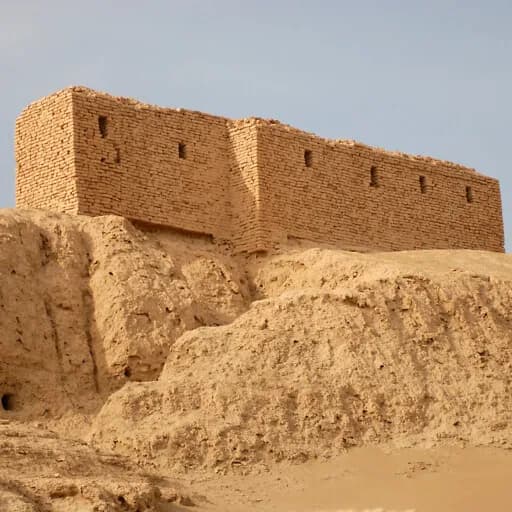
Calneh 1 is a settlement mentioned in 1 verse across 1 book of the Bible. Known today as Nippur.
Verses
1
Books
1
Confidence
Low
Coordinates
32.1261, 45.2308
Map
Loading map...
Key Verses About Calneh 1
“Erech”Genesis 10:10 (KJV)
What the Commentators Say
“**Verses 8-14** Nimrod was a great man in his day; he began to be mighty in the earth, Those before him were content to be upon the same level with their neighbours, and though every man bare rule in his own house, yet no man pretended any further. Nimrod was resolved to lord it over his neighbours. The spirit of the giants before the flood, who became mighty men, and men of renown, Ge 6:4, revived in him. Nimrod was a great hunter. Hunting then was the method of preventing the hurtful increase of wild beasts. This required great courage and address, and thus gave an opportunity for Nimrod to command others, and gradually attached a number of men to one leader. From such a beginning, it is likely, that Nimrod began to rule, and to force others to submit. He invaded his neighbours' rights and properties, and persecuted innocent men; endeavouring to make all his own by force and violence. He carried on his oppressions and violence in defiance of God himself. Nimrod was a great ruler. Some way or other, by arts or arms, he got into power, and so founded a monarchy, which was the terror of the mighty, and bid fair to rule all the world. Nimrod was a great builder. Observe in Nimrod the nature of ambition. It is boundless; much would have more, and still cries, Give, give. It is restless; Nimrod, when he had four cities under his command, could not be content till he had four more. It is expensive; Nimrod will rather be at the charge of rearing cities, than not have the honour of ruling them. It is daring, and will stick at nothing. Nimrod's name signifies rebellion; tyrants to men are rebels to God. The days are coming, when conquerors will no longer be spoken of with praise, as in man's partial histories, but be branded with infamy, as in the impartial records of the Bible.”
Matthew Henry's Concise Commentary on Genesis 10:10
“(10) **The beginning of his kingdom.**—Nimrod’s empire began with the cities enumerated in this verse, and thence extended into Assyria, as is mentioned in Genesis 10:11. First, then, he established his sovereignty “in the land of Shinar: “that is, in Babylonia, the lower portion of Mesopotamia, as distinguished from Assyria, the upper portion. It is called *Sumir *in the cuneiform inscriptions. In Micah 5:6 Babylonia is called “the land of Nimrod.” His cities there were four. **Babel.**—That is, *Bab-ili, *“the gate of God,” the literal translation in Assyrian of its previous Accadian name, Ca-dimirra (*Chald. Gen., *p. 168). In Genesis 11:9 the word is derisively derived from a Hebrew root meaning *confusion, *because of the confusion of tongues there. **Erech.**—“At the time of the opening of the Izdubar legends, the great city of the south of Babylonia was Urak, called in Genesis Erech” (*Chald. Gen., *p. 192). It was ravaged by Kudur-nankhunte, king of Elam, in the year B.C. 2280, according to an inscription of Assurbanipal (B.C. 670). It lies about thirty leagues to the south-east of Babylon, and is now called Warka. From the numerous mounds and remains of coffins discovered there, it is supposed to have been the early burial-place of the Assyrian kings. (See also Rawlin-son’s *Ancient Monarchies, *1, pp. 18, 156.) **Accad.**—This name, which was meaningless fifty years ago, is now a household word in the mouth of Assyriologers; for in deciphering the cuneiform literature it was found that many of the works, especially in the library of Sargon, were translations from an extinct language; and as these were deciphered it gradually became evident that before any inhabitants of the Semitic stock had entered Chaldea it had been peopled by the Accadians, a black race, who had been “the builders of its cities, the inventors of the cuneiform system of writing, and the founders of the culture and civilisation afterwards borrowed by the Semites” (*Chald. Gen., *p. 19). This Sargon, who was king of Agané, in Babylonia, about B.C. 1800. is of course a different person from the Ninevite Sargon mentioned in Isaiah 20:1, who also was the founder of a noble library about B.C. 721; and as the Accadian language was already in his days passing away, this earlier or Babylonian Sargon caused translations to be made, especially of those works in which the Accadians had recorded their astronomical and astrological observations, and placed them in his library at Agané. Previously also “Semitic translations of Accadian works had been made for the library of Erech, one of the earliest seats of Semitic power” (*Ibid, *p. 21). Mr. Sayce places the conquest of Shinar by the Semites at some period two or three thousand years before the Christian era, and thus the founding of these cities and the empire of the Accadians goes back to a still more remote date, especially as the struggle between them and their conquerors was a very prolonged one (*Ibid, *p. 20). **Calneh.**—The Caino of Isaiah 10:9, where the LXX. read, “Have I not taken the region above Babylon and Khalanné, where the tower was built?” It was thus opposite Babylon, and the site of the tower of Babel (see *Chald. Gen., *p. 75, and Note on Genesis 11:9). The other place suggested, Ctesiphon, is not in Shinar, but in Assyria.”
Ellicott's Commentary for English Readers on Genesis 10:10
People Connected to Calneh 1
Bible Verses Mentioning Calneh 1
Learn More
Nearby Biblical Places
Related Resources
Attribution
- Geographic data from OpenBible.info Bible Geocoding Data licensed under CC BY 4.0.
- Map tiles by OpenStreetMap contributors (ODbL 1.0).
- Image: Jasmine N. Walthall, U.S. Army.