Biblical Settlement
Beth-haggan in the Bible
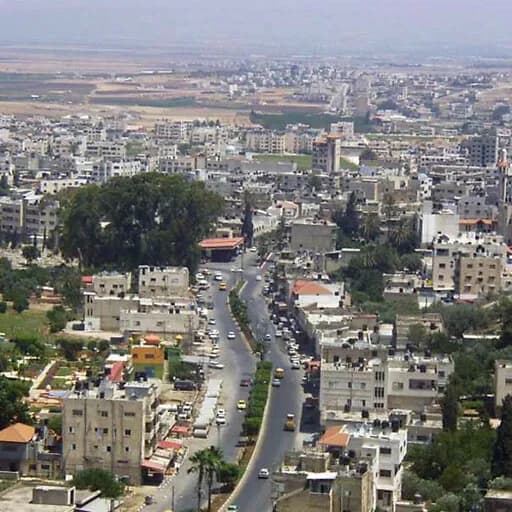
Beth-haggan is a settlement mentioned in 1 verse across 1 book of the Bible. Known today as Tell Jenin.
Verses
1
Books
1
Confidence
High
Coordinates
32.4608, 35.2987
Map
Loading map...
Key Verses About Beth-haggan
“he fled by the way of the garden house. Jehu followed after him”2 Kings 9:27 (KJV)
What the Commentators Say
“**Verses 16-29** Jehu was a man of eager spirit. The wisdom of God is seen in the choice of those employed in his work. But it is not for any man's reputation to be known by his fury. He that has rule over his own spirit, is better than the mighty. Joram met Jehu in the portion of Naboth. The circumstances of events are sometimes ordered by Divine Providence to make the punishment answer to the sin, as face answers to face in a glass. The way of sin can never be the way of peace, Is 57:21. What peace can sinners have with God? No peace so long as sin is persisted in; but when it is repented of and forsaken, there is peace. Joram died as a criminal, under the sentence of the law. Ahaziah was joined with the house of Ahab. He was one of them; he had made himself so by sin. It is dangerous to join evil-doers; we shall be entangled in guilt and misery by it.”
Matthew Henry's Concise Commentary on 2 Kings 9:27
“(27) **But when . . . saw this.**—*Now Ahaziah . . . had seen it; and he fled, &c.* **By the way of the garden house**—i.e., in the direction of the garden house, which was probably a sort of arbour or drinking pavilion near the gates of the palace gardens, of which Naboth’s vineyard formed a part. Ahaziah wished to escape from the royal park as fast as he could. **Smite him also in the chariot.**—The Hebrew is much more suited to the excitement of the occasion: *Him too! shoot him in the chariot!* (Here and in 2Kings 9:13, *supra, ‘el*, “into,” seems equivalent to *‘al,* “upon.”) **And they did so.**—Some such words as these may have fallen out of the Hebrew text. So the Syriac: “Him also! slay him! and they slew him in his chariot, on the ascent of Gur,” &c. But the rendering of the LXX. involves the least change, and is probably right: “Him too! And he smote him in the chariot, in the going up,” &c. This is more graphic. Jehu simply ejaculates,” Him too! “and, after a hot pursuit, shoots his second victim, at the ascent or declivity of Gur, where Ahaziah’s chariot would be forced to slacken speed. The ascent of Gur is not mentioned elsewhere. Ibleam lay between Jezreel and Megiddo. (Comp. Judges 1:27; Joshua 17:11.) **And he fled to Megiddo, and died there.**—See the Note on 2Chronicles 22:9, where a different tradition respecting the end of Ahaziah is recorded. The definite assignment of localities in the present account is a mark of greater trustworthiness. The way in which Rashi, whom Keil follows, attempts to combine the two accounts, is revolting to common sense. It would be better to assume a corruption of the text in one or the other narrative. **Megiddo.**—Identified in the cuneiform inscriptions as *Magidû or Magadû*.”
Ellicott's Commentary for English Readers on 2 Kings 9:27
Bible Verses Mentioning Beth-haggan
Nearby Biblical Places
Related Resources
Attribution
- Geographic data from OpenBible.info Bible Geocoding Data licensed under CC BY 4.0.
- Map tiles by OpenStreetMap contributors (ODbL 1.0).
- Image: Qasrawi 2000.