Biblical Region
Ararat in the Bible
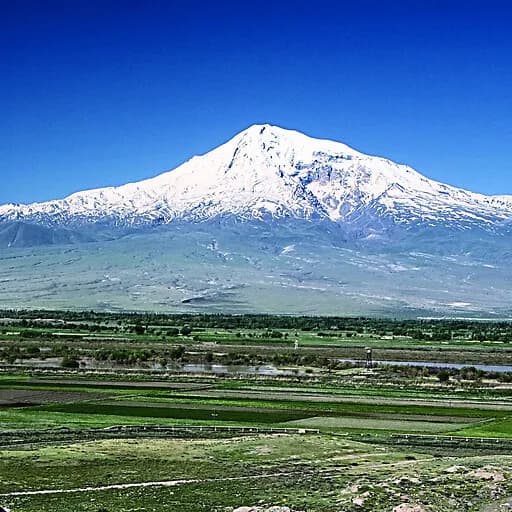
Ararat is a region mentioned in 4 verses across 4 books of the Bible. Known today as Urartu.
Verses
4
Books
4
Confidence
Very High
Coordinates
39.7028, 44.3004
Map
Loading map...
Key Verses About Ararat
“on the seventeenth day of the month”Genesis 8:4 (KJV)
“as he was worshipping in the house of Nisroch his god”2 Kings 19:37 (KJV)
“as he was worshipping in the house of Nisroch his god”Isaiah 37:38 (KJV)
“blow the trumpet among the nations”Jeremiah 51:27 (KJV)
What the Commentators Say
“**Verses 4-12** The ark rested upon a mountain, whither it was directed by the wise and gracious providence of God, that might rest the sooner. God has times and places of rest for his people after their tossing; and many times he provides for their seasonable and comfortable settlement, without their own contrivance, and quite beyond their own foresight. God had told Noah when the flood would come, yet he did not give him an account by revelation, at what times and by what steps it should go away. The knowledge of the former was necessary to his preparing the ark; but the knowledge of the latter would serve only to gratify curiosity; and concealing it from him would exercise his faith and patience. Noah sent forth a raven from the ark, which went flying about, and feeding on the carcasses that floated. Noah then sent forth a dove, which returned the first time without good news; but the second time, she brought an olive leaf in her bill, plucked off, plainly showing that trees, fruit trees, began to appear above water. Noah sent forth the dove the second time, seven days after the first, and the third time was after seven days also; probably on the sabbath day. Having kept the sabbath with his little church, he expected especial blessings from Heaven, and inquired concerning them. The dove is an emblem of a gracious soul, that, finding no solid peace of satisfaction in this deluged, defiling world, returns to Christ as to its ark, as to its Noah, its rest. The defiling world, returns to Christ as to its ark, as to its Noah, its rest. The carnal heart, like the raven, takes up with the world, and feeds on the carrion it finds there; but return thou to my rest, O my soul; to thy Noah, so the word is, Psa 116:7. And as Noah put forth his hand, and took the dove, and pulled her to him, into the ark, so Christ will save, and help, and welcome those that flee to him for rest. (Ge 8:13-19)”
Matthew Henry's Concise Commentary on Genesis 8:4
“(4) **The seventh month, on the seventeenth day of the month.**—As the months had each thirty days (see Note on Genesis 8:14), this makes exactly 150 days (see Genesis 7:11). The seventh civil month would be Abib; and the *Speaker’s Commentary *notices the following remarkable coincidences:—“On the 17th day of Abib the ark rested on Mount Ararat; on the 17th day of Abib the Israelites passed over the Red Sea; on the 17th day of Abib, Christ, our Lord, rose again from the dead.” **Ararat.**—If in Genesis 11:2 the Authorised Version is right in saying that the descendants of Noah travelled “from the east” to Shinar, this could not be the Ararat of Armenia. Moreover, we are told that the word in, Assyrian means “highland,” and thus may signify any hilly country. In the *Chaldean Genesis *the ark rests upon Nizir, a region to the east of Assyria, the highest peak of which, now named Elwend, is called in the cuneiform texts “the mountain of the world” ( *Chaldean Genesis, *p. 307). The rendering, however, “from the east,” is by no means certain, and many translate “eastward,” and even the Authorised Version renders the word *east, *that is, eastward, in Genesis 13:11. In 2Kings 19:37 *“*Ararat” is translated Armenia; but it is more correctly described in Jeremiah 51:27 as a country near Minni, that is, near Armenia. There are in this region two mountains of great altitude, the Aghri-Dagh and the Kara-Dagh, the highest of which is 17,260 feet above the sea-level; and naturally legend chooses this as the place where the ark settled. But the inspired narrative says that it rested “upon the mountains of Ararat,” upon some chain of hills there, and seventy-three days afterwards Noah found himself surrounded by an amphitheatre of mountains, the word used in Genesis 8:5 being emphatic, and signifying “the tops of the mountains became distinctly visible,” and not that they had just begun to emerge. For, doubtless, after so vast a flood, mists and vapours would for a long time prevail, and shut out the surrounding world from Noah’s view. The Targum of Onkelos and the Syriac translate “on the mountains of Carduchia.” This range, which separates Armenia from Kurdistan, is regarded by many authorities as the hills really meant, because, as they are nearer the place whence the ark started, the difficulty regarding the course taken by it is not so insuperable.”
Ellicott's Commentary for English Readers on Genesis 8:4
Bible Verses Mentioning Ararat
Learn More
Nearby Biblical Places
Related Resources
Attribution
- Geographic data from OpenBible.info Bible Geocoding Data licensed under CC BY 4.0.
- Map tiles by OpenStreetMap contributors (ODbL 1.0).
- Image: MEDIACRAT.