Biblical Region
Aram in the Bible
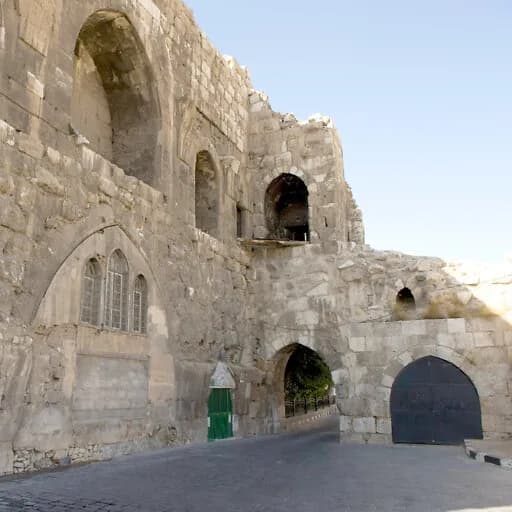
Aram is a region mentioned in 11 verses across 7 books of the Bible. Known today as Damascus.
Verses
11
Books
7
Confidence
Very High
Coordinates
33.5111, 36.3064
Map
Loading map...
Key Verses About Aram
“and said”Numbers 23:7 (KJV)
“and came to Laish”Judges 18:7 (KJV)
“because it was far from Sidon”Judges 18:28 (KJV)
“and brought tribute. Yahweh gave victory to David wherever he went.”2 Samuel 8:6 (KJV)
“saying”2 Samuel 15:8 (KJV)
What Does “Aram” Mean?
What the Commentators Say
“Chapter 23 Chapter Outline Balak's sacrifice, Balaam pronounces a blessing instead of a curse.(1-10) Balak's disappointment, and second sacrifice, Balaam again blesses Israel.(11-30) **Verses 1-10** With the camps of Israel full in view, Balaam ordered seven altars to be built, and a bullock and a ram to be offered on each. Oh the sottishness of superstition, to imagine that God will be at man's beck! The curse is turned into a blessing, by the overruling power of God, in love to Israel. God designed to serve his own glory by Balaam, and therefore met him. If God put a word into the mouth of Balaam, who would have defied God and Israel, surely he will not be wanting to those who desire to glorify God, and to edify his people; it shall be given what they should speak. He who opened the mouth of the ass, caused the mouth of this wicked man to speak words as contrary to the desire of his heart, as those of the ass were to the powers of the brute. The miracle was as great in the one case as in the other. Balaam pronounces Israel safe. He owns he could do no more than God suffered him to do. He pronounces them happy in their distinction from the rest of the nations. Happy in their numbers, which made them both honourable and formidable. Happy in their last end. Death is the end of all men; even the righteous must die, and it is good for us to think of this with regard to ourselves, as Balaam does here, speaking of his own death. He pronounces the righteous truly blessed, not only while they live, but when they die; which makes their death even more desirable than life itself. But there are many who desire to die the death of the righteous, but do not endeavour to live the life of the righteous; gladly would they have an end like theirs, but not a way like theirs. They would be saints in heaven, but not saints on earth. This saying of Balaam's is only a wish, not a prayer; it is a vain wish, being only a wish for the end, without any care for the means. Many seek to quiet their consciences with the promise of future amendment, or take up with some false hope, while they neglect the only way of salvation, by which a sinner can be righteous before God.”
Matthew Henry's Concise Commentary on Numbers 23:7
“(7) **Laish.**—It is called *Leshem *in Joshua 19:47, and is now called *Tel el-Kadi, *“the mound of *the judge,” *possibly (though not probably) with some reference to the name of Dan (Genesis 49:16). It is four miles from Paneas and Cæsarea Philippi, and was the northernmost city of Palestine (Judges 20:1). As such, its name recurs in Isaiah 10:30, if our version is there correct. It is sometimes called *el-Leddan, *because it is at the source of the Leddan, the chief stream of the Jordan. The position of the town, on a round hill girt with trees, is very striking, and fully bears out the description of this chapter (Robinson, *Bible Res. *3:392). The *name “*Dan” in Genesis 14:14 may have been altered from Laish at a later date (Ewald, *Gesch. *1:73). **After the manner of the Zidonians**—*i.e.,* *in luxurious commercial ease. *There can be little doubt that they were a colony from Zidon. **Quiet and secure . . . There are three peculiarities in this clause:**—(1) Although the word for “people” (*am*) is masculine, yet the word for “dwelling” (*yoshebeth*) is feminine, perhaps because the writer had the word “city” in his mind, just as αὺτὴν is feminine in Acts 27:14, though the word for “ship” has been neuter, because the writer has *ναῦς* in his mind. (2) The word for “careless” and the word for “secure” are from the same root, and are tautological. (3) The clause “no magistrate,” &c., is curiously expressed. It is difficult not to suppose that the text is in some way corrupt. **There was no magistrate . . . **This difficult clause seems to mean, “no one possessing wealth” (LXX., “heir of treasure”) “among them doing harm in the land in any matter.” The various versions differ widely from each other, and the text is almost certainly corrupt. **They were far from the Zidonians.**—As Josephus says, the town is a day’s journey distant from Zidon. **No business with any man.**—The reading of some MSS. of the LXX., “They had no business with Syria,” rises from reading *Aram *for *Adam.*”
Ellicott's Commentary for English Readers on Judges 18:7
People Connected to Aram
Bible Verses Mentioning Aram
Learn More
Nearby Biblical Places
Related Resources
Attribution
- Geographic data from OpenBible.info Bible Geocoding Data licensed under CC BY 4.0.
- Map tiles by OpenStreetMap contributors (ODbL 1.0).
- Image: Dosseman.