Biblical Settlement
Tabbath in the Bible
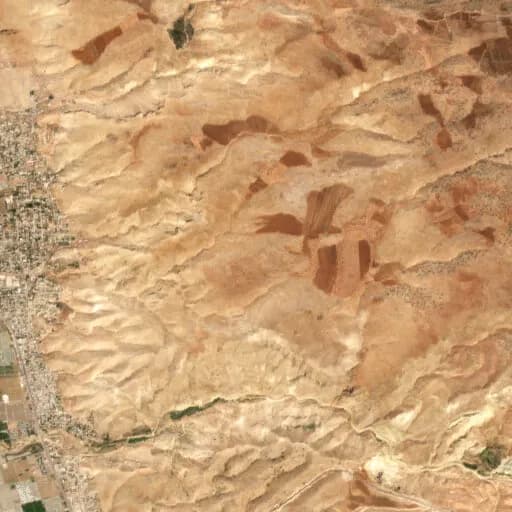
Tabbath is a settlement mentioned in 1 verse across 1 book of the Bible. Known today as Ras Abu Tabat.
Verses
1
Books
1
Confidence
Moderate
Coordinates
32.2868, 35.6189
Map
Loading map...
Key Verses About Tabbath
“and Yahweh set every man's sword against his fellow”Judges 7:22 (KJV)
What Does “Tabbath” Mean?
טַבַּת (Ṭabbath, Hebrew) — “celebrated”
Tabbath, a place East of the Jordan
H2888 in Strong's Concordance →What the Commentators Say
“**Verses 16-22** This method of defeating the Midianites may be alluded to, as exemplifying the destruction of the devil's kingdom in the world, by the preaching of the everlasting gospel, the sounding that trumpet, and the holding forth that light out of earthen vessels, for such are the ministers of the gospel, 2Co 4:6, 7. God chose the foolish things of the world to confound the wise, a barley-cake to overthrow the tents of Midian, that the excellency of the power might be of God only. The gospel is a sword, not in the hand, but in the mouth: the sword of the Lord and of Gideon; of God and Jesus Christ, of Him that sits on the throne and the Lamb. The wicked are often led to avenge the cause of God upon each other, under the power of their delusions, and the fury of their passions. See also how God often makes the enemies of the church instruments to destroy one another; it is a pity that the church's friends should ever act like them.”
Matthew Henry's Concise Commentary on Judges 7:22
“(22) **Blew the trumpets.**—They continued to blow incessantly, to add to the panic. **The Lord set every man’s sword against his fellow.**—We have an exact parallel to this in the mutual slaughter of the Ammonites, Moabites, and Edomites, when stricken with a similar panic before the army of Jehoshaphat, in 2Chronicles 20:21-22; and on a smaller scale in the camp of the Philistines at Gibeah (1 Samuel 14). The tremendous tragedy of their flight can only be appreciated by the vivid impression which it made on the national imagination (Isaiah 9:4; Isaiah 10:26). In Psalm 83:13-14, it is compared to the whirling flight of dry weeds before a rush of flame and wind, recalling the Arab imprecation, “May you be whirled like the akukb (‘wild artichoke,’ ‘a wheel,’ ‘a rolling thing’) before the wind, until you are caught in the thorns or plunged into the sea” (Thomson, *Land and Book, *Judges 36). **Beth-shittah.**—It should be rather, *Beth hash-shit-tah, *“the house of the acacia”—a place named from the trees which are still abundant in that neighbourhood, just as we have such names as Burntash, Seven-oaks, Nine Elms, &c. (Comp. Abel-Shittim, Numbers 33:49; Joshua 21.) If *Beth hash-shittah *was the village *Shultah, *with which Robinson (*Bibl. Reg., *3:219) identifies it, some of the host must have fled northwards. It is improbable that it was another name for Beth-shean, though the LXX. have Bethsead in some MSS. It is, however, by no means unlikely that some of the marauders would fly towards the fords of the Jordan near Bethshean (comp. Jos. *Antt. v.* 6, § 5), as others fled south to the fords near Succoth, which lay to the south of the Jabbok. **In.**—Rather, *towards, *as in the margin. **Zererath.**—Rather, *Zererah. *This is omitted in the Vulgate; the LXX. have the extraordinary reading *Tagaragatha, *or in some MSS. “and he led them.” The final *th *is no part of the name, but the mode of connecting the name with the particle of motion. Zererath is not again mentioned, but the distinction between the Hebrew letters *r *(ר) and *d *(ד) is so slight that the reading *Zeredath *may here be correct; and if so, it may be the Zeredath in Ephraim, which was the birthplace of Jeroboam (1Kings 11:26), and the Zaretan of Joshua 3:16, 1Kings 7:46, which is sixteen miles north of Jericho. **To the border.**—Literally, as in the margin, *to the lip, *or *brink, *as in Genesis 22:17; Exodus 4:30. It does not, however, necessarily prove that Abel-meholah was on the edge of the Jordan valley. **Abel-meholah.**—“The meadow of the dance.” It was in Ephraim, and was the native place of Elisha (1Kings 19:16; see, too, 1Kings 4:12). Eusebius and Jerome place it ten miles south of Bethshean, at Wady Maleb. *Abel *means “a moist, grassy meadow.” **Unto Tabbath.**—Literally, *upon Tabbath. *The name seems to mean “famous,” but the site is unknown, unless it be the remarkable bank called *Tubukhat Fahil,*”
Ellicott's Commentary for English Readers on Judges 7:22
Bible Verses Mentioning Tabbath
Nearby Biblical Places
Related Resources
Attribution
- Geographic data from OpenBible.info Bible Geocoding Data licensed under CC BY 4.0.
- Map tiles by OpenStreetMap contributors (ODbL 1.0).
- Image: Contains modified Copernicus Sentinel data 2019.