Biblical Settlement
Kiriathaim 1 in the Bible
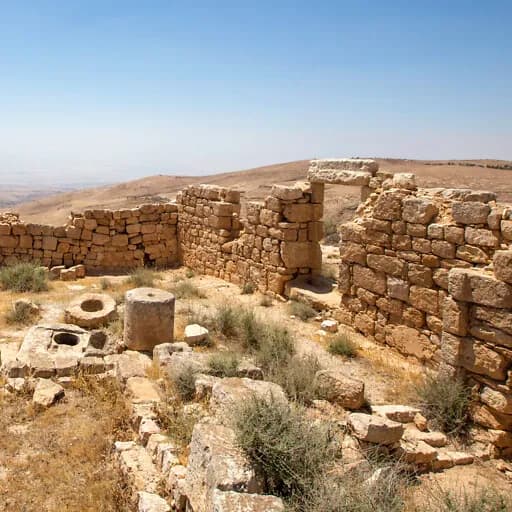
Kiriathaim 1 is a settlement mentioned in 5 verses across 4 books of the Bible. Known today as Khirbet al Mukhayyat.
Verses
5
Books
4
Confidence
Moderate
Coordinates
31.7491, 35.7439
Map
Loading map...
Key Verses About Kiriathaim 1
“and Elealeh”Numbers 32:37 (KJV)
“and Sibmah”Joshua 13:19 (KJV)
“the God of Israel: Woe to Nebo! for it is laid waste; Kiriathaim is disappointed”Jeremiah 48:1 (KJV)
“and on Beth Gamul”Jeremiah 48:23 (KJV)
“behold”Ezekiel 25:9 (KJV)
What the Commentators Say
“Chapter 32 Chapter Outline The tribes of Reuben and Gad request an inheritance on the east of Jordan.(1-5) Moses reproves the Reubenites and Gadites.(6-15) They explain their views, Moses consents.(16-27) They take possession of the land to the east of Jordan.(28-42) **Verses 1-5** Here is a proposal made by the Reubenites and Gadites, that the land lately conquered might be allotted to them. Two things common in the world might lead these tribes to make this choice; the lust of the eye, and the pride of life. There was much amiss in the principle they went upon; they consulted their own private convenience more than the public good. Thus to the present time, many seek their own things more than the things of Jesus Christ; and are led by worldly interests and advantages to take up short of the heavenly Canaan.”
Matthew Henry's Concise Commentary on Numbers 32:37
“XLVIII. (1) **Against Moab thus saith the Lord of hosts . . .**—Better, with a different punctuation, *Concerning Moab *(this being the title of the section), *Thus saith the Lord of hosts. *In the long prophecy that follows Jeremiah in part follows in the wake of “the burden of Moab” in Isaiah 15, 16, entering even more fully into geographical details. (See Notes there.) The relations between Moab and Israel had for a long period been more or less uneasy. The former had been tributary to the latter under Ahab, but on his death Mesha revolted, and a war ensued, which ended in the defeat of the Moabites by the allied forces of Israel, Judah, and Edom (2 Kings 3). They repeated their attack, however (2Kings 13:20), and appear to have occupied the territory of the Trans-jordanic tribes on their deportation by Tiglath-pileser. Of the three places named, Nebo, memorable as the summit of Pisgah, from which Moses looked upon the land of promise, and forming part of the range of the mountains of Abarim (Deuteronomy 32:49; Deuteronomy 34:1), has been identified conjecturally with *Djebel-el-Attarus, *or *Djebel-el-Jel’ad. *Hitzig derives the name from the Sanscrit *Nabho *(= the cloud-heaven). Kiriathaim (= the double city) is named in Genesis 14:5 and Numbers 32:37, in the latter passage in conjunction with Elealeh, Heshbon, and Nebo. Jerome places it at a distance of ten miles west of Medaba, as one of the cities rebuilt by the Reubenites, but it has not been identified. Misgab, the “high fort” or “citadel” of Isaiah 25:12, has shared the same fate, but has been referred by some writers to Kir-Moab, or Kir-heres, as the chief fortified city of the country (see Jeremiah 48:31; Jeremiah 48:36; Isaiah 15:1; Isaiah 16:7). The article which is prefixed to it in the Hebrew has led Fürst (Lexicon) to take it in a wider sense, as meaning the plateau or highland country of Moab generally.”
Ellicott's Commentary for English Readers on Jeremiah 48:1
Bible Verses Mentioning Kiriathaim 1
Nearby Biblical Places
Related Resources
Attribution
- Geographic data from OpenBible.info Bible Geocoding Data licensed under CC BY 4.0.
- Map tiles by OpenStreetMap contributors (ODbL 1.0).
- Image: Bashar Tabbah.