Biblical Settlement
Gedor 3 in the Bible
Gedor 3 is a settlement mentioned in 1 verse across 1 book of the Bible. Known today as Khirbet Jedur.
Verses
1
Books
1
Confidence
High
Coordinates
31.6326, 35.0921
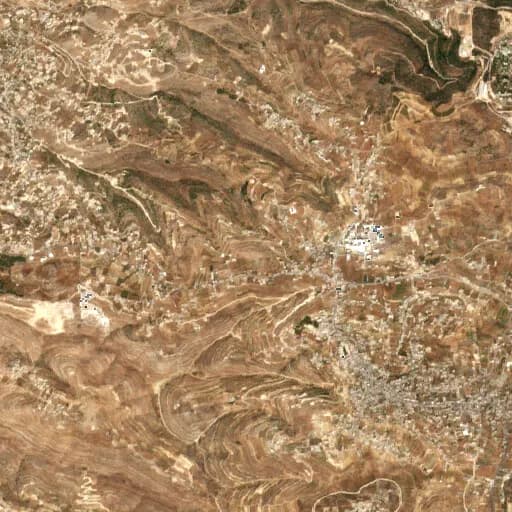
Map
Loading map...
Key Verses About Gedor 3
“and Heber the father of Soco”1 Chronicles 4:18 (KJV)
What the Commentators Say
“Chapter 4 Genealogies. --In this chapter we have a further account of Judah, the most numerous and most famous of all the tribes; also an account of Simeon. The most remarkable person in this chapter is Jabez. We are not told upon what account Jabez was more honourable than his brethren; but we find that he was a praying man. The way to be truly great, is to seek to do God's will, and to pray earnestly. Here is the prayer he made. Jabez prayed to the living and true God, who alone can hear and answer prayer; and, in prayer he regarded him as a God in covenant with his people. He does not express his promise, but leaves it to be understood; he was afraid to promise in his own strength, and resolved to devote himself entirely to God. Lord, if thou wilt bless me and keep me, do what thou wilt with me; I will be at thy command and disposal for ever. As the text reads it, this was the language of a most ardent and affectionate desire, Oh that thou wouldest bless me! Four things Jabez prayed for. 1. That God would bless him indeed. Spiritual blessings are the best blessings: God's blessings are real things, and produce real effects. 2. That He would enlarge his coast. That God would enlarge our hearts, and so enlarge our portion in himself, and in the heavenly Canaan, ought to be our desire and prayer. 3. That God's hand might be with him. God's hand with us, to lead us, protect us, strengthen us, and to work all our works in us and for us, is a hand all-sufficient for us. 4. That he would keep him from evil, the evil of sin, the evil of trouble, all the evil designs of his enemies, that they might not hurt, nor make him a Jabez indeed, a man of sorrow. God granted that which he requested. God is ever ready to hear prayer: his ear is not now heavy.”
Matthew Henry's Concise Commentary on 1 Chronicles 4:18
“(18) **And his wife Jehudijah** [Margin is right, *the Jewess*] **bare Jered.**—It is obvious that a contrast with the sons of some non-Jewish wife is intended, and these latter ought already to have been mentioned. Clearly, therefore, the sentence “And these are the sons of Bithiah, the daughter of Pharaoh, which Mered took”—a sentence which is meaningless in its present position—must be restored to its original place after the first statement of 1Chronicles 4:17. We thus get the sense: “And the sons of Ezra were Jepher and Mered, and Epher and Jalon. And these [the following] are the sons of Bithiah, daughter of Pharaoh, whom Mered took [to wife]; she conceived Miriam and Shammai and Ishbah the father of Eshtemoa. And his [Mered’s] wife the Jewess bare Jered . . . Zanoah.” Thus the house of Mered son of Ezra bifurcates into a purely Judæan and a mixed Egyptian group of families. Eshtemoa (1Chronicles 4:17) lay south of Hebron, in the hil-country (Joshua 15:50). **Gedor.**—See 1Chronicles 4:4, where Penuel is called father of Gedor. The two lists may, and probably do, refer to different epochs. **Socho.**—Joshua 15:35; in the Shephelah, south-west of Jerusalem. **Zanoah.**—Two Judæan towns were so named, one in the Shephelah, the other in the highlands (Joshua 15:34; Joshua 15:56). **Jekuthiel** occurs here only; but comp. Joktheel (Joshua 15:38), a town in the Shephelah. **Bithiah the daughter** **of Pharaoh.**—Bithiah is apparently Hebrew, “daughter of Iah,” that is, a convert to the religion of Israel. It may be a Hebraized form of Bent-Aah, daughter of the Moon, or some like native name. Daughter of Pharaoh, if the nomenclature be tribal, need only mean an Egyptian clan which amalgamated with that of Mered. On the other hand, comp. 2Chronicles 8:11 and 1Kings 9:24, where the phrase is used in its literal sense.”
Ellicott's Commentary for English Readers on 1 Chronicles 4:18
Bible Verses Mentioning Gedor 3
Nearby Biblical Places
Related Resources
Attribution
- Geographic data from OpenBible.info Bible Geocoding Data licensed under CC BY 4.0.
- Map tiles by OpenStreetMap contributors (ODbL 1.0).
- Image: Contains modified Copernicus Sentinel data 2019.