Biblical Settlement
Bochim in the Bible
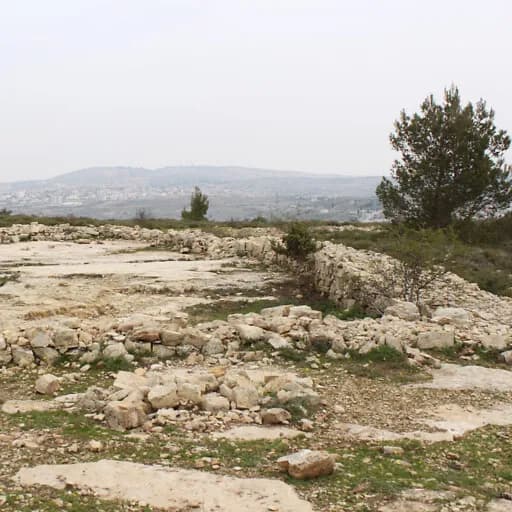
Bochim is a settlement mentioned in 2 verses across 1 book of the Bible. Known today as Beitin.
Verses
2
Books
1
Confidence
High
Coordinates
31.9228, 35.2414
Map
Loading map...
Key Verses About Bochim
“I made you to go up out of Egypt”Judges 2:1 (KJV)
“And they called the name of that place Bochim: and they sacrificed there unto the LORD.”Judges 2:5 (KJV)
What Does “Bochim” Mean?
What the Commentators Say
“Chapter 2 Chapter Outline The angel of the Lord rebukes the people.(1-5) The wickedness of the new generation after Joshua.(6-23) **Verses 1-5** It was the great Angel of the covenant, the Word, the Son of God, who spake with Divine authority as Jehovah, and now called them to account for their disobedience. God sets forth what he had done for Israel, and what he had promised. Those who throw off communion with God, and have fellowship with the unfruitful works of darkness, know not what they do now, and will have nothing to say for themselves in the day of account shortly. They must expect to suffer for this their folly. Those deceive themselves who expect advantages from friendship with God's enemies. God often makes men's sin their punishment; and thorns and snares are in the way of the froward, who will walk contrary to God. The people wept, crying out against their own folly and ingratitude. They trembled at the word, and not without cause. It is a wonder sinners can ever read the Bible with dry eyes. Had they kept close to God and their duty, no voice but that of singing had been heard in their congregation; but by their sin and folly they made other work for themselves, and nothing is to be heard but the voice of weeping. The worship of God, in its own nature, is joy, praise, and thanksgiving; our sins alone render weeping needful. It is pleasing to see men weep for their sins; but our tears, prayers, and even amendment, cannot atone for sin.”
Matthew Henry's Concise Commentary on Judges 2:1
“(1) **An angel of the Lord.**—The words “*Maleak Jehovah*” are used of Haggai, in Haggai 1:13; of prophets in Isaiah 42:19; Malachi 3:6; of priests in Malachi 2:7. Hence from very ancient times these words have been interpreted as, “a messenger of the Lord” (as in the margin of our Bible). The Targum paraphrases it by “a prophet with a message from Jehovah.” R. Tanchum, from Judges 2:6, infers that it was Joshua himself. Kimchi and others have supposed that it was Phinehas. No indications are given of anything specially miraculous. On the other hand, there is much room to suppose that the writer intended “the Angel of the Presence,” because ( 1 ) he constantly uses the phrase in this sense (Judges 6:11-12; Judges 6:21-22; Judges 13:3; Judges 13:13; Judges 13:15, &c.); (2) the same phrase occurs in this sense elsewhere, as in Genesis 16:7; Genesis 22:11; Exodus 2:2; Exodus 2:6; Exodus 2:14; Numbers 22:22, (3) the angel speaks in the first person, and does not introduce his words by “Thus saith Jehovah,” as the prophets always do (but see below). It seems probable, therefore, that by “the angel of the Lord” the writer meant “the captain of the Lord’s host,” who appeared to Joshua at Jericho (Joshua 5:13-15). Against this conclusion may be urged the fact that in no other instance does an angel appear to, or preach to, multitudes. Angels are sent to individuals, but prophets to nations. **Came up from Gilgal to Bochim.**—This notice is by no means *decisive *against the conclusion that an angel is intended. The writer may mean to intimate that the Angel Prince of the host (Exodus 23:20-23), the Angel of the Covenant, left his station in the camp of Gilgal and came up to the new camp or assembly of the people in Central Palestine (Joshua 4:19; Joshua 5:9-10; Joshua 10:7; Joshua 10:15; Joshua 10:33; Joshua 14:6). Ha-Bochim means “the weepers.” The locality is not known, but the LXX. render it “to the weeping-place,” and add “and to Bethel, and to the House of Israel.” Hence it has been inferred that Bochim was near Bethel. Possibly however, the LXX. may have been led to this interpretation by the vicinity to Bethel of Allon-Bachuth, “the oak of weeping” (Genesis 35:8). **And said, I made you to go up out of Egypt.**—The LXX. have “the Lord, the Lord brought you out of Egypt” (Cod. Alex.). Houbigant, from the repetition of the word, precariously conjectures the loss of some words, “*Thus saith the Lord, *I the Lord,” &c., as in the Peshito; and, indeed, in some MSS. a blank (*Piska*) is left, implying at least a suspicion that this formula has accidentally fallen out of the text. **I will never break my covenant with you.**—See Genesis 17:7; Genesis 29:12; Psalm 89:28; Psalm 89:34; Luke 1:54-55, Exodus 3:6-8.”
Ellicott's Commentary for English Readers on Judges 2:1
Bible Verses Mentioning Bochim
Nearby Biblical Places
Related Resources
Attribution
- Geographic data from OpenBible.info Bible Geocoding Data licensed under CC BY 4.0.
- Map tiles by OpenStreetMap contributors (ODbL 1.0).
- Image: Deror_avi.