Biblical Mountain Ridge
Amana in the Bible
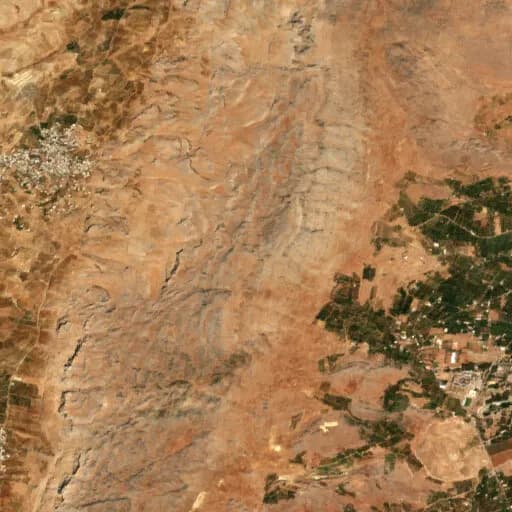
Amana is a mountain ridge mentioned in 1 verse across 1 book of the Bible. Known today as Jebel Zabadani.
Verses
1
Books
1
Confidence
High
Coordinates
33.6889, 36.0317
Map
Loading map...
Key Verses About Amana
“my bride”Song of Solomon 4:8 (KJV)
What Does “Amana” Mean?
What the Commentators Say
“(8) **Come with me**.—Better, *to me. *LXX., *hither*; so Vulg. and Luther, reading *athî, *imperative of *athah, *instead of *ittî =* *with me, *or more properly, *as regards me. *The reading involved only a difference of vowel points, and is to be preferred. We have here another reminiscence of the obstacles which had attended the union of the pair under another figure. The course of true love, which never yet, in East or West, ran smooth, is beset here by tremendous difficulties, symbolised by the rocks and snows of the range of Lebanon, which shut in the poet’s northern home, and the wild beasts that haunted these regions. Like Tennyson’s shepherd, he believes that “love is of the valleys,” and calls to her to come down to him from her inaccessible heights. The word *Shûr *translated in English Version *look, *has properly in the LXX. its primitive meaning, *come. *To suppose a literal journey, as some do, to these peaks of the mountain chain one after another, is absurd. They are named as emblems of height and difficulty. *Shenîr *(Senir, 1Chronicles 5:23) is one of the peaks of Hermon. *Amana *has been conjectured to be a name for the district of Anti-Libanus in which the Abana (*Barada*) has its source, but nothing is certain about it. The appellative *spouse *first occurs in this verse. In Hebrew it is *khallah, *and is translated in the Authorised Version either “daughter-in-law,” or “bride,” or “spouse,” according as the relationship, now made complete by marriage, is regarded from the point of view of the parents of the bridegroom or of himself (*e.g., daughter-in-law, *Genesis 11:31; Genesis 38:11; Leviticus 20:22; Micah 7:6, *bride, *Isaiah 49:18; Isaiah 61:10; Isaiah 62:5, &c.). Its use does not by itself prove that the pair were united in wedlock, because in the next verse the word *sister *is joined to *spouse, *and it may, therefore, be only a stronger term of endearment, and in any case, when put into the lover’s mouth while describing the difficulties in the way of union, it is *proleptic*; but its presence strongly confirms the impression produced by the whole poem, that it describes over and over again the courtship and marriage of the same couple. For *lion *see Genesis 49:9. The *leopard *was formerly very common in Palestine, as the name *Bethnimrah, i.e., house of leopards *(Numbers 32:36) shows. (Comp. Jeremiah 5:6, Hosea 13:7.) Nor is it rare now. “In the forest of Gilead it is still so numerous as to be a pest to the herdsmen” (Tristram, *Nat. Hist. of Bibl., *p. 113). The LXX. translate *amana *by πίστις*, *and this has been turned into an argument for the allegorical treatment of the book. But it is a very common error of the LXX. to translate proper names. (Comp. Song of Solomon 6:4.)”
Ellicott's Commentary for English Readers on Song of Solomon 4:8
Bible Verses Mentioning Amana
Learn More
Nearby Biblical Places
Related Resources
Attribution
- Geographic data from OpenBible.info Bible Geocoding Data licensed under CC BY 4.0.
- Map tiles by OpenStreetMap contributors (ODbL 1.0).
- Image: Contains modified Copernicus Sentinel data 2019.